Ruby’s symbolism and rarity inspire July birthstone personalization trends
Ruby turns a July birthstone into a signature, pairing love-lore and rarity with initials, lockets, and charm layers that feel intimate rather than merely decorative.

Ruby is the July birthstone, and in a tiny initial pendant, a nameplate, or a charm cluster, its saturated red reads less like ornament and more like a statement of feeling.
Why ruby feels so personal
Its name comes from the Latin ruber, meaning red, a color long tied to love and passion. That symbolism has been reinforced for centuries: in ancient India, ruby was called the “king of precious stones,” admired for rarity, beauty, and a power that was believed to sharpen youthful energy. Medieval Europeans gave the gem an equally expansive emotional job description, wearing rubies in hopes of securing health, wealth, wisdom, and success in love.
The official U.S. birthstone list dates to 1912, when the American National Retail Jewelers Association established it, which helps explain why July jewelry often lands at the intersection of tradition and giftability. Ruby is also the gem for both the 15th and 40th anniversaries, so it carries enough symbolic weight to work for a birthday, a marriage milestone, or a piece meant to mark a family name.
What makes ruby look like ruby
The finest ruby color is a deep red with a slight purple modifier, the trade’s coveted “pigeon’s blood.” That color does not happen by accident. Ruby is the red variety of corundum, and chromium is the trace element that gives the stone its red hue. The more chromium present, the stronger the red can appear, which is why two rubies of similar size can look dramatically different once they are cut and polished.
Durability is part of ruby’s appeal in everyday jewelry. After diamond, corundum is the hardest known natural substance, so ruby can hold up beautifully in pieces meant for frequent wear. Ruby is the most valuable variety of corundum and one of the most important gems in the colored stone market, with stones that can command some of the highest per-carat prices of any colored gem.
How to wear ruby as personalization
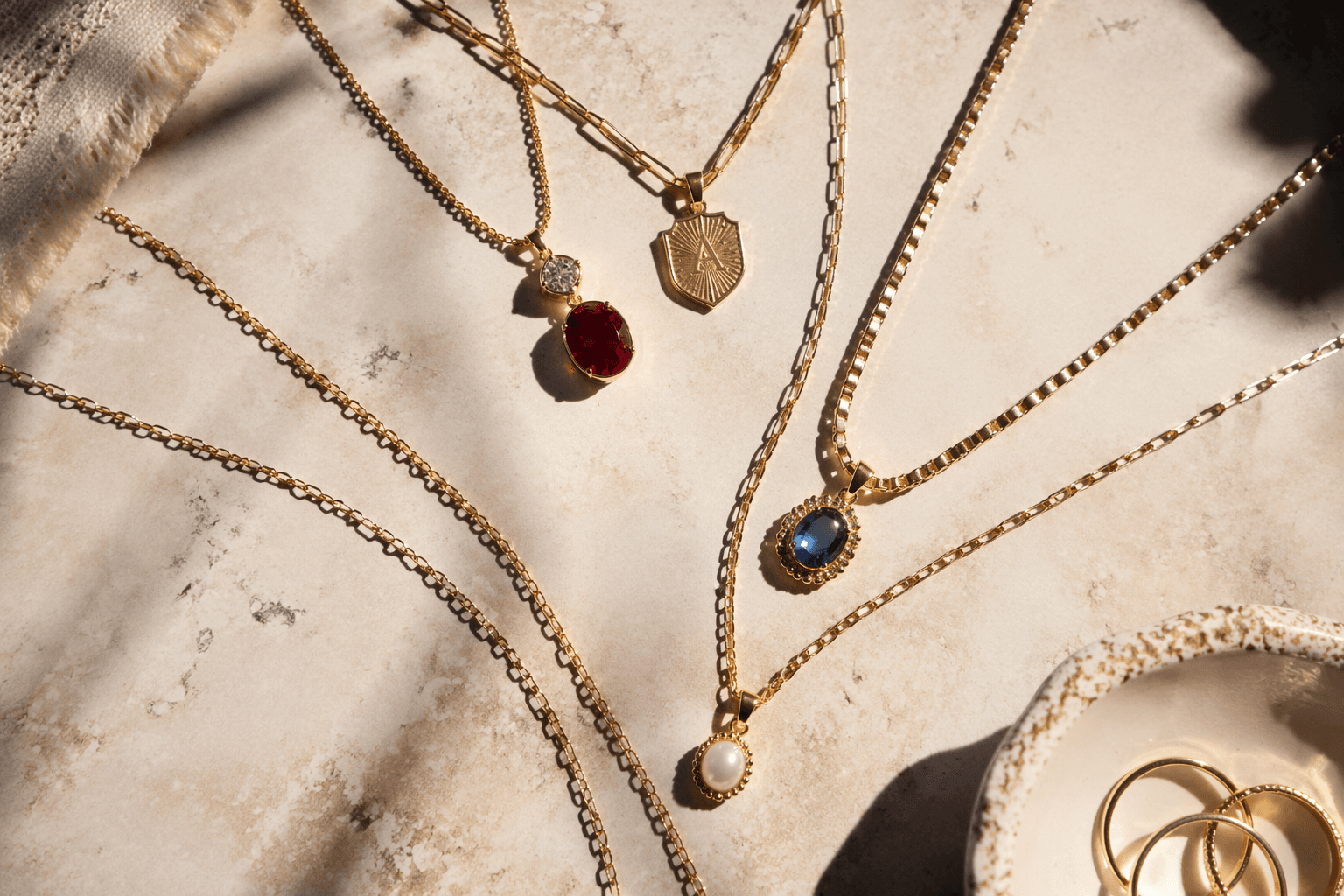
The smartest way to use ruby in personalized jewelry is to let color do some of the storytelling. A single ruby beside an initial turns a name into a visual accent; a ruby dropped into a nameplate softens the typography with warmth; a locket with one red stone at the bail or clasp feels less literal, more intimate. Charm layers are especially effective because ruby can sit among letters, dates, and talismans without overpowering them, creating a palette that reads as curated rather than crowded.
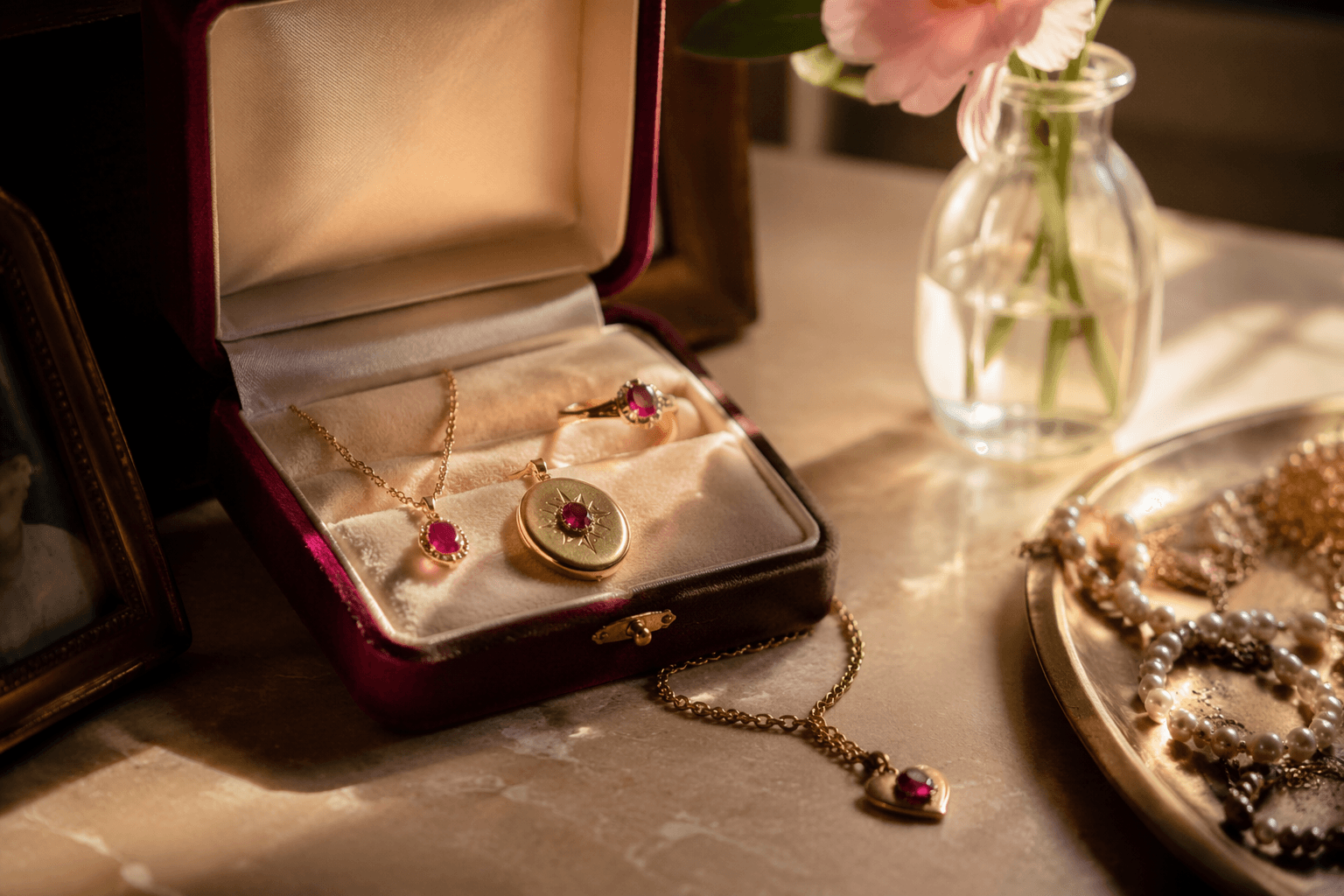
Settings matter here. A bezel setting, which wraps metal around the stone’s edge, makes sense for daily-wear pieces like pendants, charms, and bracelets because it protects the ruby and gives the jewel a sleek, modern outline. Prong settings allow more light into a faceted stone and can make a ruby flash more vividly, but they leave more of the gem exposed. For a personalized jewel that will be worn often, a bezel often feels more practical; for a more airy, sparkling effect, prongs bring a classic brightness.
Natural ruby, lab-grown ruby, or a ruby-look alternative
Natural ruby, lab-grown ruby, and ruby-look alternatives signal different things. A natural ruby says rarity, geological romance, and long-term keepsake value. It is the right answer when the piece is meant to feel singular, especially if the buyer is drawn to provenance and the romance of the stone’s journey from the earth to the setting. Burma, now Burma/Myanmar, has historically been the most important source of fine rubies, and Thailand was a major source in the 1970s and 1980s, especially near the Cambodian border.
Lab-grown ruby tells a different story. It keeps the species and the color but shifts the emphasis toward accessibility and size, which can be useful when the goal is a bolder charm, a larger center stone, or a more flexible budget. For many shoppers, that makes lab-grown ruby the most wear-forward choice: the color reads clearly, the price pressure is lower, and the piece can still feel fully personal without carrying the premium of a fine natural stone.
The modern birthstone list has only a slight relationship to ancient beliefs and was shaped by availability and cost, which is why contemporary birthstone jewelry often makes room for substitutes and complementary colors. In practice, that means a red-toned alternative can offer the mood of ruby without the same material commitment. This is the option for buyers who want the emotional cue, a flash of July red, and the freedom to style more generously across initials, charms, and layered chains.
Where ruby earns its place in a collection
Ruby can stand for passion, because of its color; protection and power, because of its history; and devotion, because it is easily folded into wearable identity pieces. Smithsonian’s collection includes large and notable examples such as the Carmen Lúcia ruby, a reminder that the gem can be both tiny enough for a locket and grand enough to anchor a major collection.
This article was produced by Prism’s automated news system from verified source data, official records, and press releases, then run through automated quality and moderation checks before publishing. The system is built and supervised by the people who set the standards it runs under. Read our full AI policy.
Did this article answer your question?