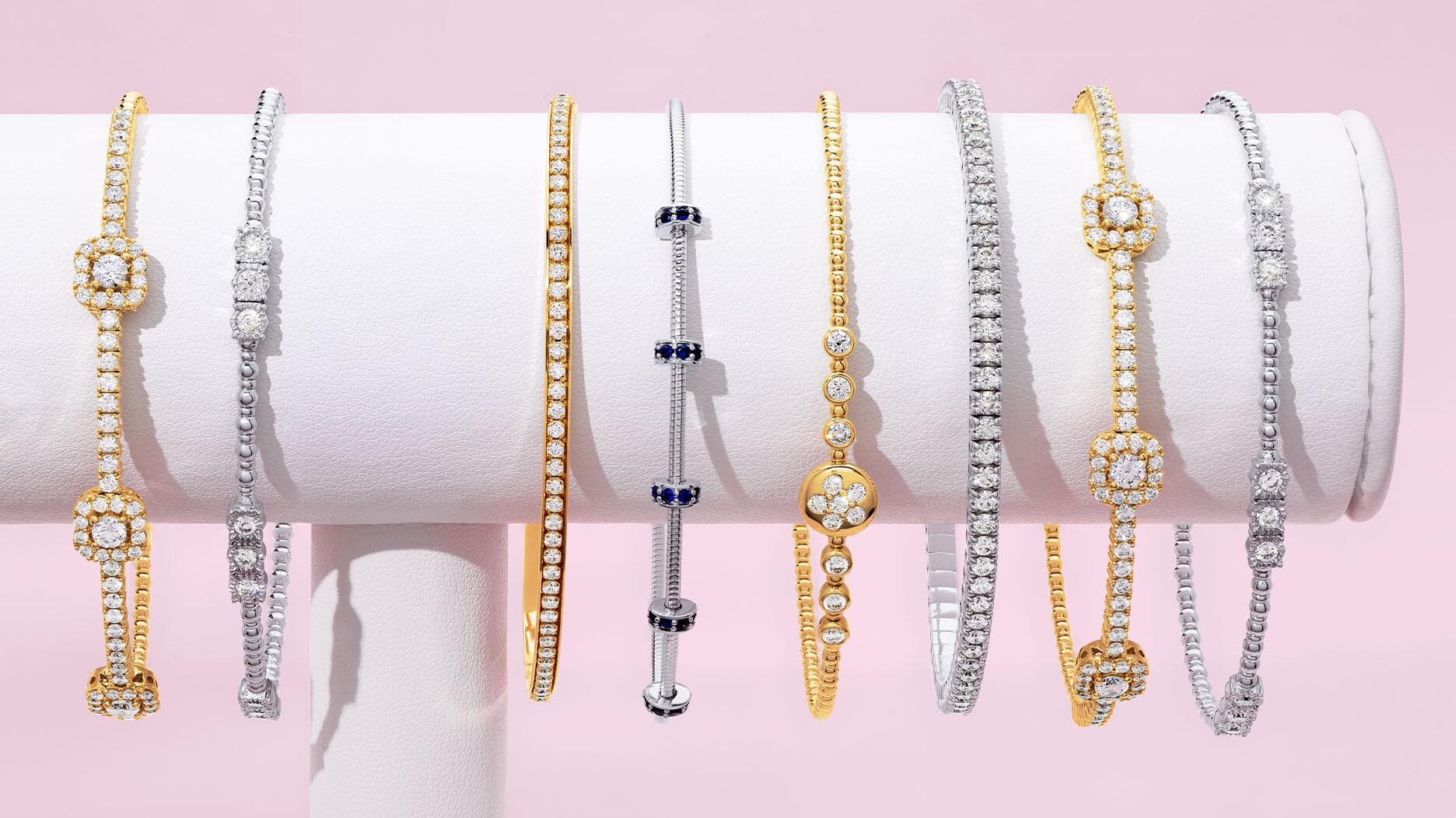
Colorful collar necklaces turn layering into a more personal statement
Collars and long layers are turning necklaces into intimate, buildable stories, with initials, birthstones and vivid stones at the center of the stack.
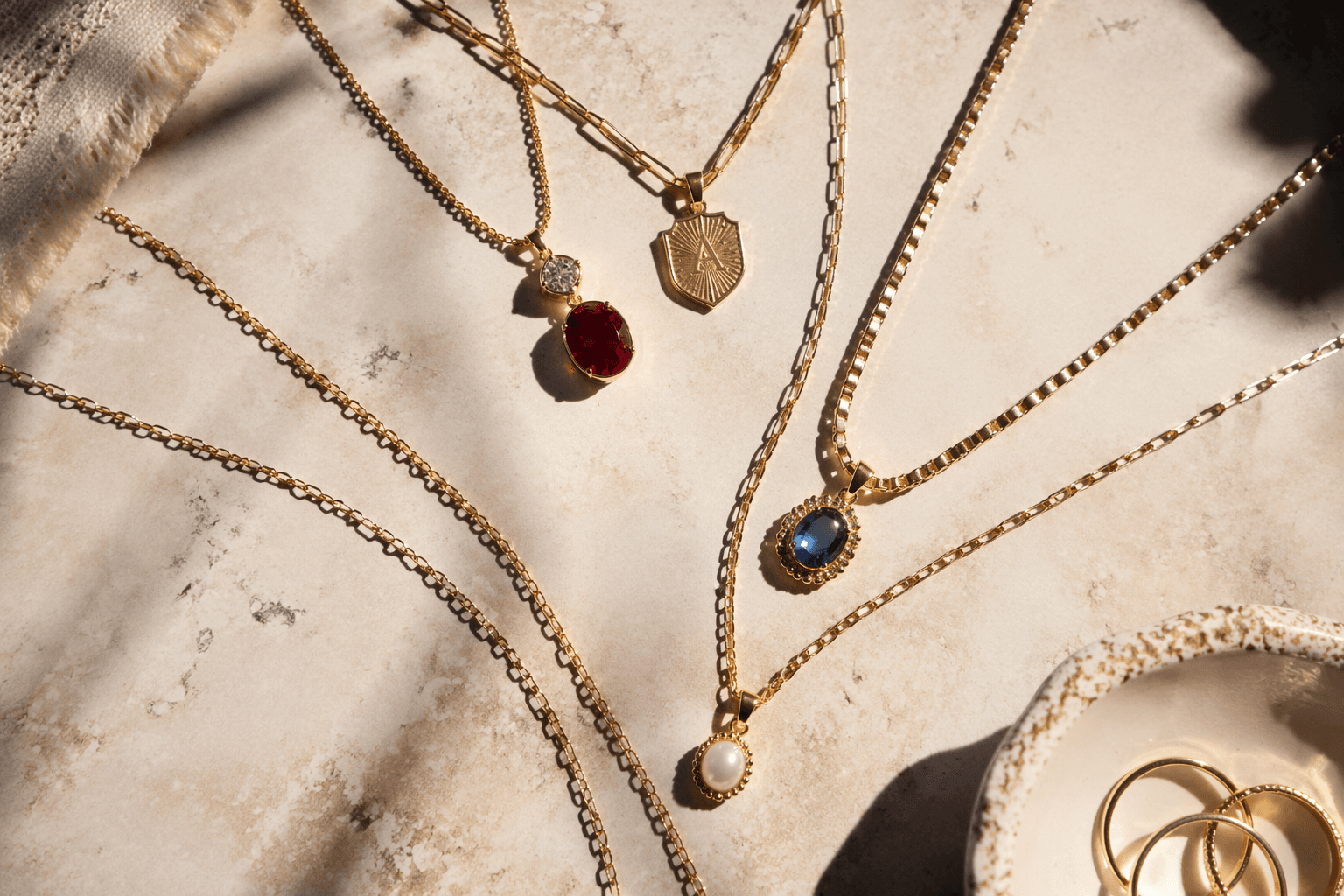
A collar at the clavicle, a longer chain beneath it and a final strand in the 30-inch range create space for initials, birthstones, charms and engravings to speak without crowding one another. The result is a neckline that looks composed, but never generic.
A neckline built in chapters
The layers work best when they fill the space between 16-inch and 30-inch lengths, with each length taking a distinct role in the composition. Chokers, collars and torques have been circling for the past two years, and in 2026 they were visible both on the red carpet and in design studios.
Collar-length pieces change the way personalization reads. A nameplate, an engraved bar or a small birthstone looks more deliberate when it sits close to the collarbone, then hands the eye down to a longer chain or pendant below.
Why personalization and layering fit each other so well
The personalized-jewelry category is projected at $3.79 billion in 2025 and $7.17 billion by 2033, with an 8.3 percent compound annual growth rate from 2027 to 2033. Necklaces and pendants account for about 34 percent of global personalized-jewelry revenue in 2025, which makes sense given how naturally they accommodate names, initials, coordinates, photo lockets and small symbolic charms.
A necklace sits close enough to the face to feel intimate, but it also has enough surface area to carry a narrative. In practice, that can mean a family initial on the shortest layer, a birthstone in the middle and an heirloom pendant on the longest chain, a combination that reads as personal even when the materials are mixed.
Color at the clavicle has become the point
Color has moved from accent to focal point, especially when it sits high on the body. Multiple 2025 trend reports pointed to vivid gemstones as a central direction, and JCK singled out brown stones, especially brown diamonds, tiger’s eye and quartz, as a fresh counterpoint to years of brighter palettes. Brown feels grounded rather than flashy, and it pairs especially well with the warm skin-level framing of a collar necklace.
A ruby or emerald close to the throat does not need a lot of competition around it; a slim torque or a structured collar gives the stone a stage. The look becomes more individual when the color is chosen for meaning, a birthstone, a favorite shade, a stone that recalls an heirloom ring, rather than only for coordination with a dress.
Gold prices are nudging the silhouette in a different direction
High gold prices are also changing how people build these stacks. Some shoppers are moving toward demi-fine or costume-layering looks because they want the effect of abundance without committing every strand to heavy precious metal. Long leather or silk cords can reduce the amount of gold used while still supporting fine pendants, and that changes the whole mood of the necklace story.
A substantial pendant can hang from a pared-back cord, while a smaller engraved charm can sit against a collar of metal or beads. The mix of materials gives the wearer more agency: one layer can be precious, another restrained, another playful. The return of long layering necklaces in 2025 also fed a bohemian comeback.
The diamond conversation has moved beyond the engagement box
De Beers Group’s June 2026 Diamond Report is based on a U.S. consumer study of 18,500 women ages 18 to 74. In that report, non-bridal occasions account for three-quarters of overall U.S. diamond demand, and self-expression ranks among the core reasons people buy diamonds.
For necklaces, that means a diamond no longer has to announce a proposal or formal milestone to feel relevant. It can sit in a collar stack beside a birthstone, a gold charm or an engraved tag and still carry weight.
This article was produced by Prism’s automated news system from verified source data, official records, and press releases, then run through automated quality and moderation checks before publishing. The system is built and supervised by the people who set the standards it runs under. Read our full AI policy.
Did this article answer your question?