Laser inscription makes personalized diamonds discreet and verifiable
A microscopic inscription can carry initials, a date, or a report number, giving a diamond private meaning and a built-in way to verify it.
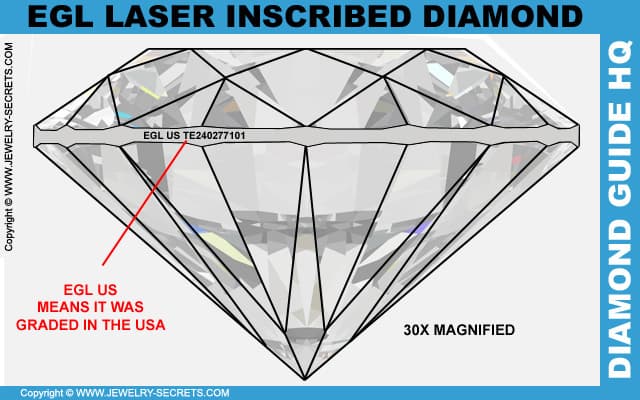
A laser inscription sits on a diamond’s girdle, invisible to the naked eye. The diamond keeps its clean face-up look while carrying a private signature and a technical identity at once.
The quiet appeal of an invisible signature
Visible engraving changes the object. Laser inscription does something more restrained: it lets sentiment sit inside the diamond’s own architecture, where only a loupe, microscope, or verification instrument will find it. That makes it useful for engagement rings, anniversary stones, and heirloom pieces, where the owner may want a hidden date, initials, a symbol, or a logo without touching the stone’s visual balance.
The inscription is a microscopic mark that can include a personal message, symbol, logo, or the diamond’s unique report number. Because it is not visible to the naked eye, the personalization remains intimate rather than performative.
What the inscription can, and cannot, do
Laser inscription can commemorate an event, carry a sentiment, and help identify a diamond quickly and easily. It cannot create visible ornamentation, because the point is precisely that the stone should still read as itself from the top.
That makes the choice especially useful when the emotional message belongs somewhere in the piece, but not necessarily on the metal. A band engraving is immediate and legible; a diamond inscription is hidden and durable in a different way, turning the stone into a private archive. For buyers deciding where a message belongs, the question becomes whether the note should be seen at a glance or discovered only when the stone is examined closely.
Why 10× matters
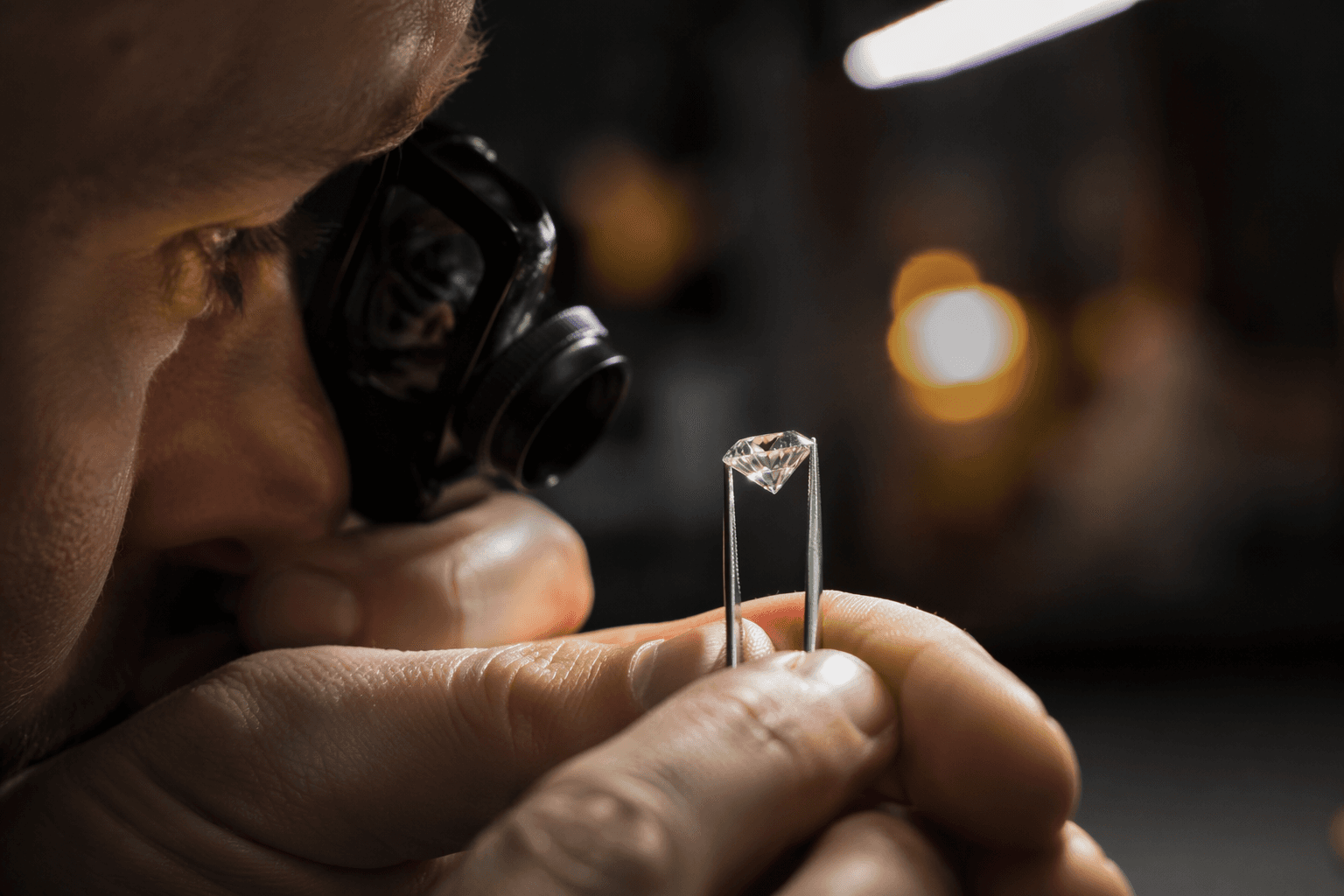
The familiar standard here is 10× magnification, the same level used in diamond clarity grading. The inscription can be seen at that magnification.
It allows a buyer to add meaning without altering the visual profile of the diamond, while still placing that meaning inside a system of evaluation that jewelers, graders, and insurers already understand.
The reports that carry it
GIA ties laser inscription to specific report formats, including the Diamond Origin Report, Diamond Dossier, Diamond EReport, and Diamond Focus Report for natural diamonds. On GIA’s natural diamond services pages, laser inscription appears alongside full quality assessment details, such as polish, symmetry, and fluorescence, and in some reports it sits beside a full 4Cs assessment, a plotted clarity diagram, geographic origin, and a GIA report number on the girdle.
For colored stones, the GIA Diamond Origin Report can include a confirmed region of geographical origin, a full 4Cs quality report, a plotted diagram, inscription and report number on the girdle, and digital images of the diamond. The inscription is part of a broader document trail that links a physical gem to a record of its properties.
Verification is where the story deepens
GIA’s Report Check service lets users confirm that the information on a report matches what is archived in its database. The mark is not only personal, it is checkable. A diamond can carry a private message and still function as a piece of evidence.
GIA’s Match iD instrument, paired with the GIA App, uses AI technology to match a loose diamond to its GIA digital grading report through the stone’s laser inscription. If the inscription is hard to find, GIA advises looking again under a high-powered microscope. Bleached or bruted girdles can make matching more difficult.
Personal meaning, ownership, and security
Laser inscription lives in two worlds at once. It can mark a birthstone-like keepsake with a date or a name, and it can also help with repair, resale, insurance, or inheritance by making the diamond easier to identify later. In a market where stones can travel through several hands over decades, that dual purpose gives the inscription unusual practical value.
A visible engraving announces itself. A laser inscription waits beneath the surface, available when needed and invisible when not.
Traceability has made the idea more relevant
The broader diamond business has become more concerned with provenance. De Beers says demand for traceability has never been more pressing and that consumers increasingly want reassurance about ethical sourcing and responsible mining. GIA said in September 2023 that consumer and government demand for credible country-of-origin information for polished diamonds was increasing.
In October 2023, De Beers and Sarine Technologies Limited announced a traceability collaboration intended to track diamonds from source to the point of entry into G7 countries. Laser inscription now sits inside a larger movement toward identity, chain of custody, and accountability.
A modern form with old cultural gravity
GIA, established in 1931, operates in a tradition that stretches far beyond modern grading labs. Pliny, writing in the first century AD, described diamond as the most valuable of all things.
This article was produced by Prism’s automated news system from verified source data, official records, and press releases, then run through automated quality and moderation checks before publishing. The system is built and supervised by the people who set the standards it runs under. Read our full AI policy.
Did this article answer your question?