2026 U.S. Jewelry Show Calendar Maps Antique and Estate Buying Venues
The 2026 show calendar is a field guide to the floors that actually yield estate jewelry, from public fairs to trade-only rooms packed with signed vintage.
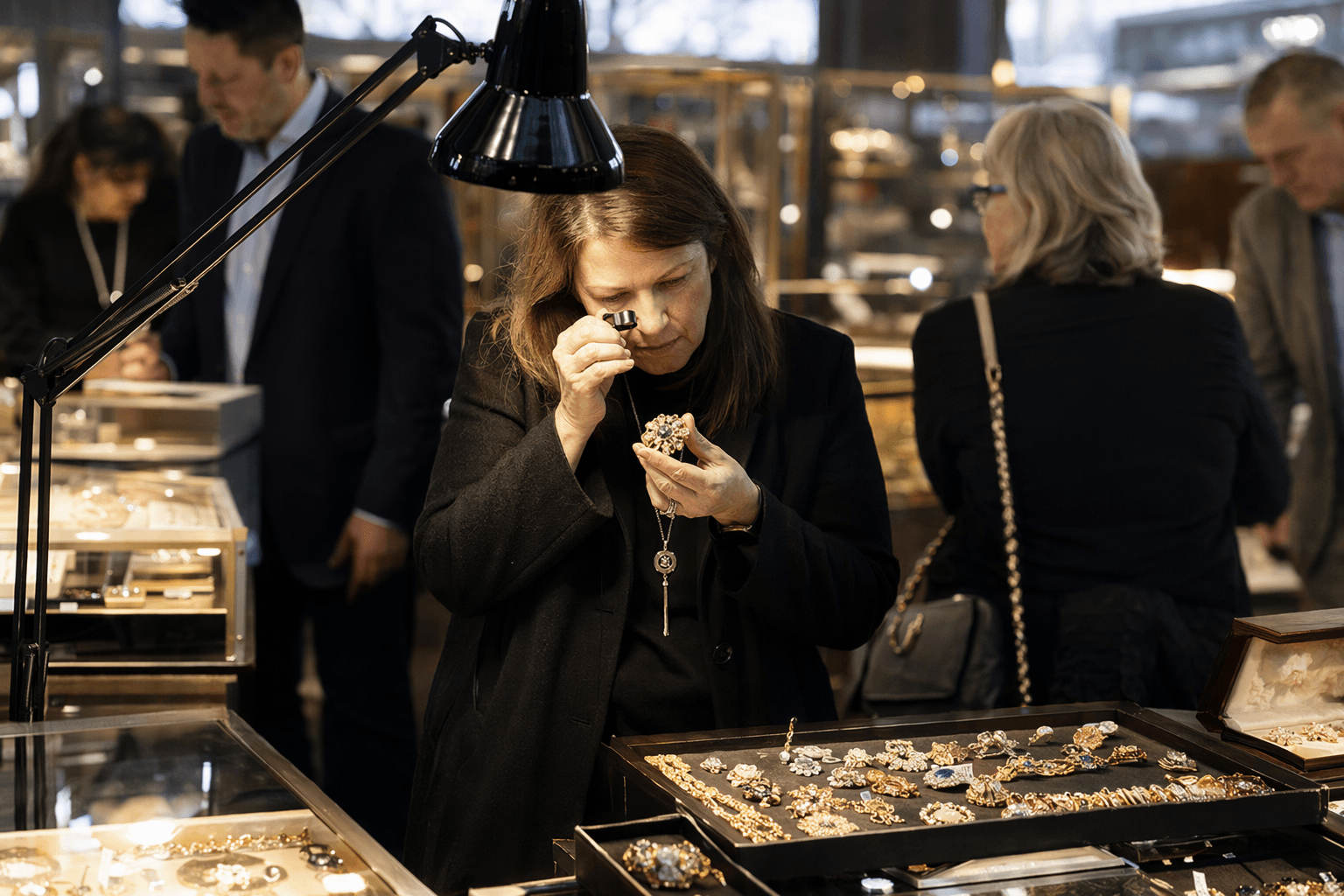
A brooch back is a small archive. Turn it over and the clasp, the hinge, the solder line and the tiny stamp inside the catch can tell you whether you are holding a Victorian relic, an Art Deco survivor or a later restitching of the original jewel.
That is why the 2026 U.S. show calendar matters. It is not simply a list of dates. It is a map of where antique, estate and period jewelry actually surfaces, and where the floor tilts instead toward loose stones, rough material and gem-heavy inventory with little for a vintage buyer to inspect.
The calendar as a buying tool
Xpo Press keeps a live 2026 directory of gem, mineral, fossil and jewelry shows across the United States and Canada, organized by state and by showcase. That structure is more useful than a generic event roundup because it lets you separate a weekend built for collectors from a wholesale floor built for dealers. Tucson and Quartzsite remain especially important waypoints, because those circuits have long functioned as dense, multi-show hubs where jewelry buyers can move from one venue to the next without losing momentum.
The best way to use the calendar is to read it as a filter. If you want old jewelry, look first for shows that explicitly mention jewelry, antique pieces, estate inventory or signed goods. If you want sourcing power, look for trade fairs with business-only access and stricter buying rules. The difference changes not only what is on the tables, but how quickly you need to move once you spot the right clasp, the right hallmark or the right maker’s hand.
Where the strongest vintage floors gather
The Southwest remains one of the most efficient regions for a serious estate-jewelry search. Tucson and Quartzsite are the names that matter most here, not because every case is packed with old gold, but because the overlap of dealers, collectors and satellite shows creates a wide net. In practice, that means more opportunities to compare an Art Deco ring with a midcentury bracelet or to find a signed piece tucked beside a tray of loose stones.
New York has become another important pin on the map. The NYC Jewelry, Antique & Object Show launched a winter edition for January 23 to 25, 2026 after dealer request and customer demand, and its autumn 2025 event expanded to more than 160 exhibiting dealers, quadruple the number at its inaugural show two years earlier. That kind of growth matters because it signals a floor where object culture and jewelry collecting are increasingly meeting in one place.
Las Vegas remains essential, but in a different way. JCK calls its Las Vegas fair the jewelry trade’s most important global gathering, and for good reason: the show has united the industry for more than 30 years and its 2026 dates run May 29 to June 1 at The Venetian Expo. That is where the modern jewelry business concentrates, yet the city also carries a vintage pull of its own through antique and watch-focused satellite fairs.
Read the gate before you walk in
Not every show is meant for the same buyer, and that distinction matters most when you are looking for estate jewelry. Xpo Press’s International Gem & Jewelry Show profile for the Virginia and Maryland market explicitly says buyers can find antique and estate jewelry, along with one-of-a-kind creations, pearls, watches, beaded strands, charms and accessories. That kind of mix is ideal if you want variety and you are willing to sift.
By contrast, the Orlando-area G&LW show is wholesale only and requires a copy of a tax ID or business license for purchases. That rule is not a barrier so much as a signpost. It tells you that the floor is built for professionals who know exactly what they are after and can move quickly when a signed brooch, a matched pair of earrings or a period bracelet comes into view.
- Public-access shows are better when you want to compare styles, handle pieces yourself and build relationships with dealers.
- Wholesale-only fairs are better when you already know your target and can document your buying status.
- Mixed shows are the sweet spot for vintage jewelry because they often combine estate trays, signed designer pieces and repairable classics in the same aisle.
This is the practical split to keep in mind:
What to bring, and what to ask, before you buy
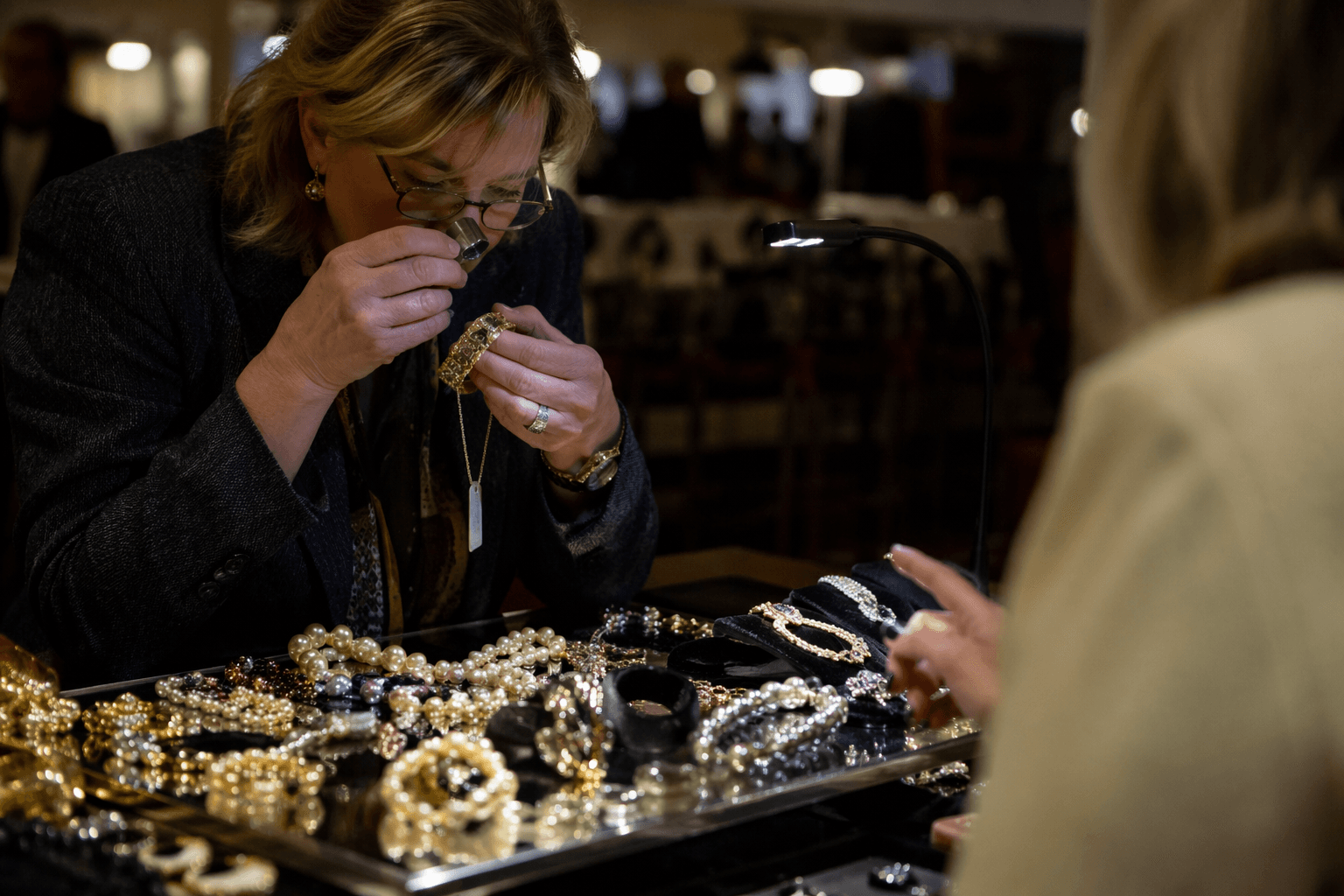
Bring a loupe, a flashlight and the patience to turn every jewel over. The front of the piece sells the fantasy, but the back tells the truth: hallmarks are often tucked inside a shank, on a clasp, under a brooch fitting or along the underside of a pendant bail. Those are the places where maker, metal purity and repair history tend to reveal themselves first.
Ask where the stone is set and why that matters. A bezel can protect a cabochon or a softer stone and often signals a design that values security and clean lines, while prongs may allow more light but also reveal later retipping or replacement work. On antique and estate pieces, those details are not cosmetic trivia. They are part of the object’s biography.
Also ask whether the piece has been resized, re-pinned, re-strung or converted. A Victorian brooch adapted into a pendant can still be desirable, but you want to know if the conversion was done carefully or if the original structure was compromised. On signed jewelry, especially Cartier, Van Cleef & Arpels, Bulgari, Tiffany & Co., David Webb or Verdura, originality can influence not only value but the integrity of the design itself.
Why this calendar is worth keeping open
The broader market confirms that these fairs are not small, niche gatherings. JCK reported more than 30,000 professionals at its 2025 JCK and Luxury shows, including over 17,000 buyers, store owners and media, a scale that explains why the major trade calendar continues to drive the rest of the industry. That same energy spills into the antique and estate side of the market, where collectors and dealers follow the traffic as carefully as they follow the hallmarks.
Xpo Press also traces the lineage of the Denver-area Independent Wholesale Gem & Jewelry Show, which became the International Gem & Jewelry Show in 1996, and notes that it now operates more than 30 IGJS shows nationwide. That history explains the patchwork quality of the American show scene today: legacy brands, regional circuits and wholesale-only venues all coexist, and the buyer who understands the differences has the advantage.
GIA’s museum collection, which spans a 200-year journey through Victorian, Edwardian and Art Deco design, is a reminder that vintage jewelry is not a footnote to the modern market. It is the market’s memory. The best 2026 show calendar is the one that helps you read that memory quickly, before the table is cleared and the piece you wanted has already gone to another hand.
This article was produced by Prism’s automated news system from verified source data, official records, and press releases, then run through automated quality and moderation checks before publishing. The system is built and supervised by the people who set the standards it runs under. Read our full AI policy.
Know something we missed? Have a correction or additional information?
Submit a Tip