Why Younger Buyers Are Turning to Vintage Jewelry, and Antique Diamonds
Small hallmarks and antique cuts are becoming status symbols again, as younger buyers chase jewelry with identity, provenance, and a story they can actually inspect.
The new luxury code is personal, not generic
A tiny stamp inside a clasp, an engraved monogram on a signet, the soft asymmetry of an old mine cut diamond: these are the details younger buyers are learning to read like a language. Vintage jewelry now answers a deeper desire than novelty alone. It offers identity, rarity, and the feeling that a piece was inherited rather than manufactured for a trend cycle.
That shift matters because it is showing up inside a luxury market that has been under pressure. Bain & Company estimated that the global luxury market reached €1.48 trillion in 2024, then projected personal luxury goods sales at €358 billion in 2025 after €364 billion in 2024. It also said the market lost about 50 million customers globally between 2022 and 2024, with younger consumers among the drivers of that contraction. Jewelry has held up better than many other luxury categories, and vintage has moved from insider shorthand to a visible style position.
Why vintage is moving from niche to mainstream
JCK reported in September 2025 that vintage jewelry was no longer confined to a narrow collector set. Pinterest’s fall trend reporting and Taylor Swift’s engagement ring, set with an antique old mine cut diamond, helped push older styles into everyday conversation. That kind of cultural shorthand matters because jewelry is not bought like a handbag or a coat. It is worn close to the body, read by people who notice details, and often chosen to signal permanence.
Pinterest’s 2025 Fall Trend Report framed the shift well: consumers are looking for one-of-a-kind pieces that tell personal stories while keeping planet and budget in mind. That is the heart of the vintage appeal. A pre-owned ring or necklace can feel more singular than a newly manufactured piece, while also satisfying the sustainability-minded buyer who wants fewer new resources used in the making of a jewel.
Auction houses show how durable that appetite has become. Christie’s said its December 2024 Magnificent Jewels sale totaled $87.7 million and sold 100 percent by lot. Recent Christie’s results also highlighted strong demand for colored stones and vintage signed jewels. Sotheby’s continues to position jewelry sales around antique, vintage, and contemporary pieces for both first-time collectors and seasoned connoisseurs, which is a useful reminder that the market is no longer speaking only to specialists.
The categories younger buyers are driving up
The pieces gaining the most traction are the ones that feel like private objects with public style.
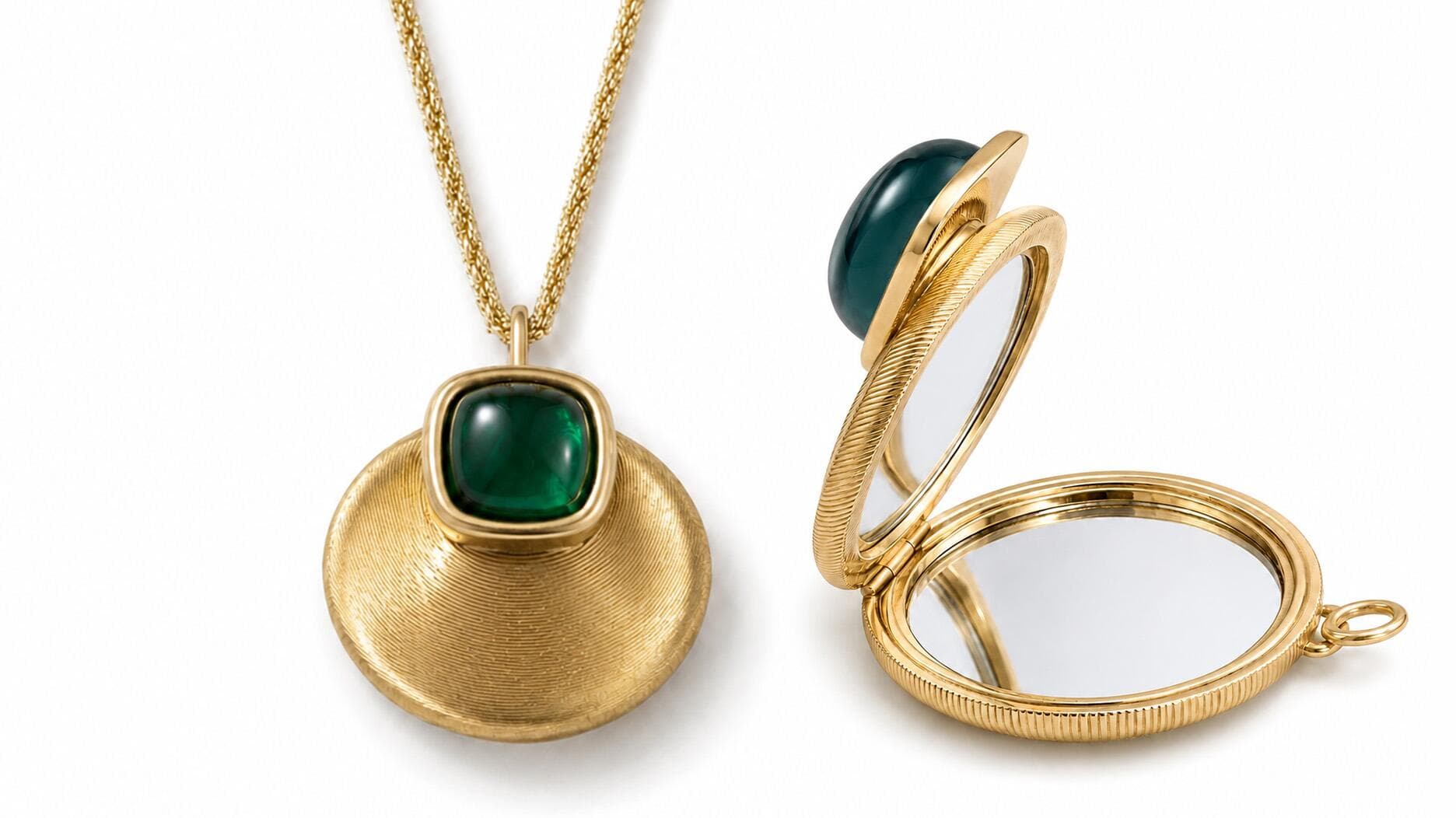
Lockets are back because they are literal containers of memory. A locket can hold a photograph, a lock of hair, a tiny handwritten note, or nothing at all, which gives it an intimacy modern jewelry often lacks. That emotional logic reaches back to the 19th century, when jewelry already included memorial hair pieces used to honor loved ones. A locket does not just decorate the neckline. It suggests a life story tucked under the collar.
Charm bracelets work in a similar way, but with a more accumulative energy. Each charm can mark a trip, a milestone, or an inside joke, turning the bracelet into a wearable chronology. Younger buyers like that flexibility: the piece can begin with one charm and become a personal archive over time.
Signet rings appeal for different reasons. They are compact, assertive, and deeply legible, with a flat surface that can carry initials, family crests, symbols, or a plain polished field. That makes them especially resonant for buyers who want jewelry that feels genderless and self-authored. A signet ring does not need to be loud to be noticed. Its authority comes from form.
Art Deco engagement rings have their own magnetism. The appeal lies in geometry, symmetry, and the unmistakable sense of design intention. These rings often feel architectural rather than romantic in the sugary sense, which is exactly why they resonate now. They signal taste, not conformity. They also photograph beautifully, a not-insignificant detail in a market where jewelry is often first encountered on a screen.
Why antique diamonds look different on the hand
Antique diamonds, especially old mine cuts, are part of this same movement toward individuality. Taylor Swift’s ring put that look in the spotlight, but the appeal runs deeper than celebrity. Old mine cuts are hand-cut stones from an earlier era, usually with a softer outline and a less mechanical symmetry than modern brilliant cuts. They often feel warmer and more intimate because their faceting was made for candlelight, gaslight, and the lower glow of earlier interiors.
That matters to a younger buyer who wants a diamond that does not read as default. An antique stone says someone chose a particular shape, a particular period, and a particular imperfection pattern. In a world of mass-produced sparkle, that kind of specificity feels luxurious.
How to inspect a vintage jewel like a collector
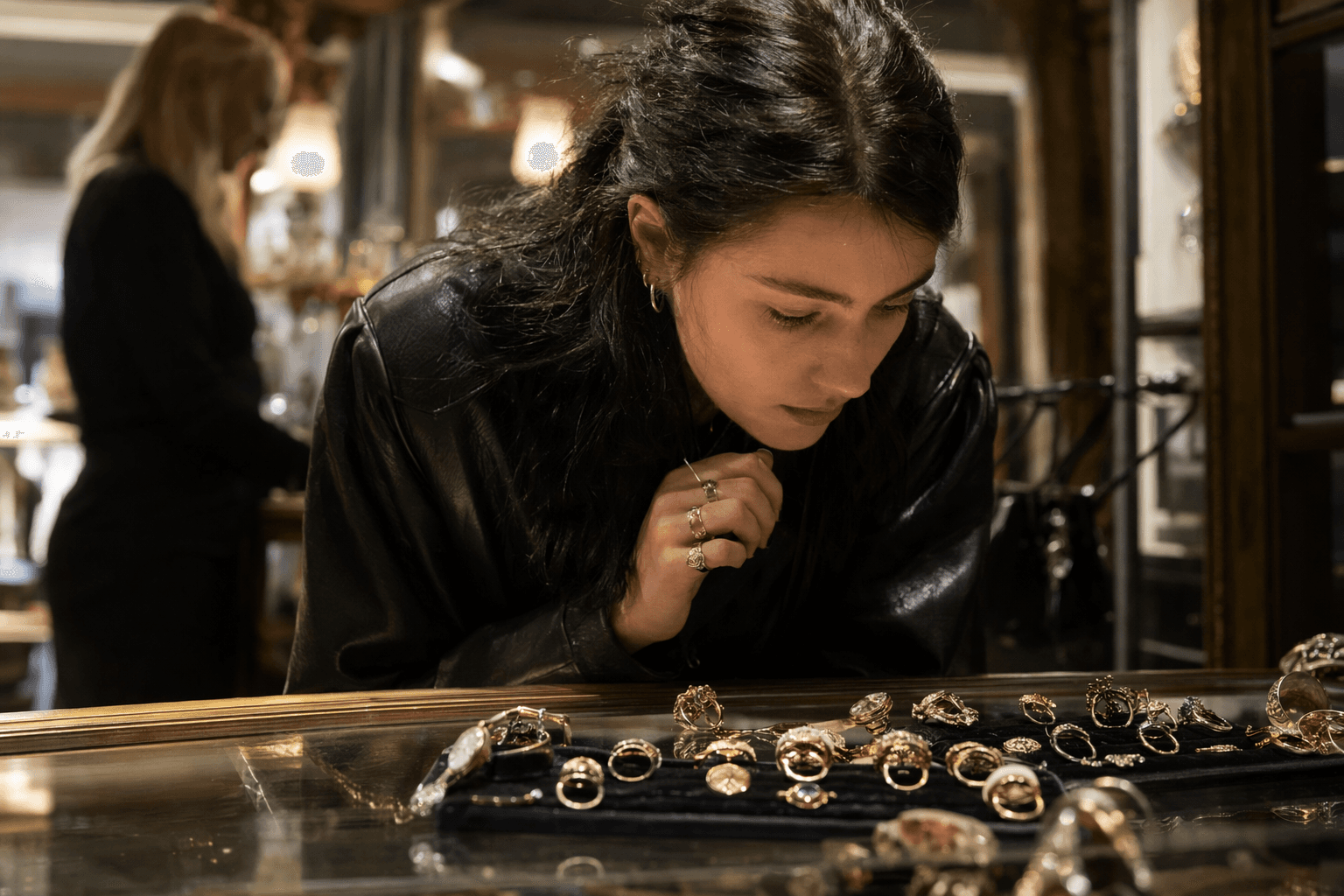
The best way to read vintage jewelry is the same way a dealer does, by looking closely at the evidence that lives in the object.
- Check the clasp, the interior of a ring shank, the back of a brooch, and the fold of a pendant bale for hallmarks, purity marks, and maker’s stamps.
- Look for consistency between the setting and the stone. An antique diamond in a later mounting can still be desirable, but the piece should make sense as a whole.
- Study wear patterns. Gentle abrasion on a clasp or shank can be honest history; sloppy repairs and mismatched soldering are different matters entirely.
- Ask whether the design matches its claimed era. Art Deco should look crisp and geometric, not merely “old.” A locket should feel proportioned for the body, not oversized in a way that mimics a later revival.
The Metropolitan Museum of Art notes that 19th-century jewelry already carried memorial and sentimental meaning, and that the American jewelry industry moved from small workshops toward mechanized production by the mid-19th century. That history explains why older pieces often feel so specific. They come from a moment when jewelry still carried a stronger trace of handwork and emotional intent.
Why this trend has staying power
De Beers Group has repeatedly shown that younger buyers are not only chasing beauty. Its 2021 Diamond Insight Report said sustainability now ranks on par with price and design, led by younger consumers. Its 2022 research added that Gen Z responds to ethical assurances, branded offerings, phygital retail, and Web3 experiences. Earlier research found that Gen Z and Millennials together accounted for two-thirds of global diamond demand.
That combination explains the appeal of vintage jewelry so clearly. It offers a visible story, a finite supply, and a way to signal taste without looking overproduced. For younger buyers, the jewel is not simply something to wear. It is a small archive of maker, era, material, and memory, and that is exactly why antique diamonds and heirloom-era pieces now feel so newly desirable.
This article was produced by Prism’s automated news system from verified source data, official records, and press releases, then run through automated quality and moderation checks before publishing. The system is built and supervised by the people who set the standards it runs under. Read our full AI policy.
Did this article answer your question?