Barbara Walters Ruby Bracelet Anchors Oak Ridge Estate Jewelry Show
Barbara Walters’ ruby bracelet gives Oak Ridge collectors a lesson in provenance, where a clasp, a hallmark and a star name can all shift value.
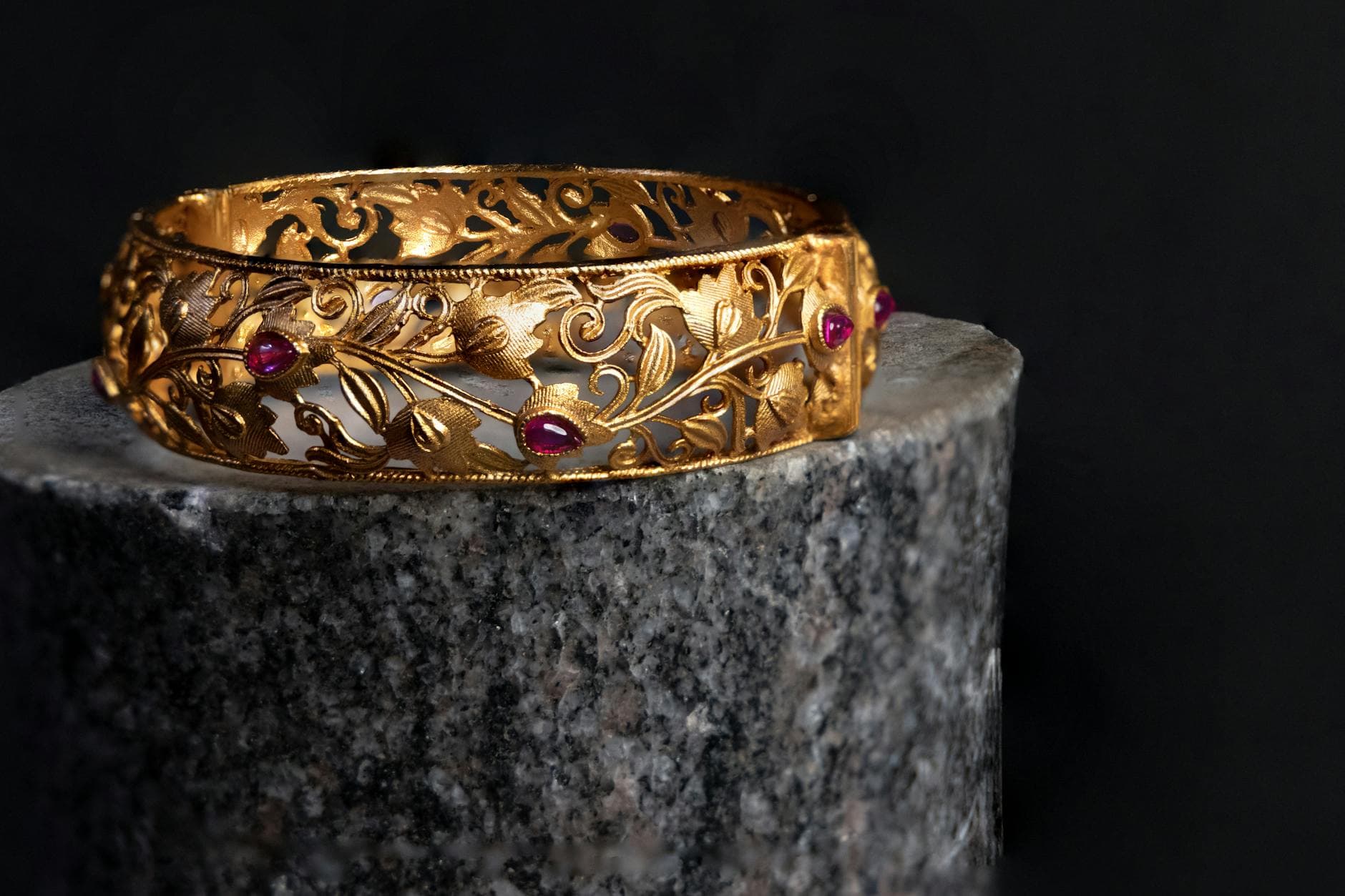
Barbara Walters’ ruby bracelet is the kind of jewel that changes the way a collector reads a display case. A stone can be beautiful on sight, but a bracelet with documented celebrity wear becomes something else entirely: a small archive of taste, era, and ownership that asks to be examined as closely as it is admired.
The bracelet as the entry point
The Oak Ridge Estate Jewelry Show and Sale at Karen’s Jewelers puts that idea front and center with a ruby bracelet worn for several special occasions by Barbara Walters. Walters was no ordinary name attached to a jewel. She became the first woman co-host of Today in 1974 and the first female co-anchor of a U.S. network evening news program in 1976 on ABC Evening News, a career that made her one of the most recognizable broadcasters in American television.
That kind of recognition matters, but not in the simplistic way many collectors assume. Celebrity provenance can deepen a piece’s narrative, yet the bracelet still has to stand up as jewelry. The color of the ruby, the quality of the pearl work, the integrity of the mounting, and the condition of the clasp all matter as much as the story attached to it.
Barbara Walters died on December 30, 2022, at age 93, and the market response to her estate showed how powerful that story can be. Bonhams’ 2023 sales of jewelry from her collection totaled $5 million, with net proceeds designated for charities dear to Walters. Among the results, a ruby and cultured pearl torsade bracelet sold for $7,040 including premium, a reminder that provenance can draw intense attention without erasing the need for real jewelry judgment.
Why provenance matters, and where it can mislead
Celebrity-linked provenance changes how collectors evaluate estate jewelry because it adds a second layer of value: historical association. If a bracelet can be tied to Barbara Walters, the piece carries the cachet of her public life, and that can make a local estate show feel more consequential than a generic trunk sale. It also helps explain why even modestly priced estate pieces can become fiercely interesting when they arrive with a verifiable backstory.
But star power can mislead when the story is louder than the object. A well-known owner does not automatically make a jewel rare, beautifully made, or original. The most important question is whether the documentation matches the piece in front of you. Auction catalog entries, photographs, original paperwork, family records, and any mention of special wear can all help distinguish a true provenance chain from a convenient legend.
The same discipline applies whether you are looking at a bracelet, a ring, or a brooch. A celebrity name should sharpen your eye, not replace it. If the jewel has been altered, reset, or heavily repaired, that may reduce the premium attached to the ownership story. In estate jewelry, narrative is a layer of value, not a substitute for craftsmanship.
How to inspect a piece like a collector
Estate jewelry rewards close looking. The tiny stamps inside a clasp, the shape of the prongs, and the way a stone sits in its setting can reveal more than any sales tag. Those marks are a compressed record of maker, origin, and purity, and they are often the fastest route to understanding whether a piece belongs to its period or has been modernized.
A few details deserve particular attention:
- Hallmarks and purity stamps: Look inside clasps, on bracelet tongues, beneath ring shanks, and along necklace backs for karat marks, platinum stamps, maker’s initials, and workshop symbols.
- Setting style: A bezel setting, where metal encircles the stone, can signal a period look and offers more protection. A prong setting exposes more of the gem and often creates a lighter visual feel, but it may also suggest later work if the piece is older than the mounting.
- Cut and character of the stone: Antique-cut diamonds often show a different life in the light than modern brilliant cuts, with broader facets and an older silhouette that suits Edwardian and Art Deco design.
- Surface wear and repairs: Honest wear is part of estate jewelry’s appeal, but replaced stones, re-tipped prongs, and newer clasps can change both the value and the story.
These details matter because they tell you whether a jewel has aged naturally or been refreshed into something newer than it claims to be. That difference is not academic. It affects price, collectability, and whether a piece still reads as a period object.
Why the Oak Ridge show deserves a collector’s eye
Karen’s Jewelers is staging the Oak Ridge sale as more than a celebrity showcase. The event includes vintage engagement rings, pearls, cameos, antique-cut diamonds, platinum, and filigree designs, with prices ranging from $500 to more than $50,000. An estate jewelry expert will be on hand, which is exactly the right setting for evaluating pieces that may span different eras and levels of rarity.
Karen’s Jewelers defines estate jewelry simply as previously owned jewelry, even if it did not come directly from an estate. That definition is important because it broadens the field beyond inherited family pieces and opens the door to anything with prior life, prior wear, and prior story. At a table like this, a Victorian cameo and a mid-century platinum ring may live side by side, but they ask very different questions of the collector.
Oak Ridge has already shown that it likes to stage estate events with range. A similar show in 2025 featured celebrity-owned jewelry and pieces spanning the Victorian through late-20th-century eras, reinforcing the idea that these sales are as much about period literacy as they are about glamour. The strongest pieces in a case like this are the ones that balance provenance, condition, and design integrity, whether they are signed or unsigned.
What value looks like in the wild
At an estate show, price alone tells only part of the story. A bracelet priced at $500 may offer a compelling antique-cut stone or a beautifully preserved filigree setting, while a piece above $50,000 should justify itself through rarity, condition, materials, and documentation. That is especially true with celebrity-linked jewelry, where the premium often rests on a narrow bridge between biography and object.
Barbara Walters’ bracelet is instructive because it shows how collectors should think. The name opens the door, but the bracelet still needs to earn its place through the ruby’s quality, the pearls’ matching, the workmanship of the torsade form, and whatever records support the chain of ownership. The same logic governs every case at an estate show: read the marks, inspect the setting, weigh the period details, and decide whether the story is supported by the jewel itself.
That is the real pleasure of estate jewelry. It is not simply older than what comes in a new display tray. It is layered, legible, and often surprisingly revealing, especially when a famous wrist or a forgotten clasp turns a beautiful object into evidence.
This article was produced by Prism’s automated news system from verified source data, official records, and press releases, then run through automated quality and moderation checks before publishing. The system is built and supervised by the people who set the standards it runs under. Read our full AI policy.
Did this article answer your question?