A$AP Rocky mixes Chanel diamonds with antique Codognato jewels at the Met Gala
A$AP Rocky’s Met Gala jewels turned antique references into a decoding lesson, from Codognato skulls to a Byzantine medallion and an English gold watch fob.
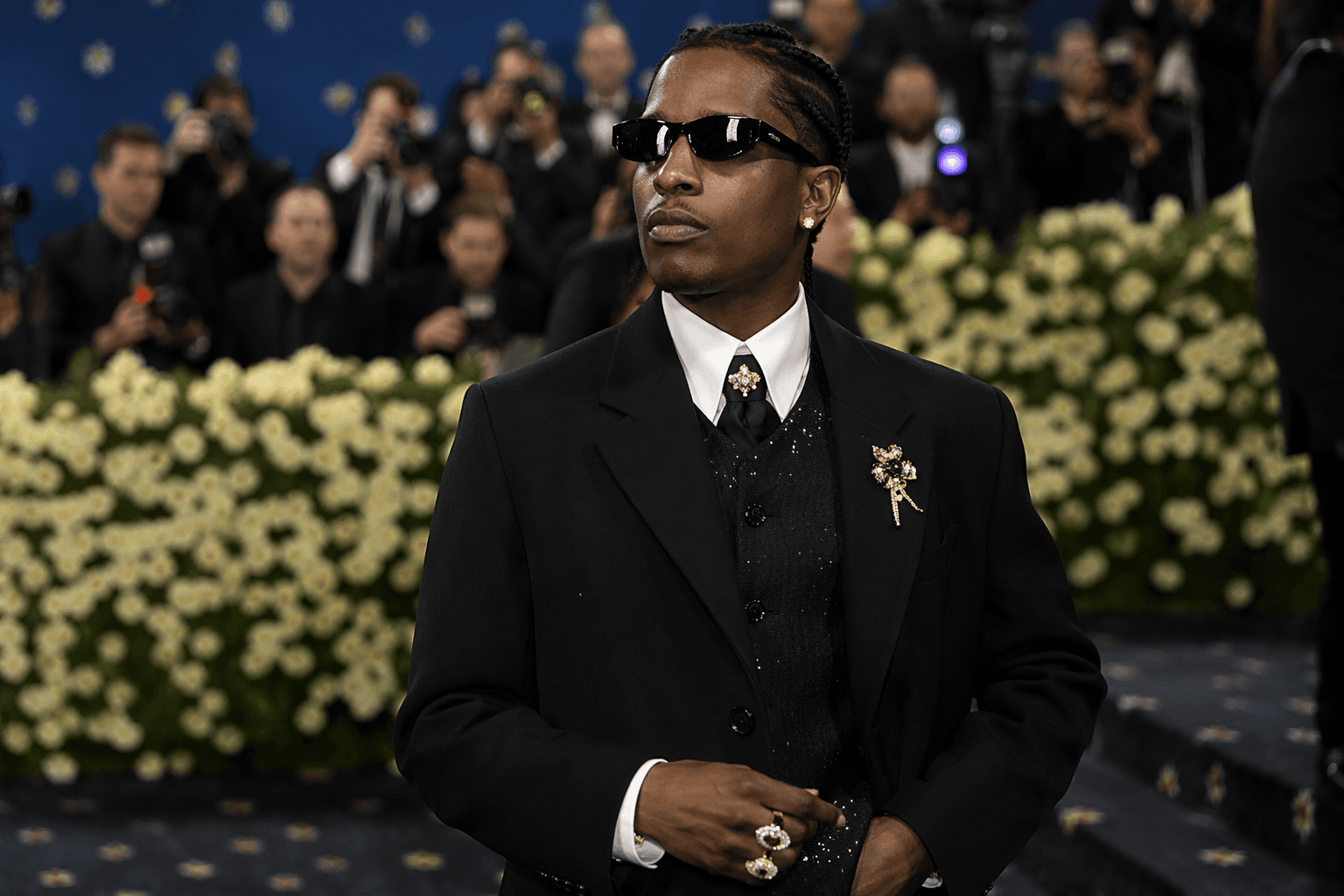
A$AP Rocky’s Met Gala jewelry did something rare on a red carpet: it behaved like a syllabus. He paired contemporary Chanel diamonds with antique Codognato jewels, including a Byzantine medallion from the 1880s and an 1800s English gold watch fob, and in that mix the old codes became legible again. At the 2026 Met Gala, staged on Monday, May 4, for the Costume Institute’s "Costume Art" exhibition and the dress code "Fashion Is Art," the message was unmistakable: vintage jewelry is no longer a niche pursuit, but a living language.
A red carpet with an archive inside it
The power of Rocky’s look lies in the way it collapses eras without flattening them. His Chanel diamonds brought the clean, polished authority of contemporary high jewelry, while the antique references gave the entire composition a sharper, more narrative edge. In a year when the Met said "Costume Art" was the first exhibition installed in the museum’s new Condé M. Nast Galleries, a nearly 12,000-square-foot space off the Great Hall, the jewelry felt perfectly in step with the setting: collectible, referential, and meticulously edited.
The exhibition itself was built around breadth as much as spectacle, with about 400 objects slated to be shown, including approximately 200 garments and accessories and 200 works of art. That scale matters because Rocky’s jewels seemed to answer the curatorial premise directly. They were not just adornment, but evidence that jewelry can move between archive, artwork, and wardrobe without losing force.
How to read a Codognato jewel
Maison Codognato is the name to know when the subject is antique-minded jewelry with a subversive streak. Founded in Venice in 1866 by Simeone Codognato, the house has long been associated with skulls, memento mori motifs, and an appetite for archaeological and antique references. Over more than 150 years, and just steps from Piazza San Marco, it has counted Gabrielle Chanel, Jean Cocteau, and Diana Vreeland among its clients, which says everything about its appeal: intellectual, slightly gothic, and unmistakably elite.
When you are trying to identify a Codognato-inspired piece, look for the tension between elegance and mortality. Skull jewels are rarely cartoonish in this vocabulary; they tend to feel sculptural, compact, and deliberate, with a serious silhouette rather than a theatrical one. The appeal is not shock value. It is the quiet glamour of memento mori, a reminder that luxury has always had a dark side.
- Skull motifs usually read as vanitas imagery, not novelty.
- Codognato pieces often feel archaeological in spirit, as if excavated from another century.
- The best examples are less literal costume than wearable relics, designed to be read, not just seen.
Beth Bernstein, the jewelry historian and author of six jewelry books who wrote the profile of Rocky, is especially attuned to that visual grammar. Her framing makes sense because Codognato is not merely decorative; it is historically charged. The house’s signatures invite the wearer to step into a lineage that includes Chanel and Cocteau as much as any modern celebrity.
What a Byzantine medallion tells you
The antique Byzantine medallion Rocky wore, dated to the 1880s, is the kind of object that rewards close looking. Byzantine-inspired jewels are often identified by their weight, symmetry, and sense of ceremonial presence. They tend to feel more like medallions, icons, or relics than conventional pendants, which is precisely why they carry such modern authority when worn on the body.
In a vintage case, a medallion like this should read as more than a round ornament. Pay attention to how it hangs, how the surface is treated, and whether the design seems to borrow from ecclesiastical, imperial, or classical motifs. The best antique examples project gravitas; they do not chatter. On Rocky, that old-world density gave the look a collector’s seriousness, the kind of detail that makes a suit feel curated rather than simply styled.
Why the English gold watch fob matters
The 1800s English gold watch fob is perhaps the most useful clue in Rocky’s look for anyone building a vintage jewelry vocabulary. A watch fob was originally a functional companion to a pocket watch chain, a small decorative object meant to live at the waistcoat. When reimagined today, it becomes something more fluid: a pendant, a charm, or a clipped jewel with a distinctly masculine history.
Its appeal lies in scale and structure. Fobs are usually compact, engineered, and cleanly proportioned, which makes them adaptable to modern wear. If a piece feels slightly formal, technically precise, and rooted in gentleman’s dress rather than evening sparkle, a watch fob lineage may be hiding in plain sight. Rocky’s version showed how one of the most practical objects in the antique jewelry cabinet can become unexpectedly contemporary when removed from its original context.
The craftsmanship behind the contemporary finish
Rocky’s historical references were anchored by Briony Raymond’s work in New York, where a cigarette case and wristlet element was made by hand in 18K white and yellow gold and set with more than 200 natural round brilliant diamonds. That combination of materials matters. White gold sharpens the brightness of the diamonds, while yellow gold introduces warmth and a more traditional jewelry cadence, making the piece feel both tailored and ceremonial.
Raymond’s role also reinforces how the old and new are now inseparable in men’s high jewelry. Coverage from the previous year noted that she created an umbrella set with 90 carats of diamonds for Rocky’s Met Gala look, a detail that confirms the scale of the collaboration. This is not decorative excess for its own sake. It is a sustained experiment in what men’s jewelry can become when craftsmanship, wit, and historical fluency are given equal weight.
Why this moment has cultural cachet
What Rocky wore signals a larger shift in taste. Skull jewels, Byzantine medallions, and archival statement pieces are gaining traction because they offer something many contemporary jewels do not: narrative depth. They carry provenance in their forms, and even when newly made, they reference a past that feels rich enough to wear.
That is why his Met Gala appearance resonated beyond celebrity styling. It showed that vintage and antique-inspired jewelry can function as wearable art, and that the most compelling modern jewelry culture is increasingly built on interpretation rather than reinvention alone. The strongest pieces now do more than sparkle; they ask to be read.
This article was produced by Prism’s automated news system from verified source data, official records, and press releases, then run through automated quality and moderation checks before publishing. The system is built and supervised by the people who set the standards it runs under. Read our full AI policy.
Know something we missed? Have a correction or additional information?
Submit a Tip