Asheville opens first permanent U.S. museum devoted to costume jewelry
Asheville’s new Museum of Costume Jewelry spans 750 pieces in 31 exhibits, from Art Nouveau to Lucite-era looks once worn by Josephine Baker and Katharine Hepburn.
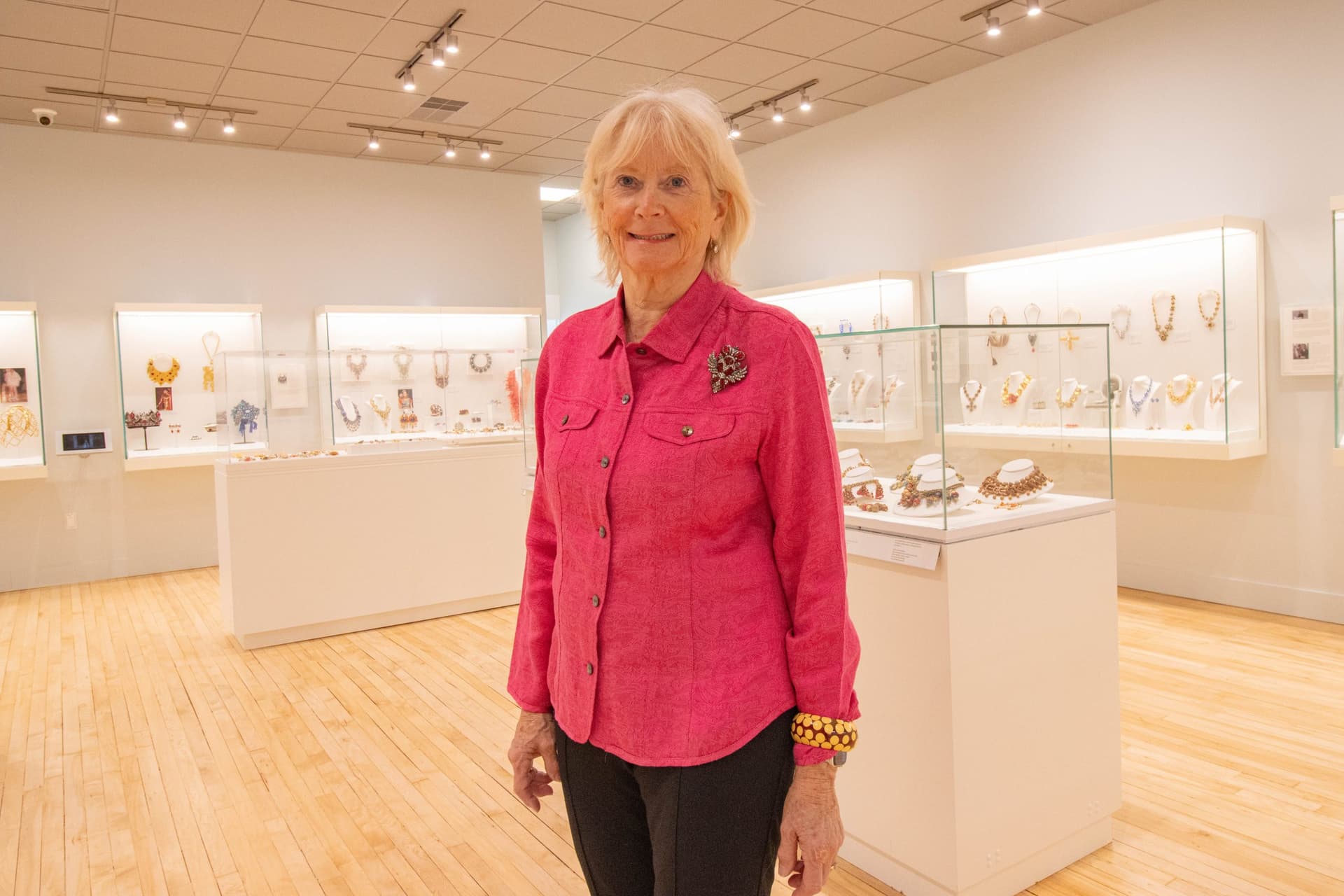
In downtown Asheville, costume jewelry has been given the kind of address usually reserved for fine gems: 60 Haywood St., where the Museum of Costume Jewelry opened with 750 pieces arranged across 31 exhibits. Sharon Ryback, the founder, says it is the only permanent museum of its kind in the United States, and the scale of the installation makes the argument quickly and convincingly. This is not a case for trinkets as decoration. It is a case for costume jewelry as a coded archive of style, technology, and social aspiration.
The museum’s exhibits move from Art Nouveau and Art Deco into Hollywood glamour, post-World War II scarcity, 1970s Lucite fashions, and contemporary costume jewelry, a sequence that reads like a collector’s field manual. Art Deco pieces, with their disciplined geometry and crisp metalwork, reward a close look at construction and symmetry. Lucite-era jewels demand attention to color saturation, molding, and surface condition, while Hollywood-style brooches and necklaces often reveal their pedigree through scale, drama, and the confidence of their settings. Among the names represented in the collection are Coco Chanel, Elsa Schiaparelli, Miriam Haskell, Christian Dior, and Joseff of Hollywood, designers whose work often turns on signature silhouettes, recognizable materials, and the kind of craftsmanship that can survive decades of wear.
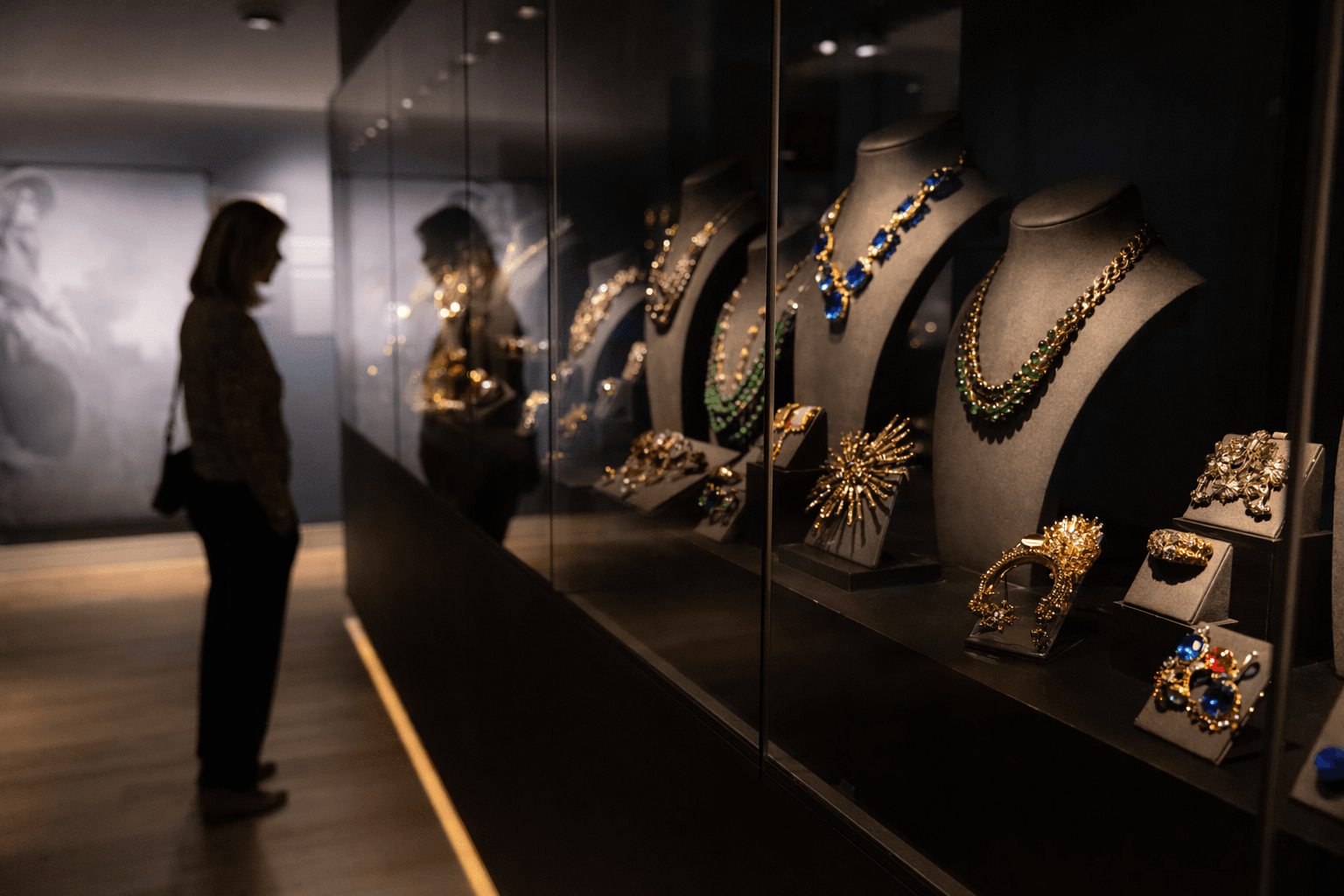
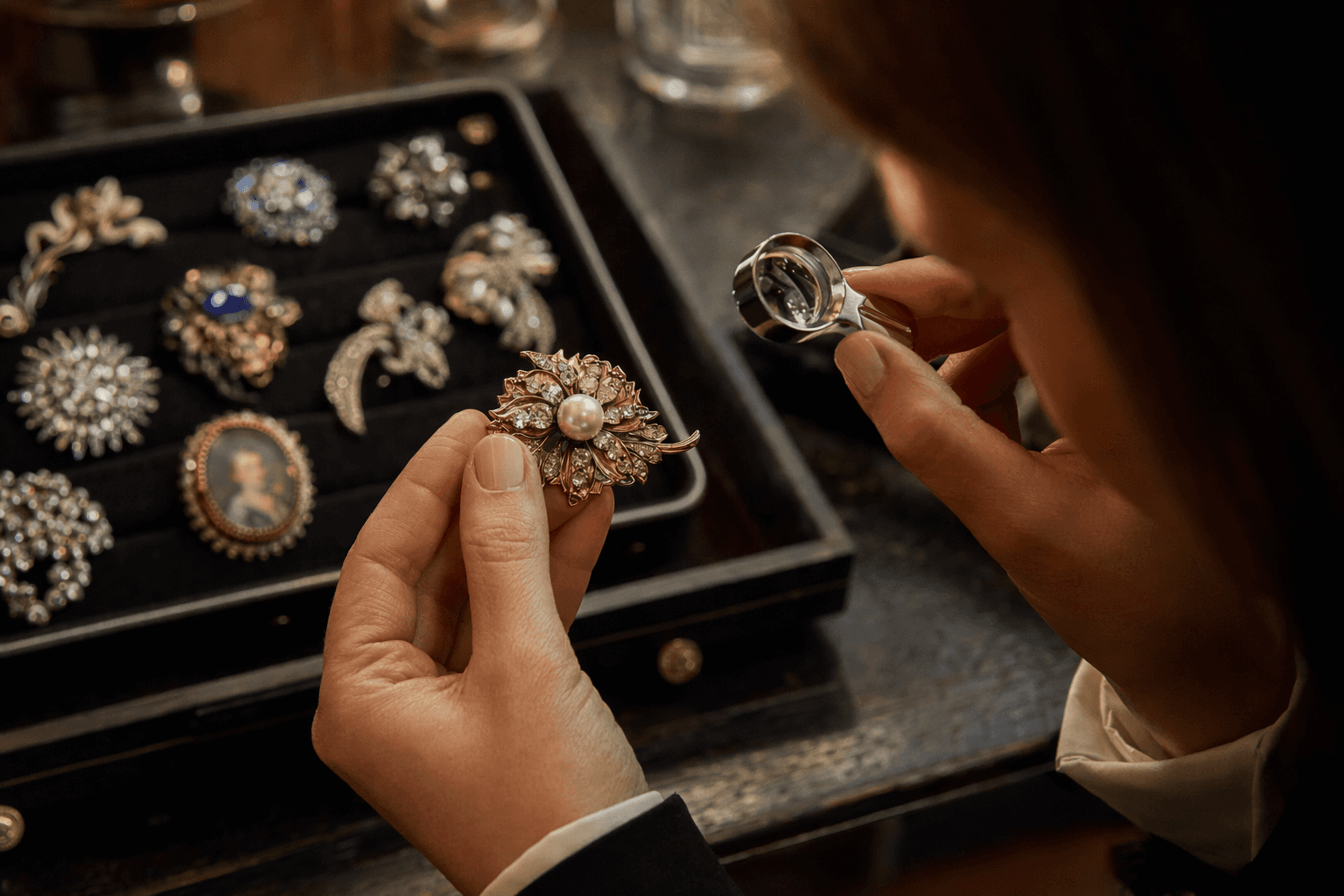
That historical range is anchored by pieces associated with Josephine Baker and Katharine Hepburn, a reminder that costume jewelry has always lived in the space between performance and personal identity. Baker’s association points to ornament as spectacle, while Hepburn evokes the precision of accessories that sharpen a silhouette rather than overwhelm it. For anyone sorting through an inherited brooch or an estate-sale necklace, that distinction matters: look for the clasp, the backing, the signatures, and the period logic of the design. A piece that feels stage-ready may still be meticulously made, and a modest stamp can matter as much as a visible sparkle.
Ryback said the project was shaped in part by a visit to the Museum of Bags and Purses in Amsterdam, an encounter that helped turn a private collecting passion into a public institution. The museum’s mission extends beyond display to collection, preservation, research, exhibitions, publications, lectures, oral and visual history, and educational programming. Its learning center is intended to serve Western North Carolina students, local residents, and visitors, while the gift shop will carry resource books and jewelry-related finds.
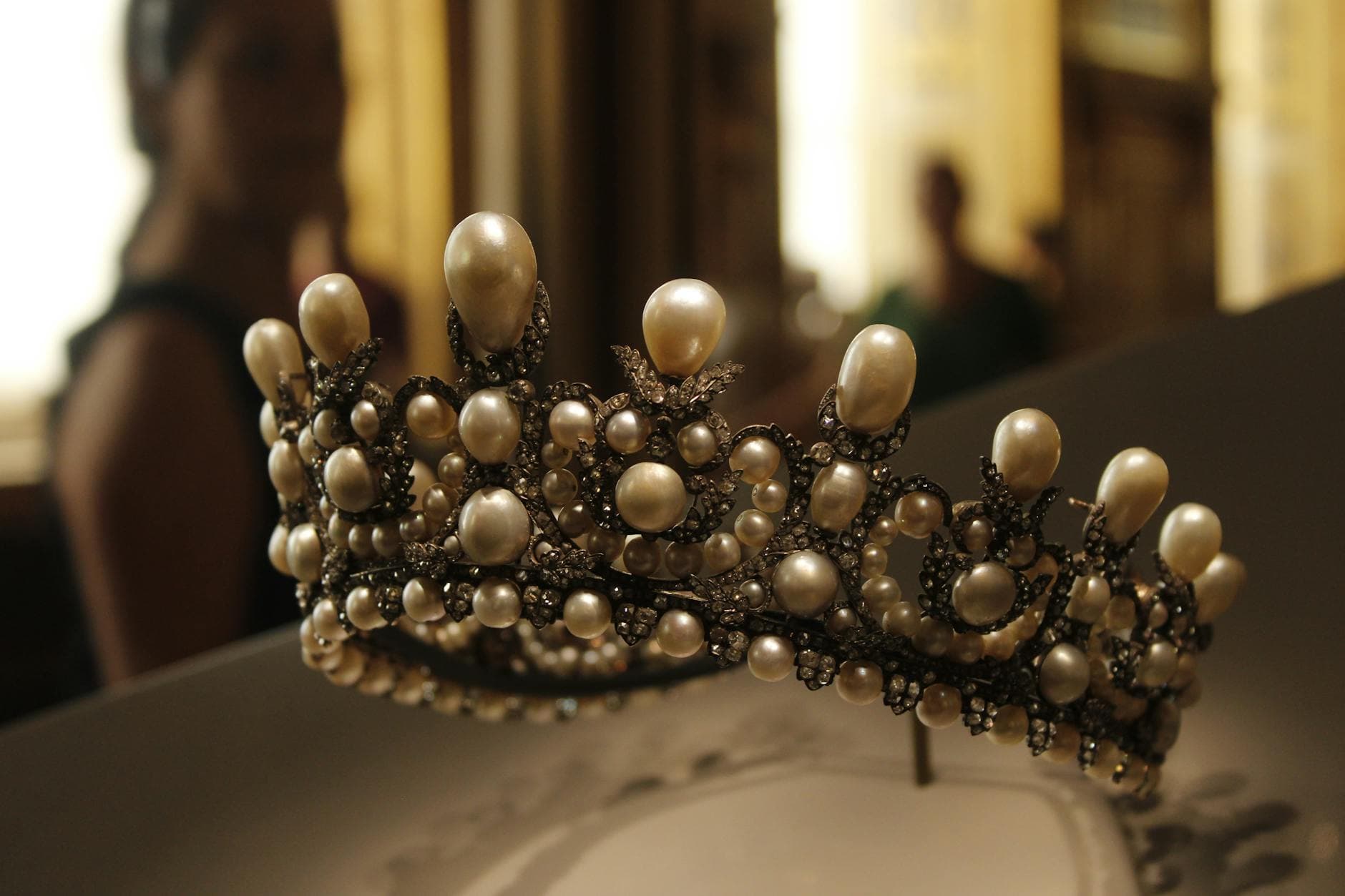
The opening also fit Asheville’s broader cultural rebound after Hurricane Helene, with Explore Asheville folding the museum into the city’s 2025-2026 revival narrative. Collectors and tourists came through the doors, including New York jewelry designer Iradj Moini, a sign that the museum is already speaking to both trade insiders and the public. In a field too often dismissed as secondary, Asheville has given costume jewelry a permanent room of its own, and the label on the door now reads like a correction.
Know something we missed? Have a correction or additional information?
Submit a Tip