Hancocks London acquires Victorian Inchiquin emerald jewel with royal lineage
A 5.67-carat Colombian emerald with O’Brien family provenance and a convertible Victorian setting has joined Hancocks London’s St. James’s townhouse.
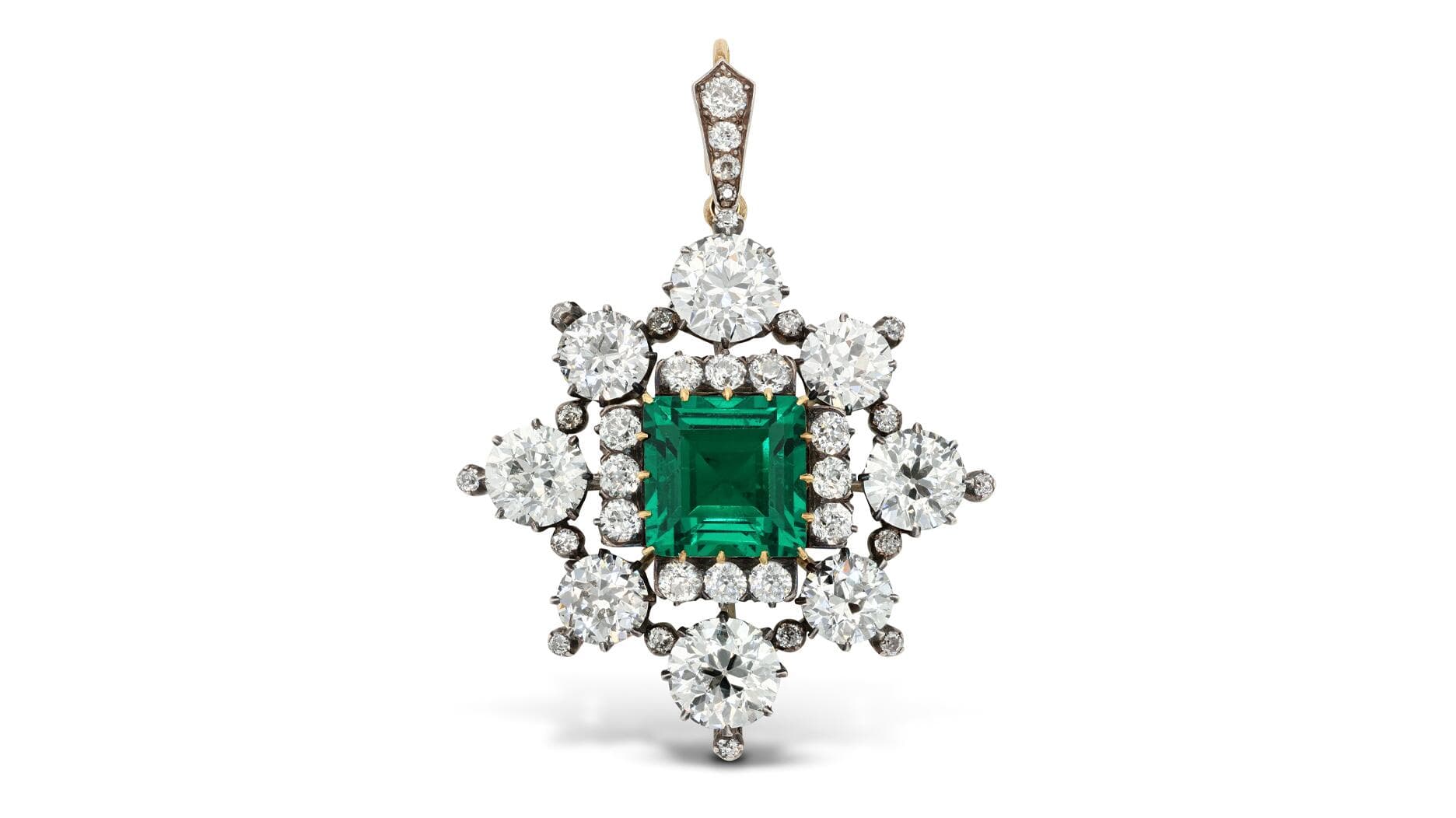
A 5.67-carat Colombian emerald with a documented O’Brien family history has become the latest named jewel to pass through Hancocks London, and its value rests on more than size alone. The late-Victorian piece, dating to circa 1890, centers the Inchiquin emerald and can be worn either as a bangle or as a pendant, a reminder that Victorian jewelers prized ingenuity as much as display.
The jewel’s construction is part of its appeal. The emerald sits in yellow gold claws and is encircled by twelve old mine-cut diamonds and eight larger old European-cut diamonds, with diamond points bringing the total diamond weight to approximately 10.50 carats. The gemstones are mounted in silver and gold, and a fixed loop on the reverse allows the jewel to detach from its bangle fitting and be worn as a pendant. Hancocks says that kind of convertible design is exactly the sort of practical invention that set the Victorian era apart.
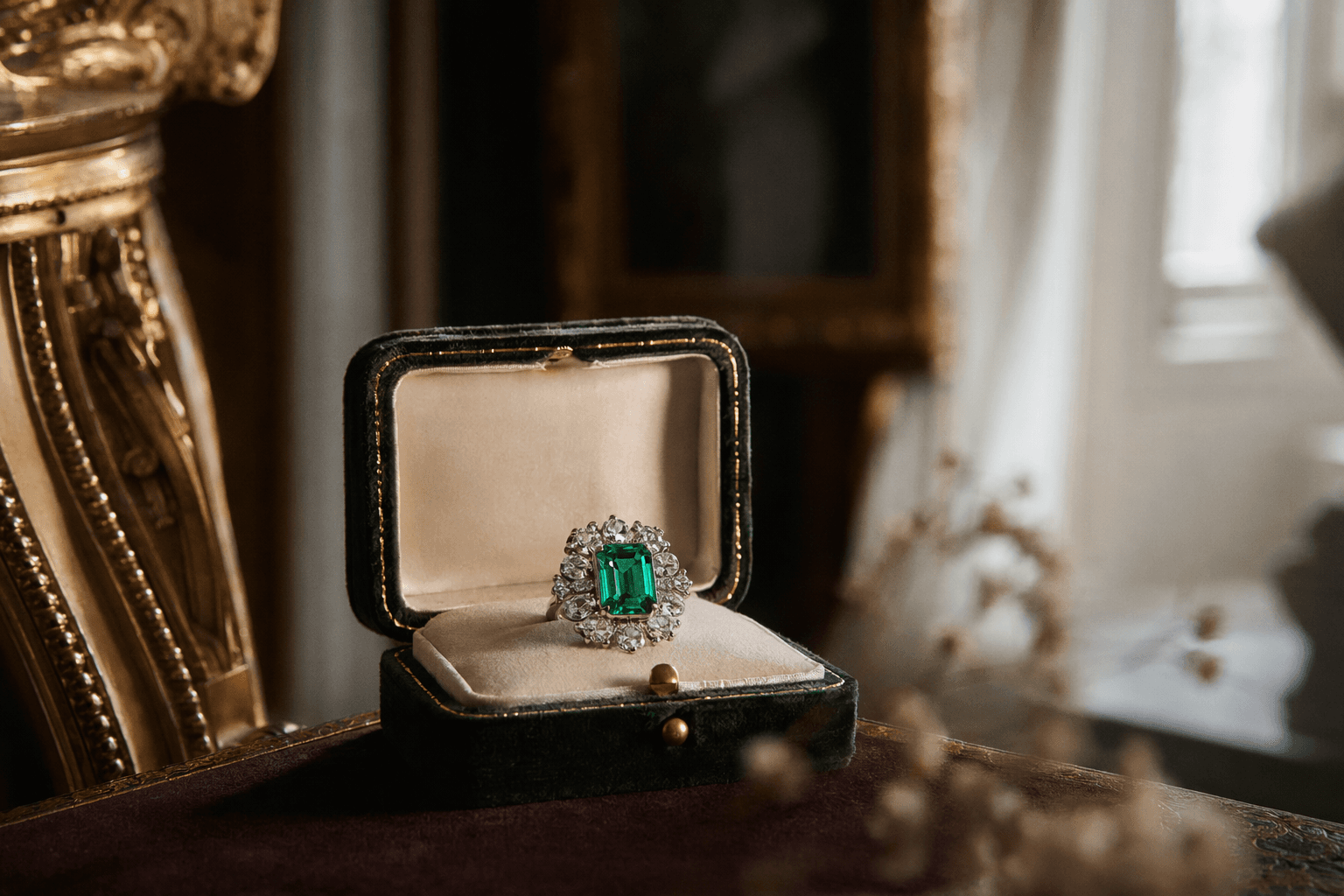
The provenance is equally specific. The title Baron Inchiquin was created by Henry VIII in 1543 for Murrough O’Brien, and the O’Brien line traces back to Brian Boru, high king of Ireland from 1002 to 1014, who died at the Battle of Clontarf on April 23, 1014. The jewel was given to Ethel Jane Foster when she married the Honourable Lucius William O’Brien in 1896. Lucius later succeeded as the 15th Baron Inchiquin in 1900, and the jewel remained within the family, which had six children.
That continuity matters because the strongest vintage jewels carry evidence at every layer: the named stone, the family link, the period setting, and the surviving paper trail. Lady Ethel Inchiquin recorded the piece in her 1939 will as her “large emerald and diamond bracelet given me by my mother on my marriage,” a detail that turns a handsome emerald jewel into a documented heirloom. In the vintage market, that kind of written record can matter as much as the mount itself.
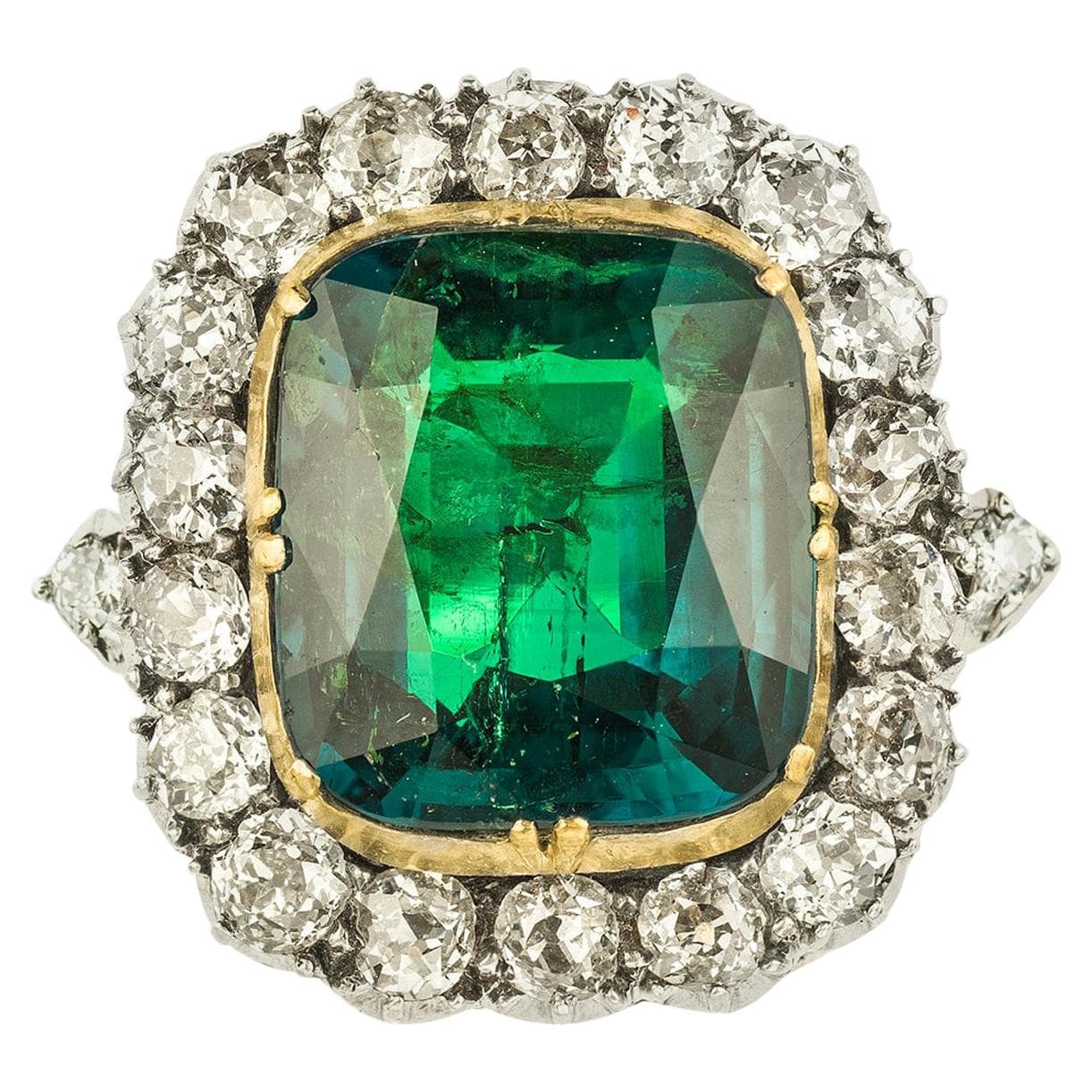
The gemological report sharpens the story further. The Swiss Gemmological Institute identified the emerald as Colombian in origin and found no indications of clarity modification in fissures at the time of testing, a notable point for emeralds, where fissure filling is common. Guy Burton, managing director of Hancocks London, said the Inchiquin emerald belongs to an exceptionally small group of named heritage jewels available today, and that jewels of this caliber come to market very rarely.
Hancocks moved in March 2024 from Burlington Arcade to a three-floor Georgian townhouse in St. James’s, where it has been leaning into antique and vintage jewelry, including educational talks on Colombian emeralds. The Inchiquin piece is now on display there with price upon request, a fit for a jewel whose story is anchored in family descent, royal-era title, documented ownership, and a stone whose origin and condition have been independently described with unusual precision.
Know something we missed? Have a correction or additional information?
Submit a Tip