Brooches gain collector appeal as provenance drives demand
Brooches are being rediscovered as tiny archives: maker marks, clasp construction, and ownership history can matter more than the latest runway moment.
Brooches as objects with a memory
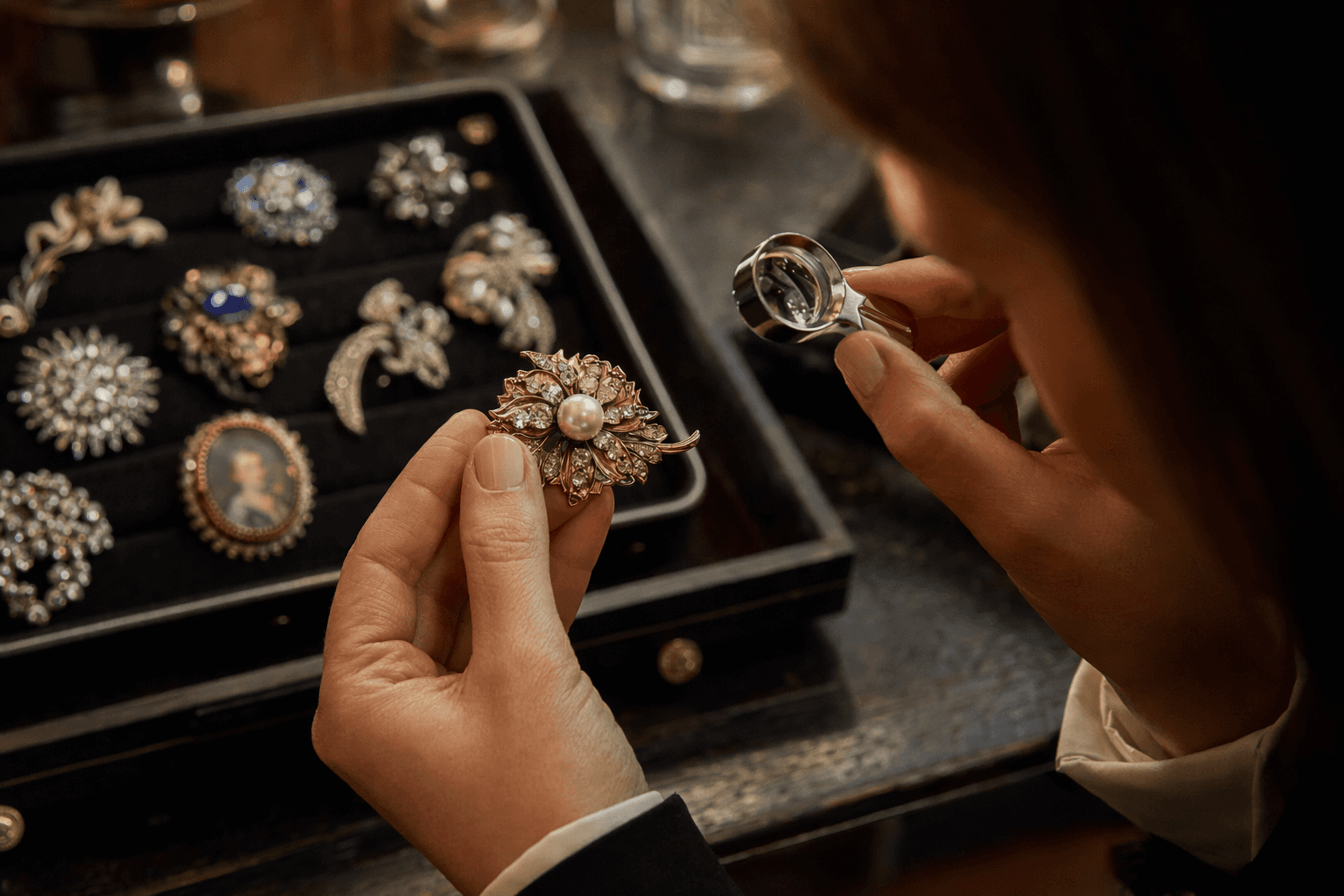
A good brooch never asks to be judged only by the outfit around it. It arrives with a backstory in metal, a clasp, a pin stem, a maker’s mark, and sometimes the faint evidence of earlier lives. That is why the category keeps returning to collectors even when fashion cycles look elsewhere: a brooch can be read, not just worn.
The strongest examples reward the same kind of attention you would give a signed ring or an important bracelet. Look closely at the reverse, and the piece begins to tell you whether it was made by a major house, adapted later, or worn hard enough to leave the kind of honest wear that collectors prize. In brooches, provenance is not a luxury extra. It is often the thing that turns decoration into an object of consequence.
From fastener to jewel
Brooches began as functional fasteners long before they became ornaments. The first recorded examples were made of thorns and flint, and metal pins date back to the Bronze Age. By the Middle Ages, the form was already widely worn, and over time it became more symbolic, more decorative, and more personal.
That evolution explains why brooches feel so layered today. They have served as practical closures, status symbols, mourning jewels, and fashion statements across eras as varied as the Celtic and Viking periods, Victorian mourning culture, the 18th and 19th centuries, and later Edwardian and Art Deco dressing. The category is not narrow at all. It is one of jewelry’s broadest historical languages.
Why provenance changes the reading
The Metropolitan Museum of Art describes provenance research as a systematic review of an object’s creation, maker, and journey into a collection. For brooches, that matters because so much value lives in the trail the piece leaves behind: who made it, why it was made, how it moved through ownership, and what kind of wear confirms that it was cherished rather than merely preserved.
This is where a collector’s eye should slow down. Search for maker signatures, stamped symbols, cartouches, and purity marks. Those small details can connect a piece to a workshop, a city, or a period style with surprising precision. A brooch with a clear maker mark and coherent construction is a different proposition from one that simply looks old. The first has an argument for itself.
Museums make the same case in another register. The British Museum and The Met hold brooches from Anglo-Saxon, medieval, Victorian, Edwardian, and Art Deco periods, which is a reminder that the form has real collecting depth. If a brooch resembles something you would expect to see in a museum case, it is usually because its materials, iconography, and craftsmanship still carry the period clearly on their surface.
The market is responding to story, not novelty
The renewed attention around brooches has less to do with a single trend moment than with a sense that the category offers something more durable. JCK reported that UK online searches for brooches reportedly rose 253 percent to 17,000 in a month, while Berganza said brooch sales were up 125 percent over the past year. Those numbers suggest curiosity, but they also suggest intent. People are not only admiring brooches. They are actively looking for them.
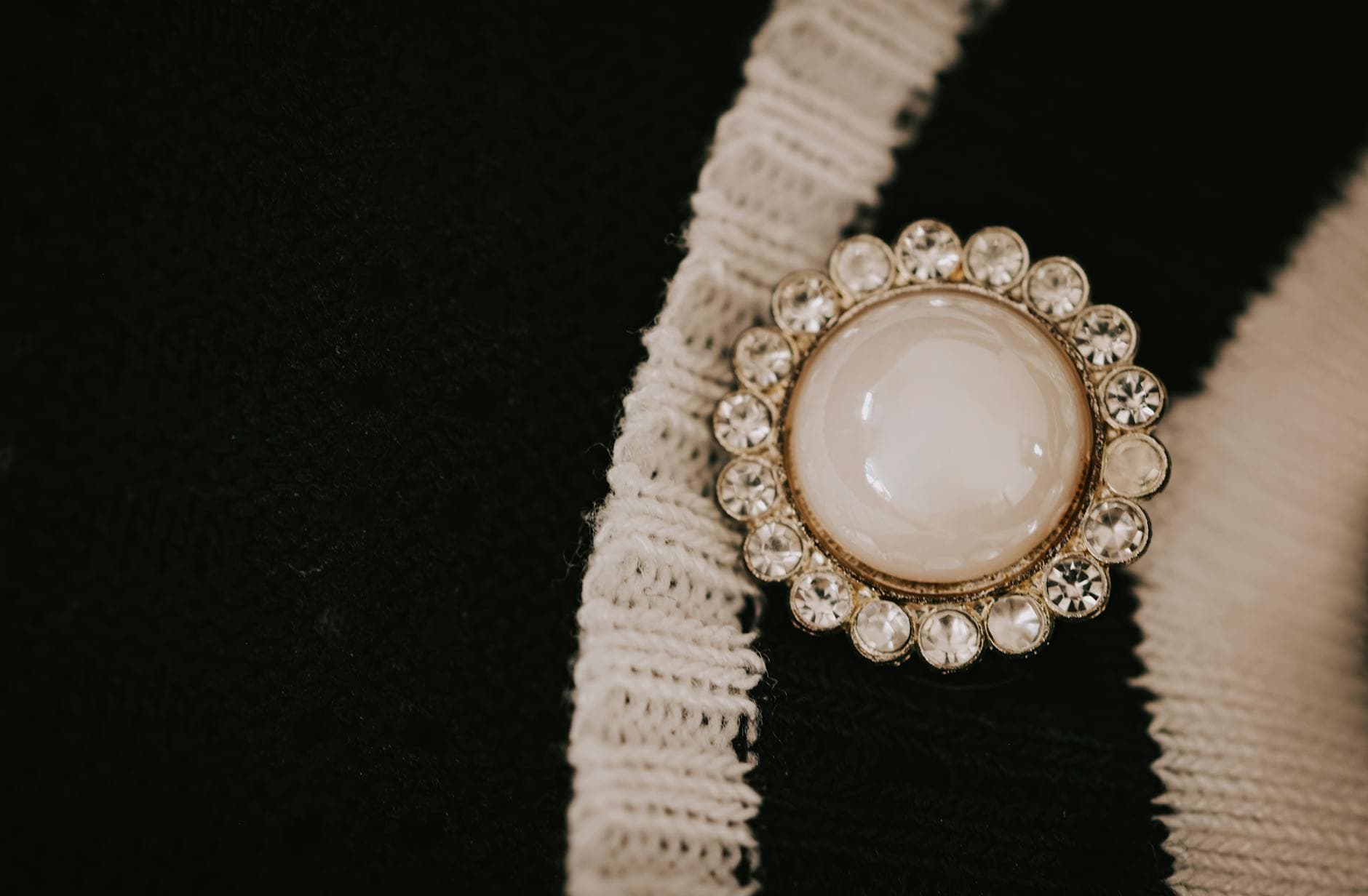
Visibility has helped. Brooches have been appearing on runways and red carpets at Carolina Herrera, Tom Ford, Tory Burch, and the Met Gala, where they have been worn by men as well as women. That shift matters because it pulls brooches out of the old etiquette box and places them back where they belong: among the most adaptable forms of adornment in jewelry.
What to inspect before you buy
A brooch worth collecting should reveal itself from the back as much as from the front. Study the clasp first. A strong, original fastening tells you how the jewel was built and whether it has been altered. Then check the pin mechanism for straightness, movement, and security, because these are the parts that decide whether the piece can still be worn with confidence.
Look next for signs of convertibility. Many desirable brooches were designed to work in more than one way, whether as a pendant, a hair ornament, or a detachable element within a larger suite. A hidden loop, an adaptable fitting, or a design that balances properly on both a collar and a chain can make a vintage jewel far more useful than its single name suggests.
Motif matters too. Floral sprays, ribbon bows, insect forms, geometrics, and mourning symbols all point to different eras and intentions. The symbolism is not decorative trivia. It can help place a piece in time and explain why it was made at all.
- maker signatures and stamped symbols that can be traced to a house or workshop
- secure hinge and clasp construction that suggests integrity rather than later repair
- evidence of convertibility, such as a hidden loop or detachable fitting
- motifs that align with a known period style, from mourning jewelry to Art Deco geometry
- original patina and surface wear that feel consistent with age, especially on platinum and other precious metals
Why platinum still speaks so clearly
In the late 19th and early 20th centuries, platinum became especially important in brooch design. Bill Rau of M.S. Rau says Cartier in Paris and Tiffany & Co. in New York began producing all-platinum brooches in the 1890s, when the metal’s strength and malleability made possible the delicate filigree and lace-like motifs collectors still admire.
That is not just a technical footnote. Platinum changed the look of brooches. It allowed jewelers to create airy settings with exceptional detail, and its cool color suited diamonds and pearls particularly well. Rau has also pointed out that vintage platinum jewels keep a desirable patina, which explains why many collectors prefer them to pieces that have been polished into an overly bright finish. In platinum, softness of surface can be a virtue.
Reading the jewel, not the trend
A brooch can be tiny and still hold a wide field of meaning. It can carry a maker’s identity, a family’s history, a period style, and a clue to how jewelry was actually worn. That is why the category persists even when the fashion conversation moves on. Brooches do not need a trend cycle to justify themselves. They need only a viewer willing to read the back, follow the marks, and recognize that the most collectible pieces often arrive as archives in miniature.
Know something we missed? Have a correction or additional information?
Submit a Tip