Experts Sound Alarm Over the New Normal of Museum Heists
The $102M Louvre crown jewel theft took under eight minutes — and experts warn private collectors are next. Here's how to document what you own before it vanishes.
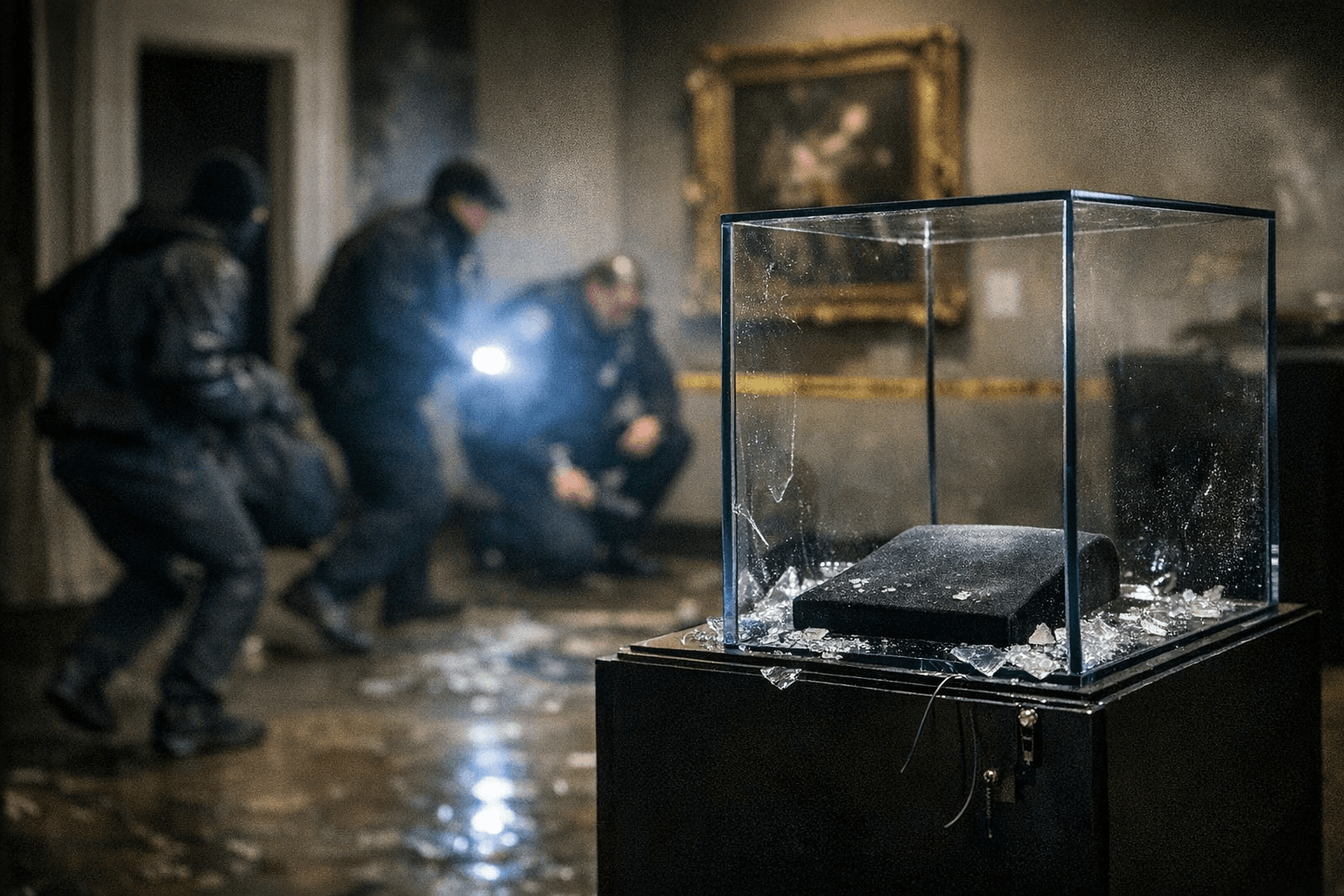
When four masked men forced open the front door of the Magnani Rocca Foundation, a private villa housing one of northern Italy's finest art collections, just outside Parma, they were inside for roughly three minutes. They left with a Cézanne, a Matisse, and a Renoir, valued at approximately $10 million. Police arrived in four minutes, which Christopher Marinello, CEO of Art Recovery International, acknowledged was "fast for the countryside." It still wasn't fast enough.
The March 22 break-in came just five months after the most shocking museum theft in recent memory: the October 19, 2025 daylight robbery of the French Crown Jewels from the Louvre's Apollo Gallery, where four thieves used power tools and a mechanized ladder to breach an upper-floor window, smash two high-security display cases, and exit with eight priceless heritage objects valued at roughly €88 million ($102 million). That heist took approximately seven minutes. The Louvre's director, Laurence des Cars, resigned in February 2026 under the weight of the fallout. The jewels, aside from a battered Empress Eugénie crown found dropped on the sidewalk during the thieves' escape, remain missing.
Together, two heists. Ten minutes of combined criminal action. More than $112 million in irreplaceable objects gone. "The Louvre theft was supposed to be a wake-up call to museums everywhere, especially small museums," Marinello said, in an Artnet News feature published April 1, 2026. The alarm, it appears, went unheeded.
Why jewelry and small treasures are the target of choice
Recovery specialists have watched this pattern sharpen over several years. As one expert observed after the Louvre theft, professional gangs tend to target treasures like gold that are more easily disguised and resold. "Nobody wants to admit that Europe has a crime problem," Marinello said, as various security lapses that made the Louvre vulnerable to theft were brought to light.
The logic is brutal and practical. Stolen paintings only have value if they are kept intact as artworks; they have no financial value if destroyed in the way that jewelry stolen from Paris would, as gold and gems. A crown can be stripped of its diamonds. A tiara can be melted. A signed Cézanne cannot. Anthony Amore, director of security at the Isabella Stewart Gardner Museum in Boston and author of several books on art crime, noted that his research shows most thefts take between three to nine minutes. In that window, a thief can pocket a fortune in gemstones with far more exit options than a rolled canvas.
Amore, who has spent two decades investigating the still-unsolved 1990 Gardner Museum theft of thirteen works by Degas, Rembrandt, Vermeer, and others, is clear-eyed about what drives recovery: "The hope is that these guys who stole these paintings are trying to shop them. That's the best case scenario. If they just put them into hiding, then you don't find them." Marinello echoes this: "I've never encountered a theft to order. They're going to try to sell these and that's what's going to get them caught. They may try to move them to Belgium, or Eastern Europe, or try to find a buyer in the Middle East but they're going to have a hard time unloading them."
The sale attempt is precisely where documentation becomes decisive.
Build your provenance file now, not after
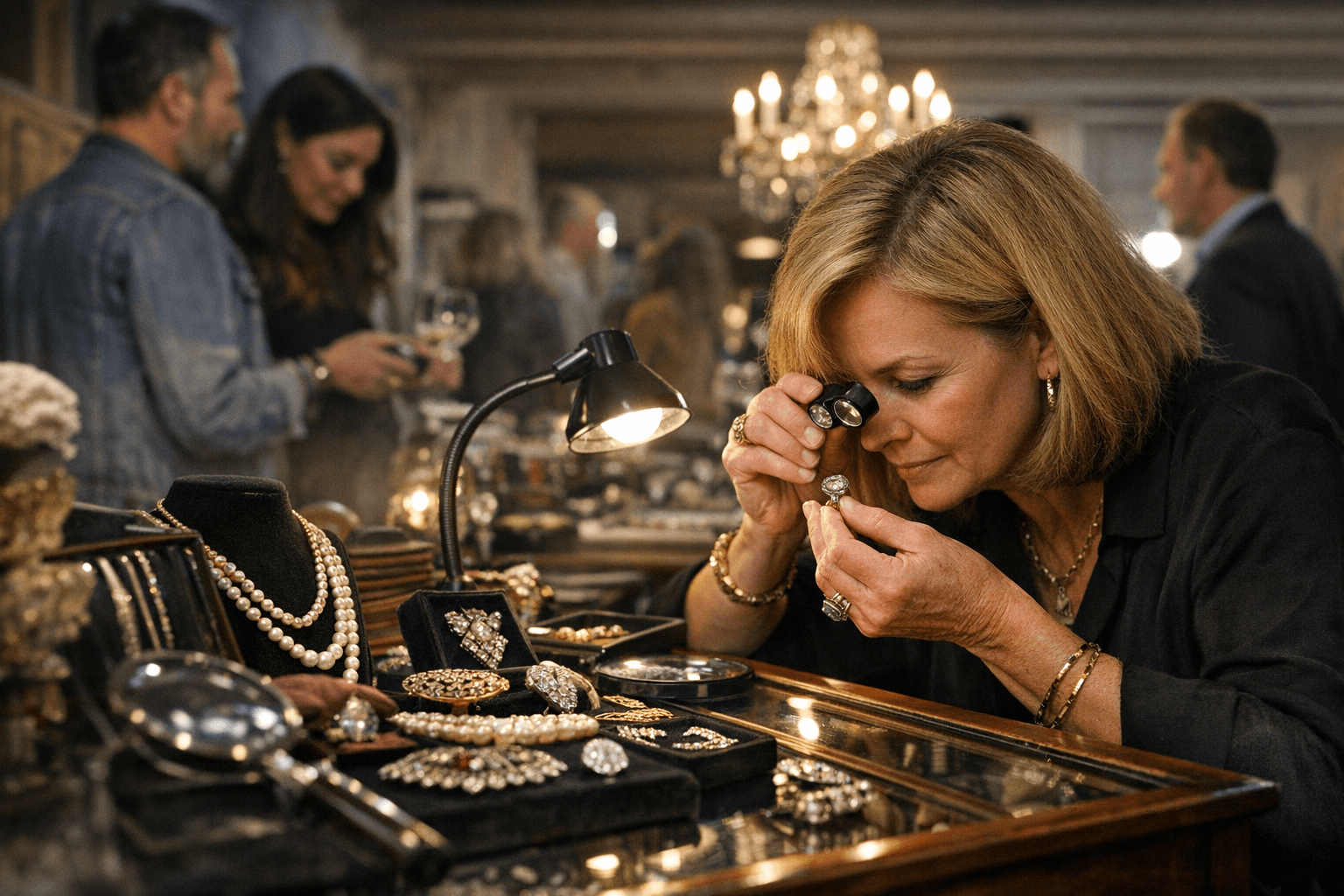
The critical window for establishing a piece's legitimacy is before it is ever stolen. Recovery specialists and authentication experts consistently point to one variable that separates recoverable objects from permanently lost ones: the paper trail. For private collectors of vintage and estate jewelry, this means treating your documentation as seriously as the pieces themselves.
Every significant piece should have its own physical and digital file. At minimum, that file should contain:
- Original purchase receipt or auction catalog entry, showing seller name, date, and lot description. For estate pieces acquired before the digital era, a notarized letter from the seller or estate attorney carries weight.
- Professional appraisals, with dates. Appraisals should be updated every three to five years, as metal and stone valuations shift. Crucially, keep old appraisals too: a 2009 appraisal establishing a ring's provenance is evidence, even if the dollar figure is outdated.
- Repair and service receipts, including the jeweler's name and any notation of the piece's identifying features. A receipt from a goldsmith who re-sized a Victorian mourning ring in 2018 places that ring in your possession at a specific moment in time.
- Hallmark macro-photographs: close-up images of every maker's mark, assay office stamp, and date letter, shot under raking light against a neutral background. These images should be stored offsite — cloud backup, a separate hard drive at a trusted location, or both — so a home burglary cannot simultaneously erase the piece and its documentation.
- Full-length and detail photographs in natural light, showing stone color, setting style, patina, and any unique wear patterns. A signed Cartier bracelet with a specific scratch near the third link is far easier to identify and claim than one described only as "yellow gold, Art Deco."
The Louvre's vulnerability in the Empress Eugénie crown case illustrated exactly what happens when even institutions assume their records are sufficient. The crushed crown recovered from the pavement was identifiable because of centuries of documented royal history. Private collectors rarely have that luxury.
Decoding the red flags: a buyer's checklist
As thefts rise and stolen objects enter circulation more quickly, the risk of unknowingly purchasing hot jewelry increases, particularly through informal estate sales, online auctions, and private resellers. The Art Loss Register, which registered the Magnani Rocca paintings in its database immediately after the March theft, maintains one of the most comprehensive databases of stolen objects in the world; a search costs a fraction of what any serious piece is worth. Before purchasing any significant vintage or estate jewelry item, run through these markers:
- Missing provenance: A seller unable to produce any documentation beyond "it was my grandmother's" is not automatically suspicious, but family pieces with no photographs, no estate paperwork, and no jewelry box history warrant caution for anything valued above a few hundred pounds.
- Over-polished or recently buffed hallmarks: Legitimate wear on a Victorian brooch should match its age. Hallmarks on older pieces that look unnaturally bright or show evidence of recent cleaning around the stamp only may indicate an attempt to obscure or alter identifying marks.
- Pricing that defies logic: Stolen jewelry enters the secondary market at a discount because speed of sale matters more than fair value to a thief. A Georgian parure offered at 40% below comparable market examples, with no explanation and pressure to close quickly, is a warning sign.
- No photographic history: For any piece claimed to have a notable collecting history, ask for photographs from previous ownership. Absence of any image of an allegedly decades-old piece in a known collection is worth questioning.
- Resistance to third-party verification: A legitimate seller has nothing to fear from an independent gemologist's examination or an Art Loss Register search. Reluctance to allow either should stop any transaction.
What happens after a theft, and why records determine recovery
For a museum managing the aftermath of a theft, the challenges involve full cooperation with the police and deciding whether to issue a reward. Amore recommends a dedicated member of the staff act as the sole point person for investigators, and that a reward be offered as soon as possible. Private collectors face the same priorities in condensed form: file a police report immediately with your documentation in hand, contact your insurer with photographic evidence, and register the piece with the Art Loss Register so any dealer or auction house conducting due diligence will encounter an alert.
"The most important thing here is recovery of the stolen items, not prosecution," Amore has said. That orientation shifts the entire strategy: you are building a record that enables identification at the moment of resale, not a case for a courtroom. Hallmark photographs, gemological certificates, and repair receipts become the instruments of that identification.
The Louvre theft, for all its scale, underscored a principle that applies equally to a private collector's Art Nouveau pendant as it does to a Napoleon III-era emerald diadem: the object that can be proven is the object that comes home. In an era when a professional crew can breach a museum's upper floor, strip two display cases, and be gone in under eight minutes, the paperwork you maintain today is the only thing standing between a loss and a recovery.
Know something we missed? Have a correction or additional information?
Submit a Tip