Kamp De Crog Returns to Atlanta With Curated Vintage Jewelry and Estate Pieces
Nearly 3,000 shoppers are expected at Kamp De Crog's Atlanta pop-up April 11-12; here's how to authenticate estate jewelry in two minutes flat.
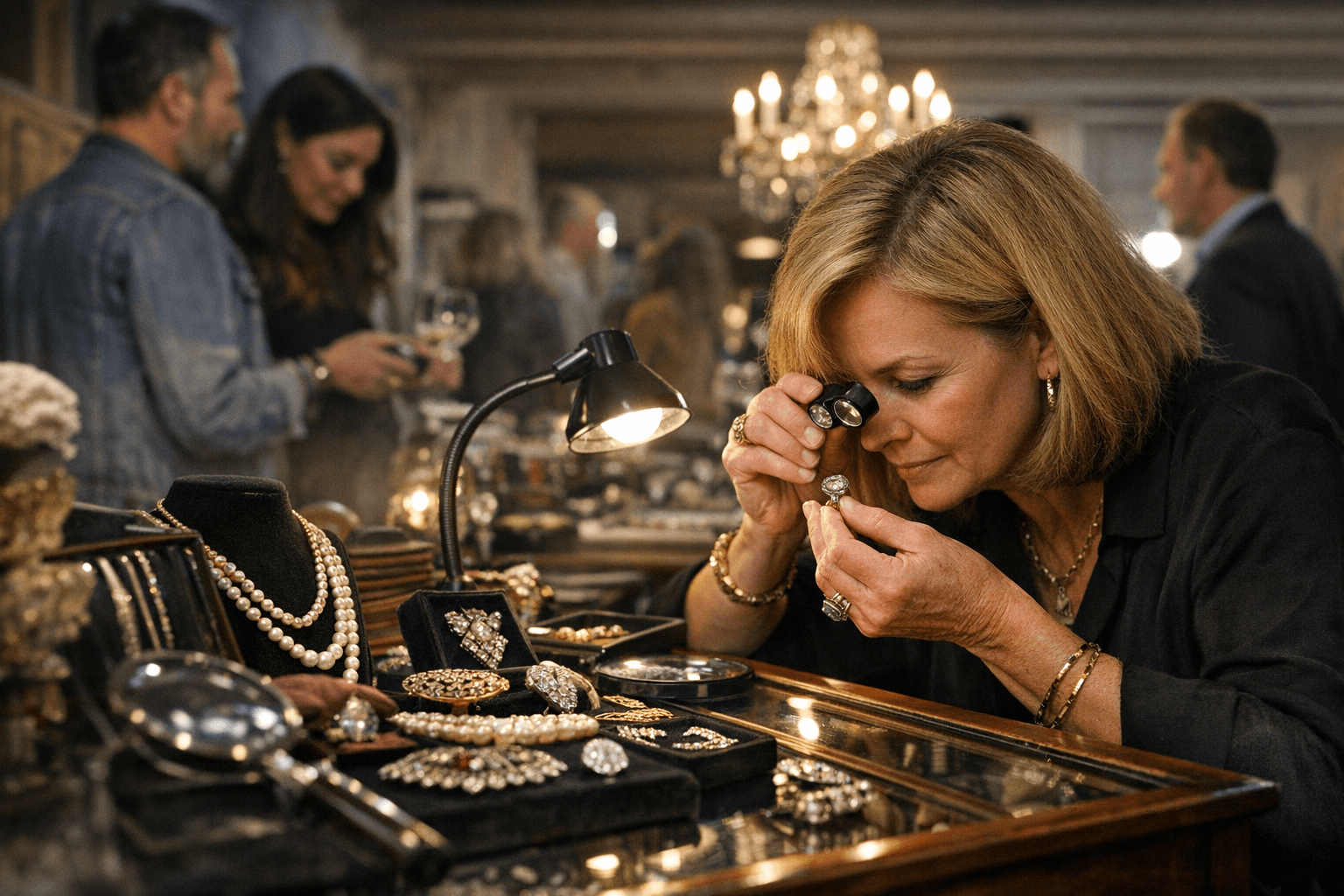
Kamp De Crog's return to Atlanta this weekend draws more than 30 vetted vendors and nearly 3,000 expected shoppers to Atlantic Station on April 11 and 12, but whether you walk away with a genuine estate brooch or an overpriced costume piece depends almost entirely on what you do in the first two minutes at any booth.
Organizer Antonio Rivera has built Kamp De Crog around careful dealer curation, and that vetting matters. The vendor mix spans vintage clothing and accessories alongside costume and estate jewelry, which means the authentication burden still falls squarely on the buyer. Jack Parker of Valley Jack Vintage, one of the market's longtime vendors, represents the kind of specialist presence that makes curated pop-ups worth attending: a dealer with deep inventory knowledge who can speak to a piece's provenance without hesitation.
Start with the clasp. On brooches and necklaces from the 1920s through the 1950s, the clasp style is often the fastest way to date a piece. C-clasps without a roller typically predate 1910. A tube-hinge brooch clasp with pot-metal construction places a piece in the 1930s to 1940s. If the clasp looks markedly newer than the body of the piece, it was likely replaced, which affects value but doesn't disqualify the piece outright. Ask the vendor directly.
Flip the piece and look for hallmarks before doing anything else. British pieces carry assay office marks, date letters, and maker's stamps in combination. American silver is stamped "925" or "Sterling." Gold should show a karat mark, typically 10K, 14K, or 18K, pressed into the shank, clasp, or finding. A piece presented as precious metal with no stamp at all is worth challenging on the spot.
Examine the prongs on any stone-set ring or pendant. Prong tips should show consistent, even wear that corresponds to the piece's claimed age. Freshly filed or replaced prongs suggest a recent repair, which a reputable dealer will disclose without being asked. Solder seams on bracelets and chains also tell a story: hand-soldered joins from earlier periods look slightly irregular, while machine-made joins are perfectly uniform. A loupe, even a cheap 10x version on your phone, resolves both in seconds.
Ask every vendor three questions before handing over cash: Where did this piece originate? How do you date it, and by what evidence? Has anything been repaired or replaced? A knowledgeable dealer answers all three without deflecting. Vague references to "estate lots" without further detail are common at general markets; at a curated event like Kamp De Crog, you have grounds to expect more.
Before purchasing, photograph both faces of any piece, the clasp or closure mechanism, any visible hallmarks or maker's marks, and a close-up of the stone settings. Your phone's flash will reveal hairline fractures in stones, chips along enamel borders, and re-soldered breaks that are invisible in ambient light. That image record is also your recourse if a piece turns out to be misrepresented after you get it home.
Kamp De Crog opens Saturday at Atlantic Station, with both days giving buyers direct access to vetted sellers across the jewelry spectrum. Rivera's screening of dealers provides a meaningful head start over a general flea market, but the sixty-second physical inspection remains the only authentication that actually protects your investment.
This article was produced by Prism’s automated news system from verified source data, official records, and press releases, then run through automated quality and moderation checks before publishing. The system is built and supervised by the people who set the standards it runs under. Read our full AI policy.
Did this article answer your question?