How to identify vintage jewelry maker’s marks and gold stamps
A tiny stamp can reveal who made a brooch, where it was assayed, and when it was made. Learn how maker’s marks and hallmarks turn heirlooms into evidence.
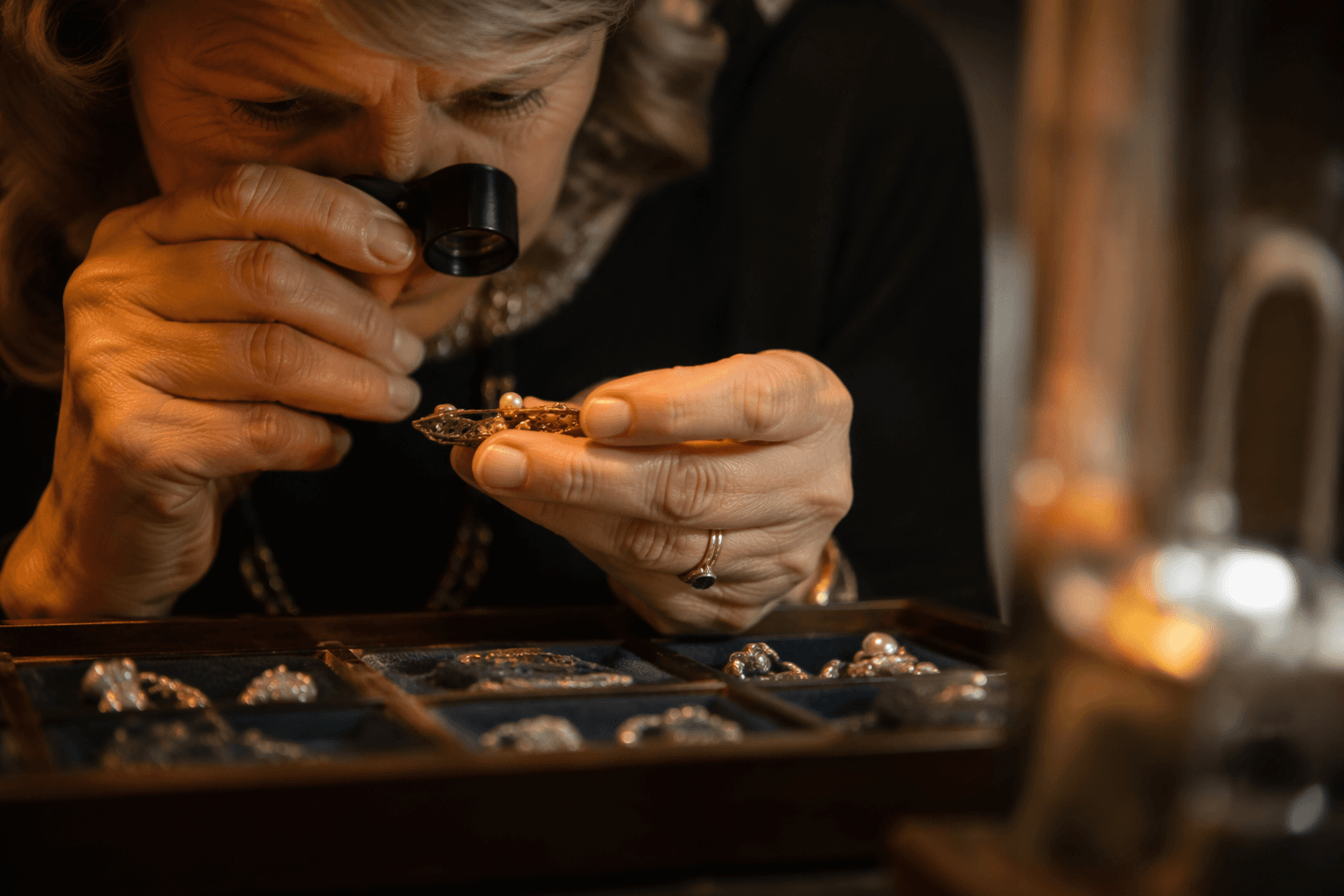
An unsigned brooch from an estate tray, an inherited ring with a worn shank, a flea-market pendant tucked into a velvet box: the smallest stamp on a jewel can be the strongest clue. A maker’s mark points to the hand or workshop behind a piece, while a hallmark can tell you what the metal is, where it was tested, and sometimes when it passed assay. That difference turns a tiny impression into a usable tool for dating, attribution, and appraisal.
Maker’s marks and hallmarks are not the same thing
A maker’s mark is the signature of origin. These stamps are identification symbols, and that is exactly how collectors, appraisers, and historians use them when a piece is unsigned or the paper trail is gone. A hallmark goes further, because it sits inside a broader system of metal verification and consumer protection that has long protected buyers from false claims about precious metals.
Hallmarks often combine several elements on one piece. In the UK, a complete mark may include a maker’s mark, a fineness mark, an assay office symbol, and a date letter. Read together, those symbols can point not only to who made the jewelry, but also to where it was assayed and, in many cases, when.
Britain built the template for reading stamps
The Goldsmiths’ Company Assay Office dates London’s hallmarking system to 1300 and traces an early attempt to regulate gold standards to Henry III in 1238.
The history runs even deeper than medieval London. The concept of hallmarking appears as early as nearly 400 AD, on silver objects from the Byzantine period. The details vary by region and era.
The Birmingham Assay Office was established in 1773, and Birmingham gold marking began in 1824. City marks and date letters can help narrow a piece to a specific assay office and period of testing.
How to read a British hallmark
When you turn a ring or bracelet over, look for the whole group of marks rather than a single stamp. A British hallmark may contain:
- a maker’s mark, which identifies the workshop or manufacturer
- a fineness mark, which indicates metal content
- an assay office symbol, which shows where the item was tested
- a date letter, which can help place the piece in a specific year or cycle
British pieces are often especially useful to heirs and collectors. An inherited brooch may have no receipt and no family story attached to it, but a complete hallmark can still tell you where it entered the system and when.
American jewelry tells a different story
In the United States, the marking system is later and less uniform. Jewelers have been required to stamp a purity mark on pieces since 1906, and a maker’s mark became required in 1961. That helps explain why older American jewelry can be harder to trace than comparable British pieces: the legal framework for marking came in later, and earlier jewels may carry fewer identifiers.
For a collector, that does not make an American piece less interesting. It simply means the evidence may be thinner. A vintage American ring may show a karat or purity stamp without a maker’s signature, while a midcentury piece is more likely to carry both. If the stamp is partial or lightly worn, the absence of a maker’s mark does not rule out quality, but it does change the path of identification.
Why this matters when the jewelry is in your hand
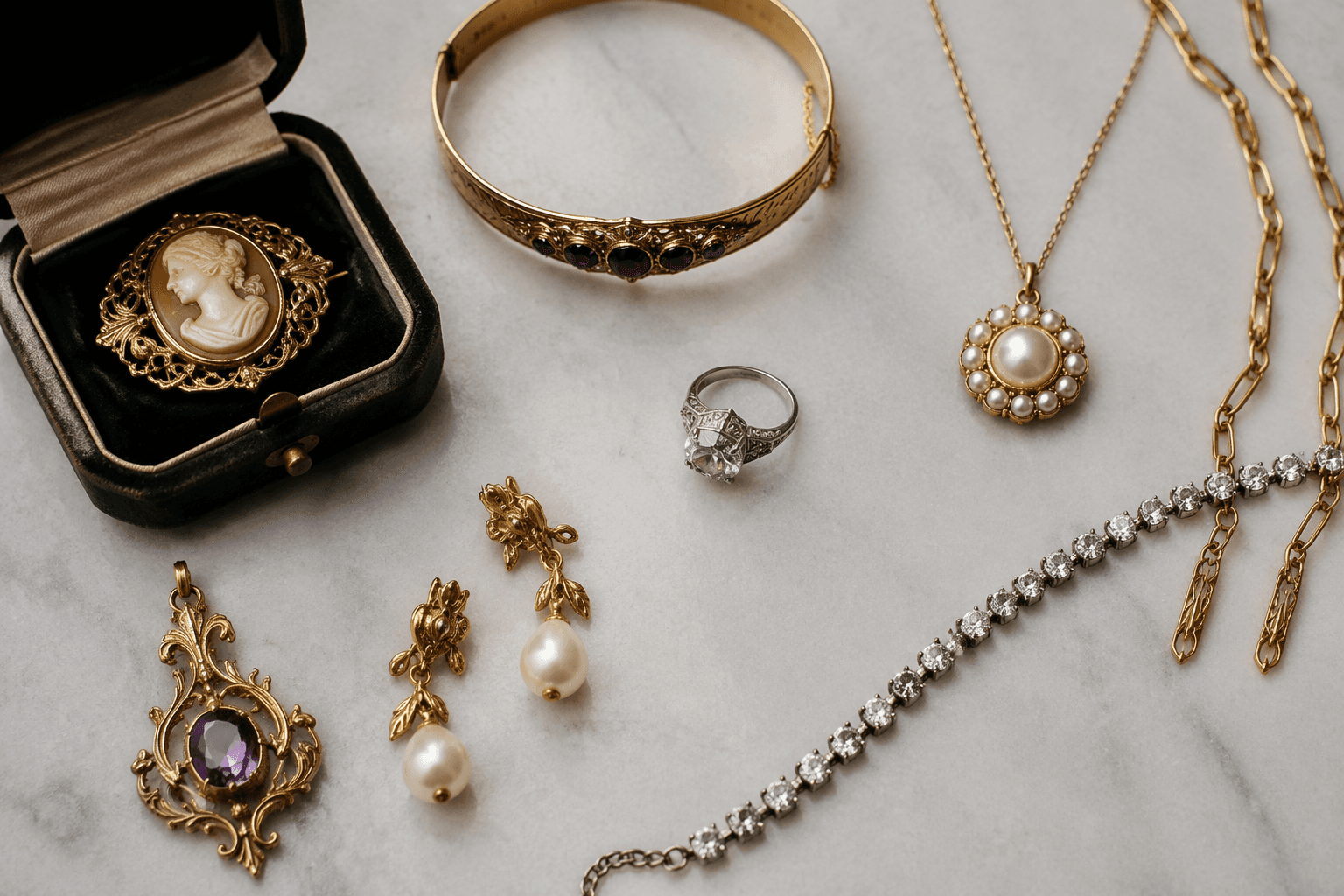
The practical value of a stamp shows up in real collecting situations. An unsigned Art Deco brooch may be easier to place once you identify a workshop mark. An heirloom ring can move from family lore to documented object if the hallmark shows the metal standard and assay location. A flea-market find that looks anonymous on first glance may suddenly resemble a known maker once you match the mark against a reference library.
Gold hallmarks are a way to understand gold jewellery markings and makers’ marks. Collectors should approach them as a language of origin and authenticity. The stamp does not replace connoisseurship, but it gives connoisseurship a factual base. When the mark aligns with the style, construction, and wear, the piece becomes easier to authenticate and appraise.
What to do next when you find a stamp
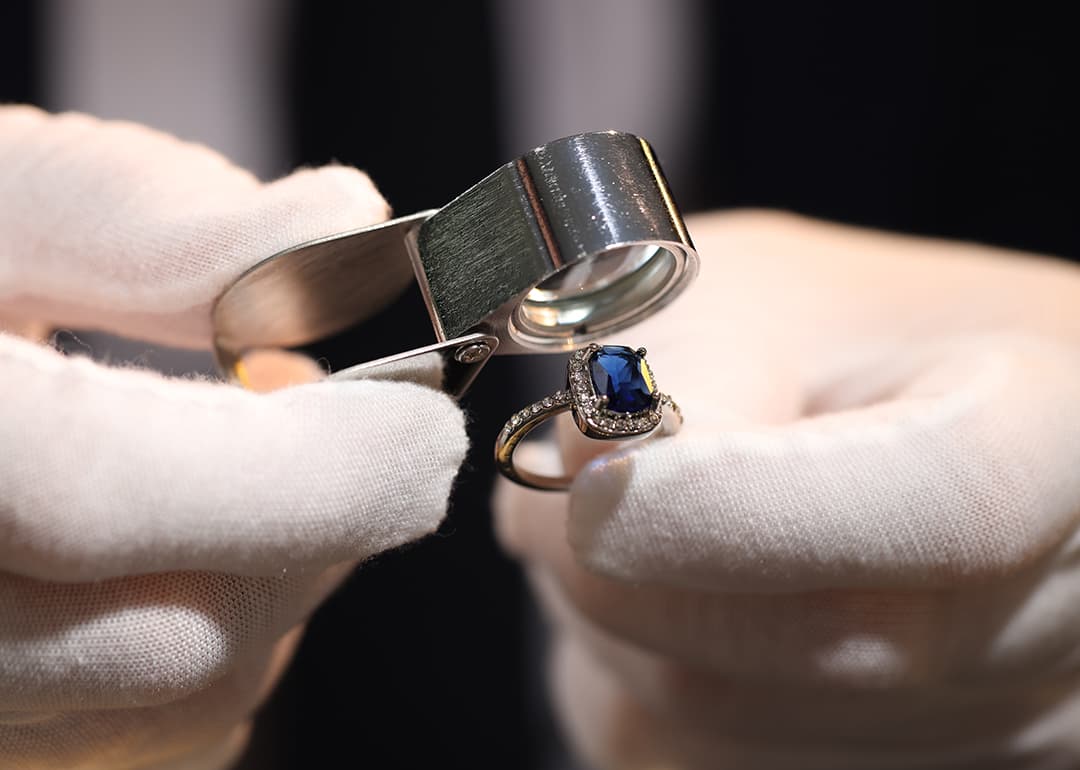
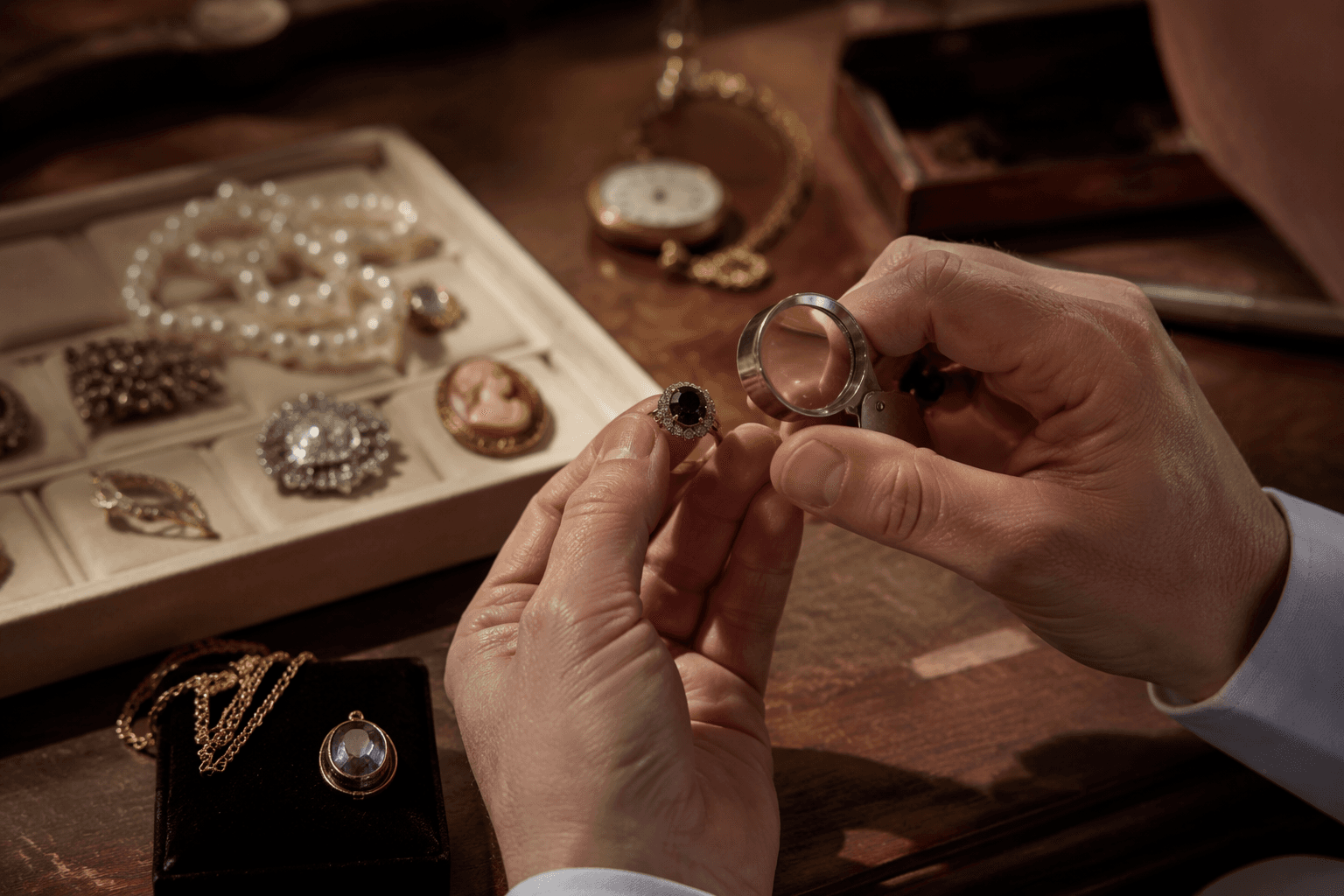
Start with the object itself. Clean your hands, use a loupe or magnifier, and photograph the marks in good light before you handle the piece too much. Then separate what you are seeing into categories: maker, metal content, assay office, and date letter if present.
From there, compare the stamp with established reference pages and institutional guides, especially those devoted to British hallmarks and maker’s marks. If the piece is valuable, unusual, or inherited with no paperwork, take it to a specialist appraiser who works with vintage and antique jewelry. A clear stamp can narrow a jewel to a maker and a period; a full hallmark can do even more, tying object, metal, and place into one compact record of origin.
This article was produced by Prism’s automated news system from verified source data, official records, and press releases, then run through automated quality and moderation checks before publishing. The system is built and supervised by the people who set the standards it runs under. Read our full AI policy.
Did this article answer your question?