What antique, vintage and estate mean in jewelry listings
The three labels do different jobs: antique means more than 100 years old, vintage means older but not antique, and estate only means preowned.
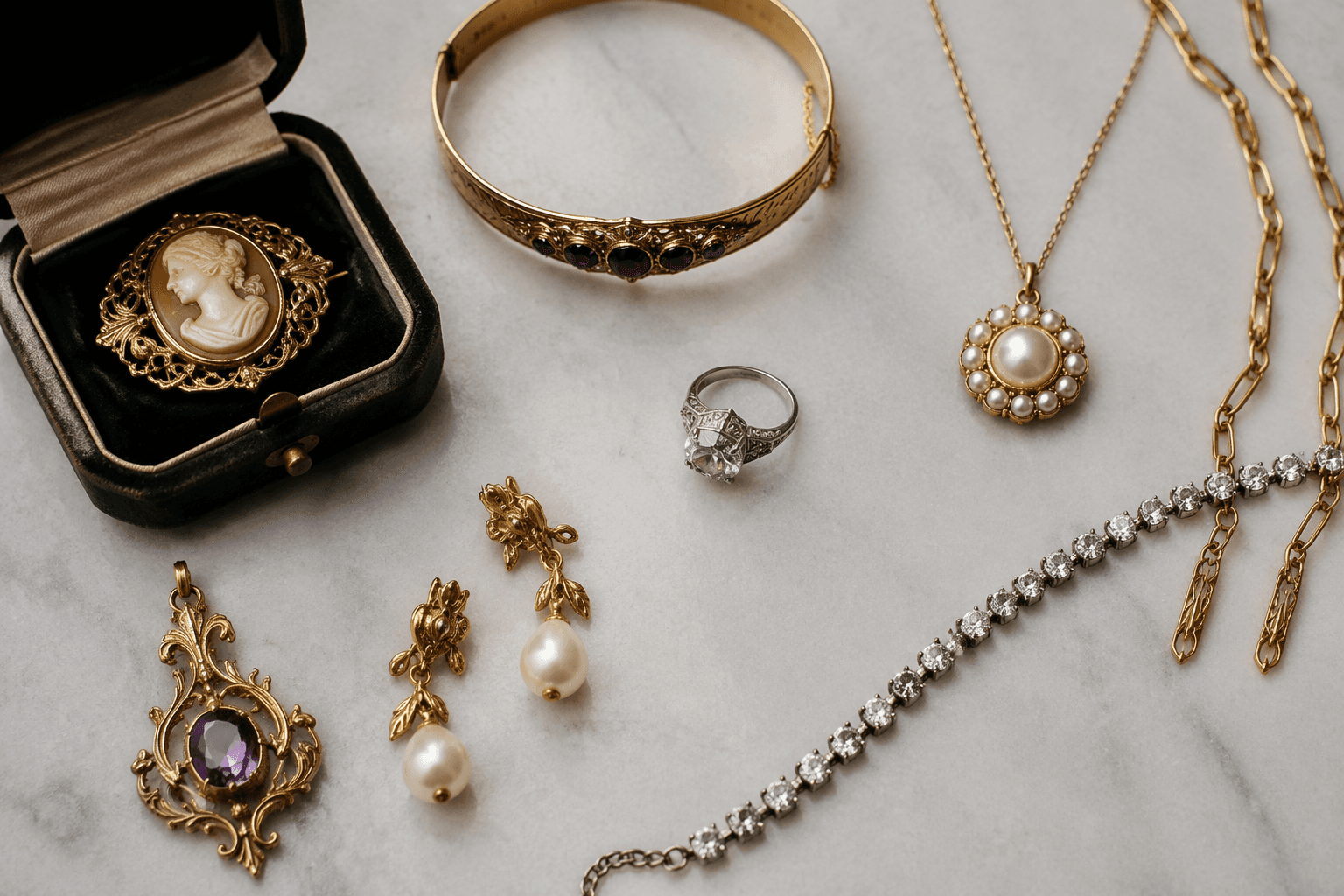
A well-made 1950s ring can be desirable, but it is vintage, not antique. In a listing, antique, vintage, and estate are not interchangeable. They shape what you expect to see, what you think the piece is worth, and how closely you should inspect the marks inside the band, clasp, or back.
Antique, vintage, estate: the first cut matters
Antique jewelry is made more than 100 years ago. Vintage jewelry is not contemporary, but it is not old enough to be antique. Estate jewelry is simply preowned. That last definition is the one that gets blurred most often online, because it says nothing about age, period, rarity, or style.
An “estate” ring may be a recent secondhand piece, a mid-century band, or a much older jewel that has changed hands many times. “Vintage” sounds period-correct, but it still covers a wide range of dates. “Antique” is the most specific of the three, because it carries an age threshold, not just a mood.
What the marks inside the metal can tell you
Lang Antiques, a San Francisco retailer, treats maker’s marks as identification symbols stamped on jewelry. Those marks are not decoration. They can point to origin, maker, and period, which is why they matter to collectors, appraisers, and historians trying to build a piece’s story.
A dealer may call a ring Georgian or Art Deco, but the real test is whether the design and marks support the claim. If the inside of a shank or the back of a clasp carries a recognizable maker’s mark, the piece gives you something firmer than a sales adjective.
Period names are clues, not decoration
Lang Antiques’ Antique Jewelry University places Georgian jewelry from 1714 to 1837 and the Grand Period from 1860 to 1885. The same archive also includes Renaissance jewelry and Art Deco jewelry from the 1920s to the 1930s.
A seller may call any ornate ring “Georgian” because the word sounds old and romantic, even when the construction looks much later. A true Georgian ring should fit that 1714 to 1837 window, while a genuine Art Deco piece should reflect the 1920s to 1930s rather than simply looking geometric or glamorous.
Why a 1950s band is not an antique, even if it is beautiful
Mid-century gold is a good example of why age and value are not the same thing. The label tells you roughly where a piece sits in the timeline, and that changes the way you read the piece, from the style of setting to the likely maker’s mark to the kind of wear you should expect.
The same is true of 1980s designer jewelry. It can be collectible and highly recognizable without being antique. A designer piece from the 1980s belongs to a later vintage market, where the house name, the quality of the construction, and the condition of the plating or stones matter more than any claim to great age.
How costume jewelry fits into the picture
Not every older piece is fine jewelry, and not every secondhand piece is made from precious metal. In Dictionary.com’s definition, costume jewelry is jewelry made of nonprecious metals, often gold-plated or silver-plated and set with imitation or semiprecious stones. That matters because a listing can use “estate” for a piece that is plainly costume jewelry, and that does not make it antique or even especially rare.
A gold-plated brooch with glass or imitation stones may be a charming vintage accessory, but if a seller uses “estate” to imply solid gold or period provenance, the word is doing marketing work rather than informational work. The label tells you it was owned before; it does not certify age or material quality.
A quick framework for reading a listing
Before you buy, separate the three questions that often get blurred together:
- Is the piece antique, vintage, or just estate?
- Is the claim based on age, style, or ownership history?
- Do the marks, construction, and design period support the description?
If a listing says Georgian, check whether the design language and marks fit the 1714 to 1837 period. If it says Art Deco, look for a 1920s to 1930s profile rather than a generic geometric motif. If it says estate but gives no age at all, treat that as preowned until proven otherwise.
In GIA’s June 7, 2012 tips for purchasing estate jewelry, antique, vintage, and estate are not synonyms, and a listing should not pretend they are.
This article was produced by Prism’s automated news system from verified source data, official records, and press releases, then run through automated quality and moderation checks before publishing. The system is built and supervised by the people who set the standards it runs under. Read our full AI policy.
Did this article answer your question?