How to Protect Vintage Jewelry from Damage, Wear, and Deterioration
The fastest way to ruin a vintage jewel is often a daily habit, not a dramatic accident. Careful cleaning and inspection can preserve pearls, prongs, and family history.
An heirloom can survive a century and still be undone by a vanity tray
An inherited ring or brooch is a small archive. Its value lives in the metal, the stones, the workmanship, and the life it has already led, which is exactly why the quietest mistakes can be the most expensive ones: perfume at the collarbone, a bracelet left in a steamy bathroom, a necklace worn into chlorinated water, a clasp ignored until it fails. One jewelry insurer says 39 percent of self-purchasers have never had jewelry professionally inspected, which is a reminder that damage usually begins long before anything falls apart.
Clean vintage pieces with restraint, not enthusiasm
For most vintage jewelry, less cleaning is better than more. A soft, lint-free cloth and water are often enough for routine care, and when a piece needs a little more, mild soap and lukewarm water are the safest starting point. Dry every piece completely before storing it, because lingering moisture invites trouble in settings that were built long before modern repair standards.
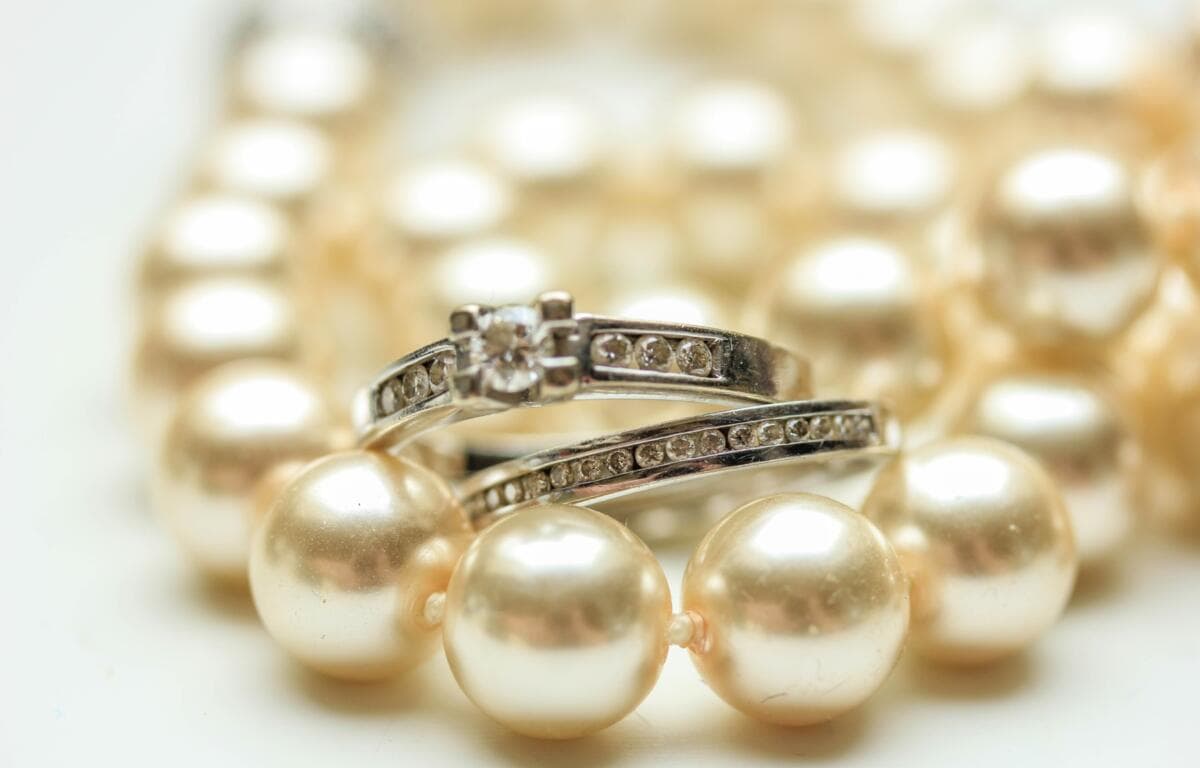
Pearls deserve special caution because they are soft, measuring 2.5 on the Mohs hardness scale. They scratch easily, and they can also be dried out, cracked, or discolored by chemicals and acids, including perfume and cosmetics. If a strand or ring contains pearls, keep the cleaning gentle and occasional, and never send them through ultrasonic or steam cleaners.
What to do
• Wipe vintage pieces with a soft, lint-free cloth after wear. • Use mild soap and lukewarm water only when a piece truly needs it. • Clean pearls with care, and treat them as delicate organic gems, not hard stones. • Dry everything thoroughly before putting it away.
What never belongs near antique metal, glue work, or old finishes
The enemy is not only neglect. It is the modern routine that seems harmless until it has repeated for years. The Gemological Institute of America warns against hairspray, lotion, perfume, cosmetics, chlorine bleach, ammonia-based household cleaners, heat, and sudden temperature changes because they can damage metals and gemstones. Those threats are especially rough on vintage construction, where older alloys, delicate finishes, and historic repairs can be more vulnerable than they look.
Never do this
• Do not spray perfume or hairspray while wearing vintage jewelry. • Do not store pieces in a bathroom, where humidity and temperature shift constantly. • Do not swim or shower with jewelry on, especially in chlorinated water. • Do not use bleach, ammonia-based cleaners, or abrasive household sprays. • Do not use ultrasonic or steam cleaning on pearls.
The fastest damage is often invisible at first. Chemicals can dull an antique surface, weaken a clasp, or compromise the look of an old setting long before a stone loosens. Heat and sudden temperature changes are equally unkind, especially to pieces that have already spent decades expanding, contracting, and being repaired.
Storage matters as much as cleaning
Vintage jewelry should be stored separately in a cool, dry place, never tossed together in a dish where chains knot, stones scratch, or clasps catch on one another. The Metropolitan Museum of Art treats storage as a preservation problem, not an afterthought, and its conservators control ambient light, temperature, relative humidity, storage conditions, and exhibition materials to slow deterioration. That approach translates beautifully to home care: keep heirlooms out of sunlight, away from radiators and windows, and protected in individual pouches or lined compartments.
This is especially important for pieces with patina, enamel, pearls, or soft gemstones. Light can slowly alter some materials, and repeated handling leaves its own marks. If a jewel has survived generations, its storage should be planned with the same seriousness you would give a photograph, a letter, or any other family artifact that cannot be replaced.
Make inspections part of the ritual
A proper inspection is where quiet preservation becomes visible. Jewelers Mutual says regular inspections help catch loose stones, worn prongs, weakened clasps, and other hidden problems early, before they turn into loss or more serious damage. Some insurance policies even require annual inspections to maintain coverage, which is reason enough to treat that appointment as part of ownership, not an optional extra.
The overlooked detail is that damage does not always announce itself. A prong can wear thin from years of friction. A clasp can begin to fatigue. A stone can move so slightly that only magnification reveals the change. That is why the best time to see a professional is before a failure, not after one.
Think like a conservator, not a last-minute repair shop
The Metropolitan Museum of Art has been teaching the same lesson for decades: prevention beats rescue. Its care manual, first published in the 1940s and continually updated, covers preservation in display, storage, and transit, with an emphasis on environmental standards and housing materials. In the conservation studio, specialists use magnification and specialized imaging to document materials and condition, then recommend controls that keep objects stable rather than merely mended.
That museum logic makes sense for jewelry because a jewel is both adornment and evidence. The Met’s collection includes objects as small as a piece of jewelry, which is a useful reminder that these pieces are not trivial accessories. They are portable history, and their value can include craftsmanship, family memory, and, in some cases, museum-level significance.
The practical rule is simple: wear vintage jewelry with care, clean it sparingly, store it separately, and inspect it regularly. Do that, and the piece keeps its shape, its surface, and its story far longer than everyday habits would ever allow.
This article was produced by Prism’s automated news system from verified source data, official records, and press releases, then run through automated quality and moderation checks before publishing. The system is built and supervised by the people who set the standards it runs under. Read our full AI policy.
Did this article answer your question?