Vintage Wedding Bands Embrace Bold Gold, Eternity Styles, and Heritage Details
The strongest 2026 wedding bands borrow from the past, but not always equally. Yellow gold and antique cuts have real lineage; mixed metals are the modern rewrite.
The clues inside the band
A wedding band tells the truth in miniature. Turn it over and the shank, the inside stamp, the weight of the gold, even the way the edges have softened with wear can reveal whether you are looking at a true vintage piece, a modern homage, or a ring that borrows from both. That appetite for decoding is part of why antique and estate jewelry is surging again, with nearly 7,000 people turning out for the NYC Jewelry, Antique, & Object Show and a January edition added after the November crowd proved the category had momentum.
The larger mood is easy to name. The Knot has framed 2026 weddings around nostalgia and vintage aesthetics, using the phrase “Something Old is Something New again.” Gen Z couples are leaning harder than previous generations into aesthetic cohesion, shareability, and personal expression, which is why wedding bands now have to do more than sit quietly beside an engagement ring. They need to read as style, story, and daily uniform all at once.
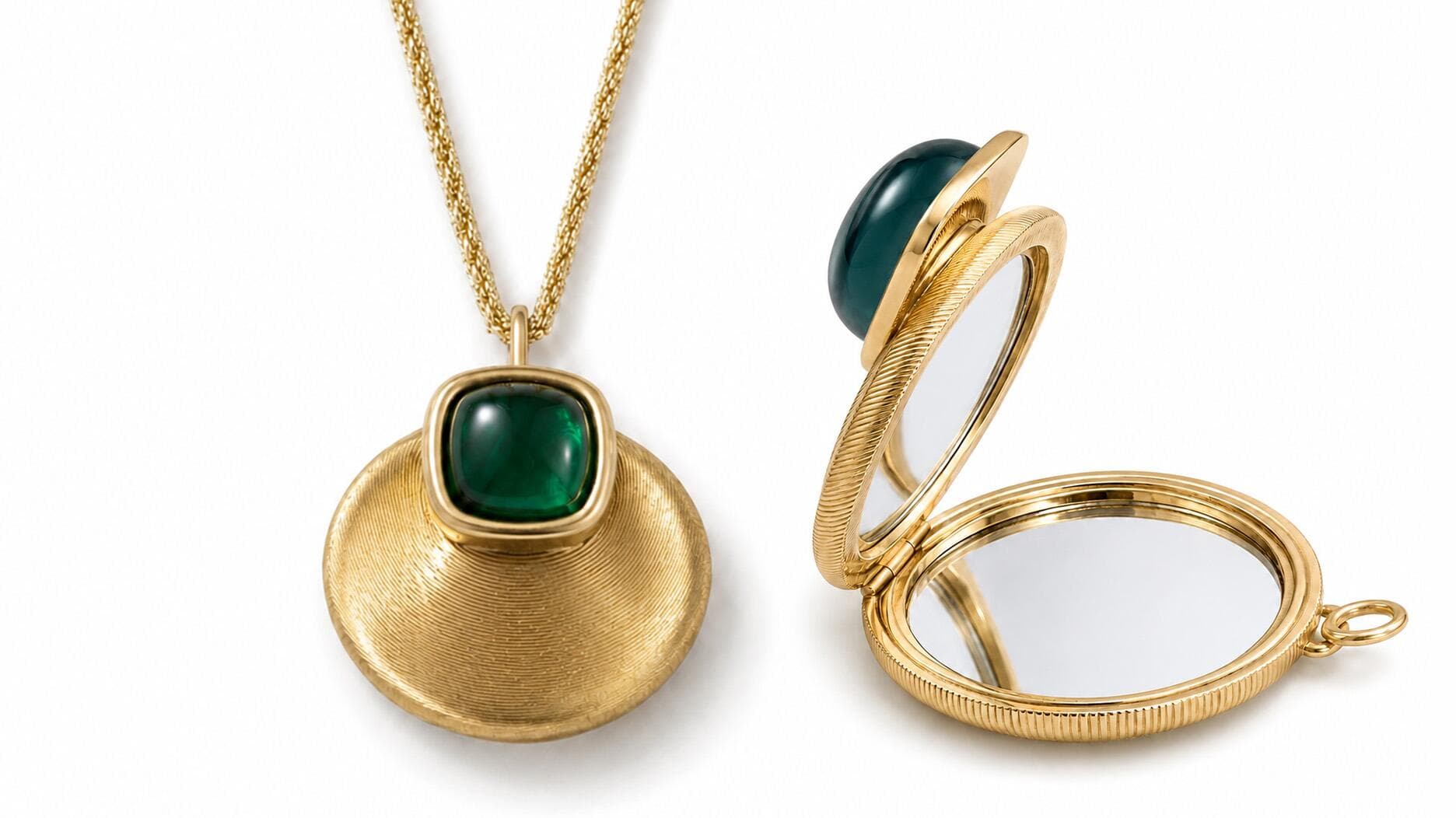
Yellow gold is the most convincing heirloom trend
If one 2026 band direction has the clearest historical lineage, it is yellow gold. The metal never truly disappears, but it returns with different social meaning. This time, its appeal is not only visual. As gold climbed near the $4,000-an-ounce mark in September 2025, buyers and designers began talking about yellow gold as both a style choice and a material with substance, longevity, and value.
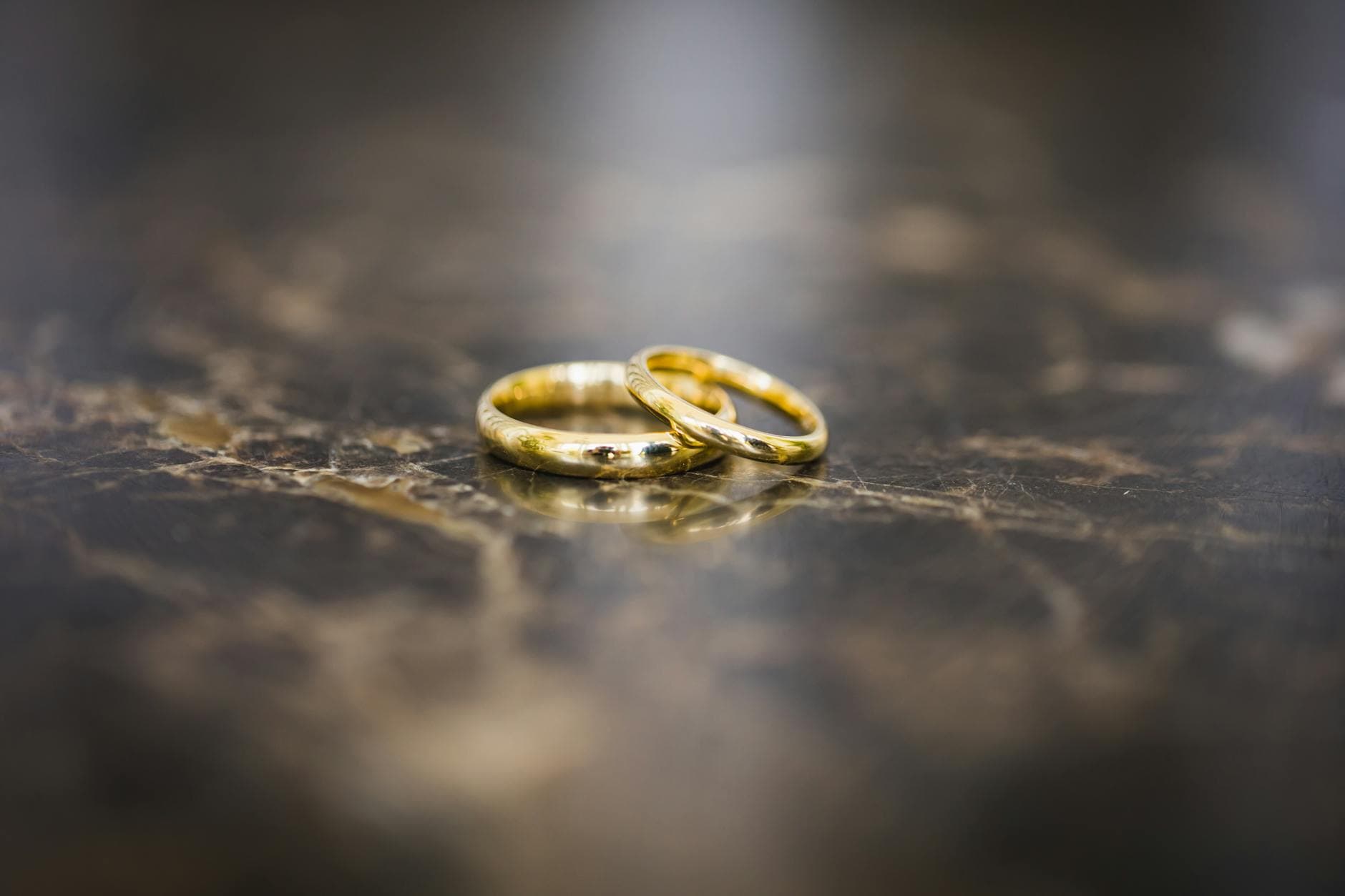
Tobias Kormind of 77 Diamonds captured the shift neatly when he linked yellow gold’s resurgence to a desire for meaningful design and long-lasting materials. That is what makes the trend feel credible rather than decorative. A yellow-gold wedding band can evoke decades of bridal history, especially in fuller, heavier profiles, while still feeling current when the finish is brushed instead of mirror-polished or when the width is slightly bolder than the slender bands of the last few years.
In vintage terms, the language to use is simple: ask for yellow gold, note the karat if it is visible, and pay attention to whether the band has an antique softness or a modern, highly uniform surface. A band with a little visual warmth will often read more convincingly than one that looks newly cast and overfinished.
Eternity bands are old in spirit, modern in use
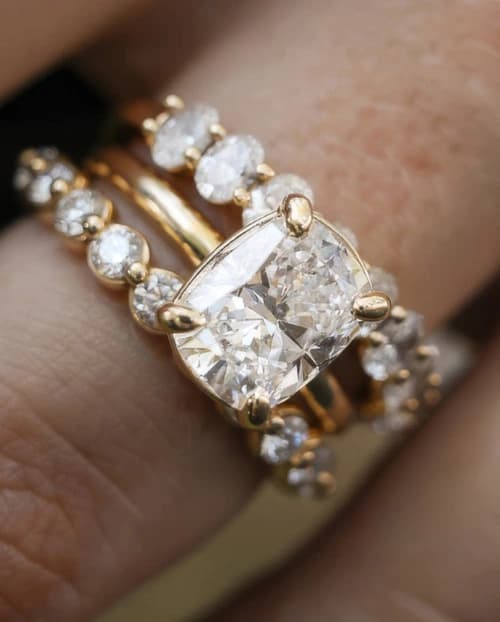
The eternity band sits in an interesting place between heritage and reinvention. Its symbolism is traditional, a continuous circle of stones suggesting uninterrupted love, but the way couples wear it now is more pragmatic and more stack-driven than ceremonial. The Knot breaks the category into full, half, and three-quarter eternity designs, and that distinction matters because it changes how the ring behaves in real life.
A full eternity band gives uninterrupted sparkle from every angle, which is the strongest visual expression of the trend. A half or three-quarter version keeps the look while making fit and daily wear easier, especially if the ring needs to sit against an engagement ring or coexist with a second band. For buyers, the vintage-style translation is to look for continuous pavé or channel-set shimmer, then ask whether the design is all around or strategically partial. That is the practical difference between a ring that photographs beautifully and one that can be worn comfortably every day.
The best versions of this look do not try to imitate antique jewelry exactly. Instead, they borrow the old idea of permanence and update it for modern stacking, where comfort, low profile, and compatibility with other rings matter as much as symbolism.
Mixed metals are the most modern reinterpretation
Mixed metals are the clearest example of a trend that feels fresh precisely because it breaks an older rule. The Knot now treats mixed-metal wedding sets as versatile rather than mismatched, which is a significant shift from the era when couples felt pressure to keep everything identical. The modern version depends on balance: if one band is bold yellow gold and another is platinum or white metal, the scale should feel coordinated so one ring does not overpower the rest of the stack.
In vintage shopping terms, this is where the phrase two-tone or bicolor becomes useful. It signals contrast without chaos and opens the door to rings that look collected rather than matched. The key is restraint. Mixed metals work best when the lines are clean and the widths feel intentional, not when every surface is competing for attention.
This is also where a wedding set can become more personal. A couple does not need identical bands to look coherent. They need a common visual language, whether that comes through width, finish, or the repetition of one metal in a smaller accent.
Antique-style detailing is where the past is most literal
Of the current bridal cues, antique-style detailing has the most direct historical roots. Hancocks London recently spotlighted a 2.38-carat fancy intense yellow pear-shape diamond with roots traced to 15th-century Belgium, set in a 22k brushed yellow-gold gypsy setting that recalls Victorian jewelry. Guy Burton described antique pear cuts as having softer, fuller proportions than their modern counterparts, and that difference is exactly why they continue to attract collectors and brides alike. The ring’s £55,000 price tag, about $73,900, also underlines how heritage details can carry serious value when the materials and craftsmanship are exceptional.
For wedding-band buyers, the lesson is not to chase ornament for its own sake. Antique-style detailing should feel structural, not costume-like. Look for brushed finishes, rounded profiles, and settings that sit close to the finger. On vintage or estate pieces, the inside of the shank often tells you the most, through hallmarks, metal marks, and signs of honest wear. Those tiny stamps and softened edges are the difference between a ring that only looks old and one that actually carries age.
How to translate trend language into vintage shopping language
When you are searching for a ring with current style and vintage credibility, use the words that connect the two worlds:
- Bold yellow gold becomes yellow gold, ideally with a substantial profile and a finish that is brushed or softly polished.
- Eternity style becomes full, half, or three-quarter eternity, depending on how much wearability you need.
- Mixed metals becomes two-tone, bicolor, or a coordinated mixed-metal stack.
- Antique detailing becomes gypsy setting, antique-cut, brushed gold, or heritage-inspired construction.
The smartest 2026 wedding band is not the one that shouts trend the loudest. It is the one that understands its own lineage, holds up to daily wear, and still looks inevitable when the fashion cycle moves on.
This article was produced by Prism’s automated news system from verified source data, official records, and press releases, then run through automated quality and moderation checks before publishing. The system is built and supervised by the people who set the standards it runs under. Read our full AI policy.
Did this article answer your question?