How to Spot Sterling Silver Marks, and Avoid Confusing Plate
A lone 925 can look convincing at first glance. Read the full mark set, the strike, and the wear before you call anything sterling.
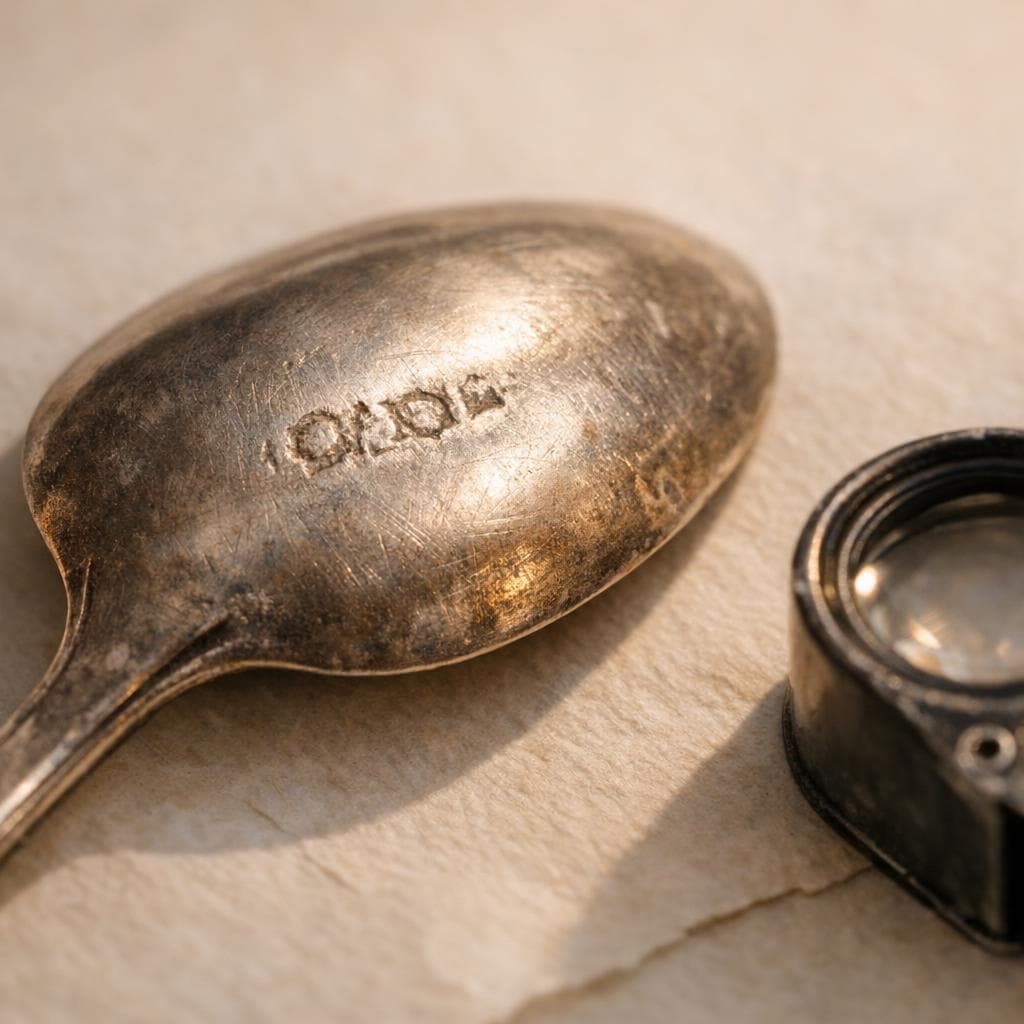
An inherited ring, an estate-sale brooch, a spoon with a promising stamp: that is where the costly confusion begins. A single mark can look like proof, but plate can borrow the language of sterling just enough to fool the eye, and one wrong read can distort value, resale, insurance, and trust.
What sterling really means
Sterling is not a decorative adjective. It is a legal standard for a specific alloy, typically 92.5 percent silver and 7.5 percent copper, and in England it has long been associated with the lion passant hallmark. The word itself reaches back to Anglo-Saxon coinage, when a pound weight of silver was coined into 240 pennies, and the silver content remained the English coinage standard until 1920, when it was reduced to 500 parts per 1,000.
That history matters because a silver-colored object is not automatically sterling, and a convincing stamp is not enough on its own. British hallmarking remains an active verification system, not a museum relic, and the law still treats description as the central issue. In other words, how a piece is described can matter as much as what it is made of.
The mistake-proofing sequence
1. Read the wording first
Begin with the exact language on the piece, not the shine. The UK Hallmarking Act 1973 requires articles described as wholly or partly made of silver to be hallmarked, subject to exemptions, and the main offense under the Act is based on description. That means a seller’s wording, a tag, an invoice, or even a misleading shorthand can create confusion long before a loupe comes out.
A single “925” can be meaningful, but it does not end the conversation. The guidance also notes that underweight articles may carry a 925 stamp, so the number has to be read in context. If the object is presented as silver but the markings, weight, and mark set do not support that claim, treat it as a question, not a verdict.
2. Check the regional marking system
Sterling identification is often a composite system, not one stamp. In British and Irish silver, the maker’s mark, assay office or town mark, standard mark, and often a date letter work together to show origin and age. That is why collectors use references such as Silver Makers Marks and 925-1000.com, because the full mark set can reveal whether a piece is sterling, plated, or something else entirely.
In England, the lion passant is the classic sterling marker, but even that should be read with the other punches around it. Sheffield Assay Office is still active, which is a useful reminder that hallmarking is a living system of testing and marking, not just a historical language stamped into old silver.
3. Inspect the strike quality and wear patterns
Once the wording and regional system make sense, look closely at how the marks sit in the metal. A genuine strike should look integrated with the surface, not oddly pasted on, and the wear should make sense across the whole piece. On a well-used spoon, the most exposed areas may soften first, while the deeper parts of a true mark often remain readable longer.
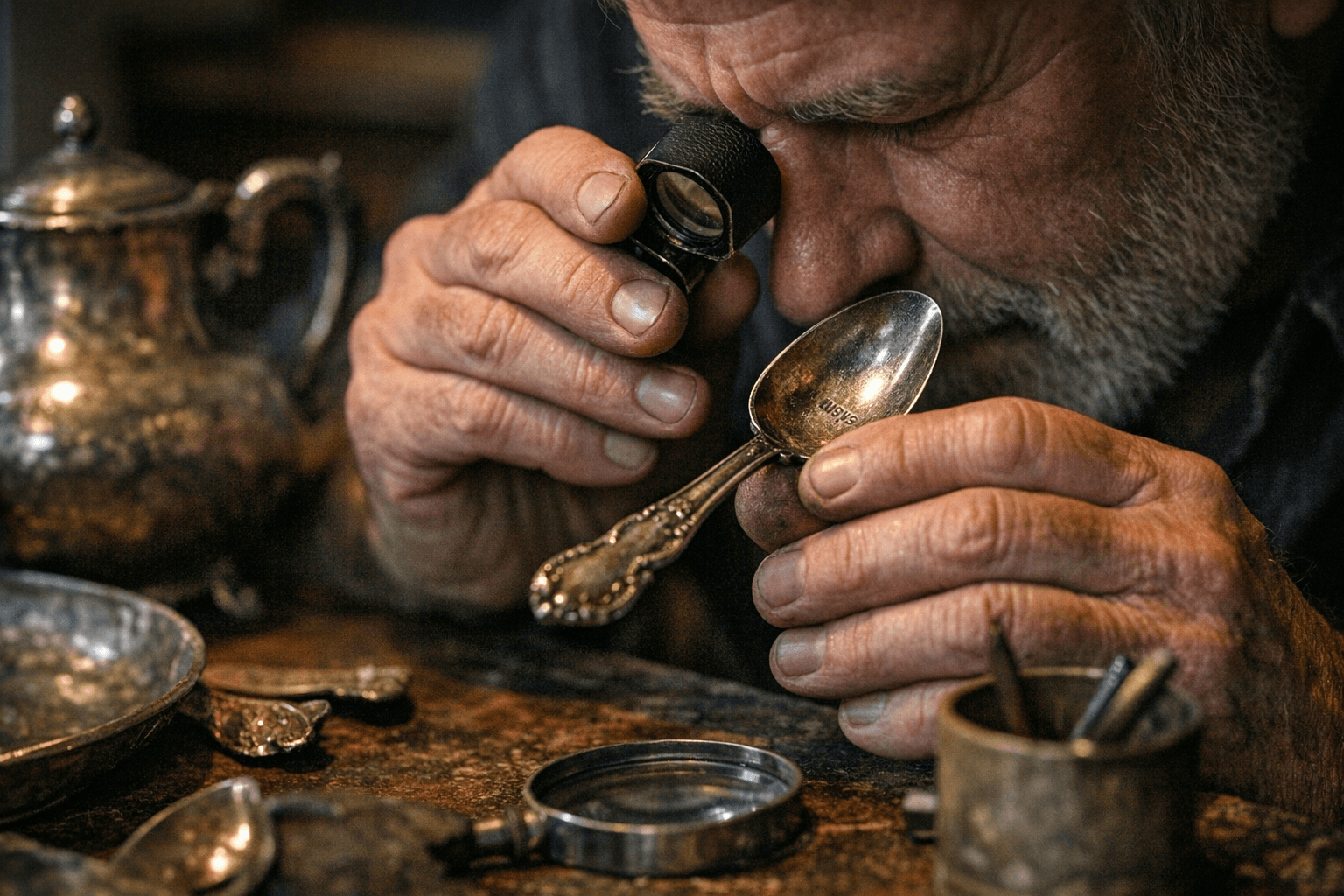
This is where inherited objects and flea-market finds reward patience. A brooch that has lost detail on the clasp and edges but still carries crisp, well-aligned marks may tell one story, while a stamp that looks fresh against an otherwise heavily worn surface may tell another. The point is not to hunt for a perfect object, but to see whether the marks belong to the piece’s life.
4. Look for plating clues
Silverplate can be persuasive because it borrows the visual cues of precious metal without carrying sterling’s material value. That is why the warning against trusting a single stamp matters so much. A plate piece may use wording or symbols that look close enough at a glance, but if the mark set is incomplete, inconsistent, or too convenient, the object deserves a second look.
The UK guidance is especially helpful here because it draws a bright line around confusing description. It says that, apart from the silver hallmark or a 925 stamp on underweight articles, other standalone fineness marks on gold-plated silver articles are considered potentially confusing and misleading. That same logic should train the eye on silver finds: if the piece is trying to say “sterling” with only half the evidence, the burden is on the object to prove itself.
Why the difference changes the stakes
This is not just a collector’s parlour game. A true sterling object carries a different valuation profile from silverplate, and that difference affects resale, insurance, and how you document a piece for future buyers or heirs. A well-read hallmark can turn a thrift-store find into a documented silver object; a misread plate stamp can do the opposite, inflating expectations and muddying provenance.
The legal framework gives you the clearest reminder. The Hallmarking Act 1973 was built around composition, assaying, marking, and description, which means the standards are meant to protect consumers from exactly this kind of visual sleight of hand. In practice, that is why experienced eyes do not stop at “925” or “sterling.” They ask whether the whole object, from its wording to its wear, tells the same story.
The final pass before you decide
When you hold a suspiciously promising piece, make the read in this order:
1. Read the wording exactly as it appears.
2. Match the marks to the regional system.
3. Check whether the strike and wear patterns are consistent.
4. Look for signs that the stamp is doing more work than the object itself.
That sequence is simple enough to use in a crowded market and careful enough to use at a kitchen table with an inherited box of silver. In the end, sterling should not be a guess made from one tidy number. It should be a chain of facts, and the better you learn to read that chain, the less likely you are to mistake plate for proof.
This article was produced by Prism’s automated news system from verified source data, official records, and press releases, then run through automated quality and moderation checks before publishing. The system is built and supervised by the people who set the standards it runs under. Read our full AI policy.
Did this article answer your question?