Vintage Silver Hallmarks, 925 Marks, and Testing Methods Explained
The fastest way to avoid a costly silver mistake is to read the marks first, then test the metal only as far as the object can safely bear.
What 925 means, and what it does not
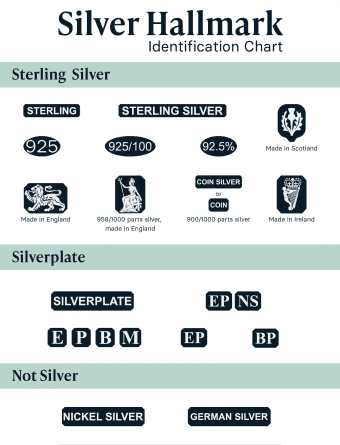
The number 925 is where a silver story often begins, but never where it should end. The Federal Trade Commission says the words “silver,” “sterling,” and “sterling silver” describe products containing 92.5 percent pure silver, and silver items are sometimes marked 925 to indicate 925 parts per thousand pure silver. The U.S. Geological Survey gives the same standard in practical terms: sterling silver is 92.5 percent silver, with the remaining 7.5 percent made up of copper and/or other alloys.
That purity standard matters because silver is one of the most frequently misdescribed metals in vintage jewelry. A crisp 925 stamp can point toward solid sterling, but it can also be copied, worn down, or placed on a piece that has seen repairs, replacements, or plate over base metal. In other words, the mark is a clue, not a verdict.
Read the hallmarks before you reach for a test
On a vintage ring, brooch, or bracelet, the marks are the first archive to decode. In the United Kingdom, government guidance says precious-metal items sold as gold, silver, platinum, or palladium must have a legally recognized hallmark when they are over certain weight thresholds, and that hallmark shows the item has been independently tested and verified for purity. The Goldsmiths’ Company Assay Office traces hallmarking in London to 1300, with the first assay office at Goldsmiths’ Hall opening in 1478, which places the system centuries ahead of modern consumer protection.
The traditional UK hallmark is not a single stamp but a sequence of marks. The full traditional hallmark comprises five marks, and the sponsor’s mark identifies the person or company responsible for submitting the item for hallmarking, not necessarily the maker. Sheffield Assay Office says the sponsor’s mark, fineness mark, and assay office mark are compulsory, while the date letter and some other symbols may be voluntary additions depending on the item and system used. For collectors, that distinction is crucial: a sponsor’s mark can lead you toward the party that handled the piece, but it does not automatically tell you who fabricated it.
The safest checks you can do at home
Start with the visual exam, then move to the simplest physical tests. A proper inspection begins with the purity number, the assay-office symbol, and any mismatch between what the piece claims to be and how it behaves in hand. If a bracelet stamped 925 feels implausibly light for its size, if a brooch wears a silver mark but shows yellow metal in high-friction areas, or if a clasp looks newer than the body of the jewel, those inconsistencies deserve attention.
A magnet test is a useful first screen because silver is not magnetic in the way many base metals are. If a strong magnet grabs the piece hard, suspicion rises quickly. If the magnet does nothing, that does not prove the object is sterling, but it does help rule out some obvious impostors. Weight also matters: sterling has substance, and a hollowed or plated piece often gives itself away by feeling too light, especially when compared with a known silver object of similar size.
Patina deserves a careful eye as well. Real vintage silver usually develops a soft surface character in recesses and around chased or engraved details, while bright, even shine across every surface can suggest recent polishing, replating, or a later replacement component. Documentation strengthens the picture: an old sales receipt, family note, or original box can help support what the marks already suggest.
Where DIY screening ends
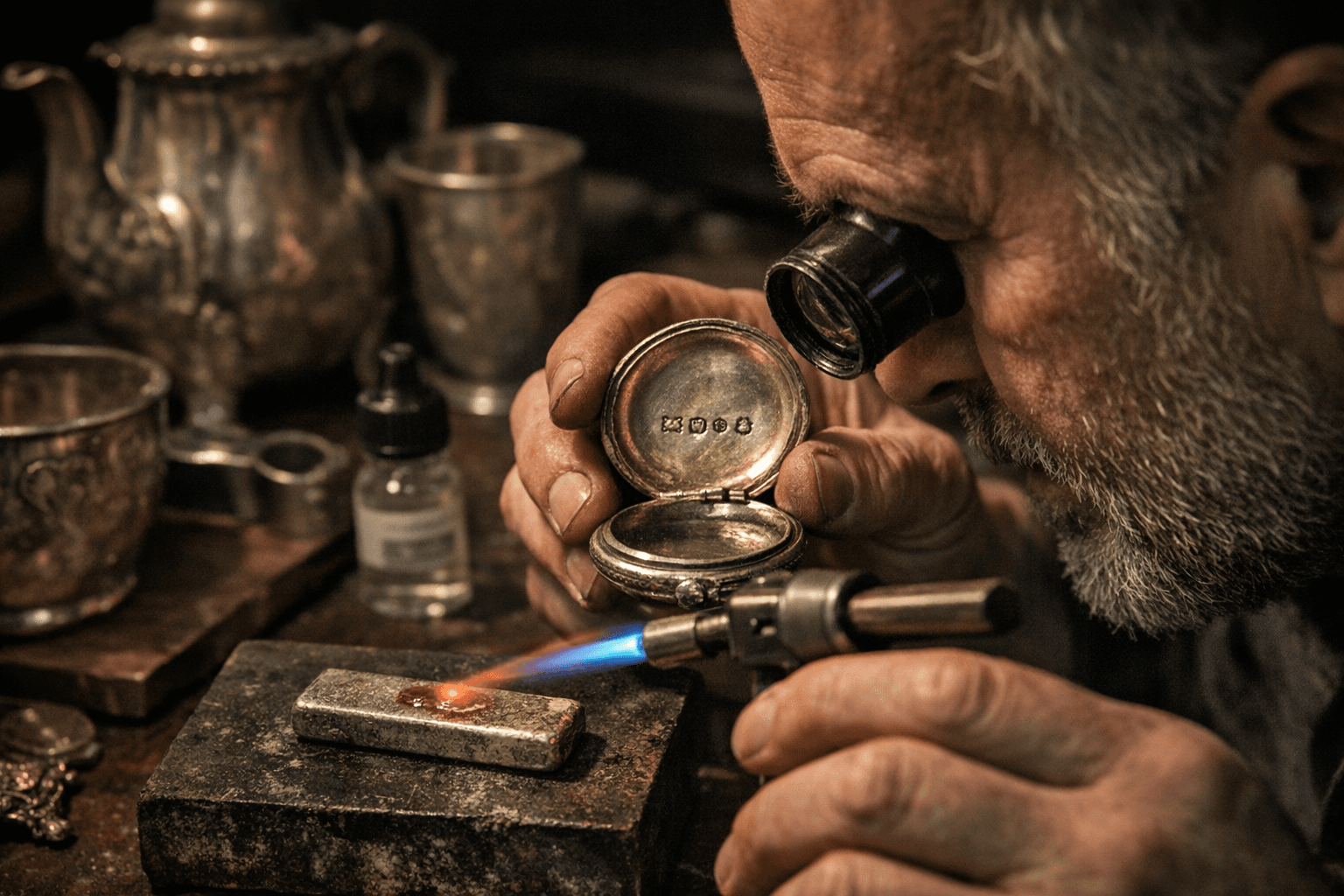
Home checks are meant to screen, not settle the question. Acid testing, while common in jewelry work, is more invasive and can mark a finished vintage surface. That makes it a poor first choice for pieces with collector value, fine engraving, enamel, or delicate construction. If you already suspect the object may be plated, altered, or assembled from mixed-metal parts, a scratch-and-acid approach can do more harm than good.
That is the point at which XRF analysis becomes especially useful. XRF, or X-ray fluorescence, can verify composition without damaging the piece, which makes it well suited to vintage jewelry and other silver objects where surface preservation matters. When a hallmark looks right but the weight feels wrong, or when a mark is partially worn and impossible to read, XRF can move the conversation from guesswork to evidence.
Why small details matter so much
Hallmark identification often comes down to tiny details, and assay-office resources ask for clear images of the marks for exactly that reason. A blurred sponsor’s mark, a weak fineness punch, or a partially visible assay-office symbol can change the identification entirely. That is why collectors should photograph marks in bright, indirect light and compare the shape, spacing, and placement before deciding what the piece is.
This is also why hallmarks should be read as part of a larger dossier. A correct mark, convincing patina, appropriate weight, and supportive documentation together make a much stronger case than any one clue alone. A single stamp can be copied; a coherent object rarely lies in every detail.
The collector’s eye, applied carefully
For vintage silver, authentication is less about a dramatic reveal than a disciplined sequence of checks. Read 925 or the assay marks first, note whether the piece sits within the framework of recognized hallmarking, then use the magnet only as a rough screen. If the object still raises questions, move from observation to professional testing.
That order protects both value and surface. It also respects what silver objects are at their best: not just precious metal, but small archives of use, trade, and care. The right hallmark can tell you that a piece was independently tested; the right testing method can tell you whether the story it is telling is true.
This article was produced by Prism’s automated news system from verified source data, official records, and press releases, then run through automated quality and moderation checks before publishing. The system is built and supervised by the people who set the standards it runs under. Read our full AI policy.
Know something we missed? Have a correction or additional information?
Submit a Tip