Lahaina Jewelry Rises From Wildfire Ashes, Reopens After 34 Years on Front Street
Victoria Doan fled Vietnam with nothing at 18. The family jewelry shop she built over 34 years on Front Street reopened April 11 after wildfire took everything.
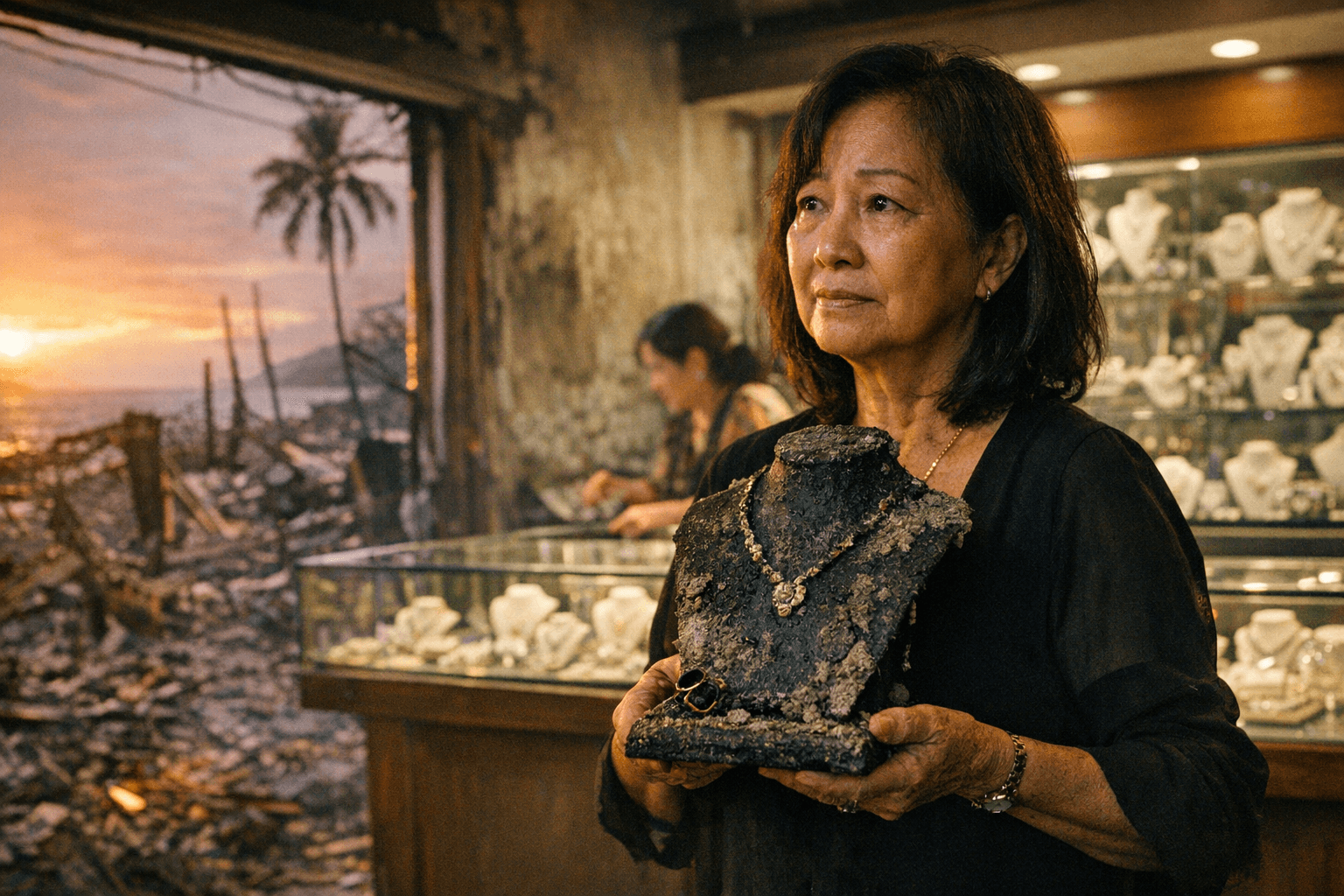
Pick up a ring that has been through fire and it tells you something no appraisal ever could. The prongs may be bent, the stone clouded with smoke residue, the shank warped from heat, but the piece endures. That persistence is the unspoken promise of fine jewelry, and it is the quiet philosophy embedded in Lahaina Jewelry's return to West Maui after the most devastating wildfire in modern Hawaiian history.
On April 11, 2026, the Doan-DeLima family held the reopening blessing for Lahaina Jewelry at 11 a.m. at 1183 Honoapiʻilani Highway, Unit 103, a newly constructed standalone building at Lahaina Cannery Mall, next to the Bank of Hawaii. The ceremony capped 32 months of rebuilding for a business that had anchored Front Street for 34 years before August 8, 2023 took everything.
Victoria Doan founded Lahaina Jewelry in 1989. She had arrived in Lahaina in the 1970s as an 18-year-old refugee from Vietnam, carrying no money and no professional network, in a country whose language she was still learning. Her husband drove a taxi. She began selling costume jewelry, reinvesting what she earned, upgrading her inventory piece by piece over years and then decades. What started at the most modest entry point in the trade grew into the oldest mom-and-pop jewelry shop on Front Street, the one locals referenced by name and visitors found themselves returning to, situated next to Kimo's Restaurant in the heart of what would eventually be designated the Lahaina Historic District.
The store was also a living family archive. Victoria's daughter Tina DeLima grew up behind the display cases. Tina's sons Maddox and Jackson took their first steps on the shop floor. Victoria's son Byron was part of the operation too. Four people across three generations, shaped by the same afternoon light off the water and the same community that walked through the door across more than three decades.
The August 8, 2023 wildfire erased that chapter with terrifying speed. The fire killed 102 people, burned approximately 2,170 acres, and damaged or destroyed more than 2,200 structures, consuming much of the Lahaina Historic District. Economic losses were estimated by Moody's RMS at between $4 billion and $6 billion; FEMA placed the capital exposure required to rebuild at approximately $5.52 billion. Lahaina had been generating roughly $2.7 million in daily revenue before the fire; in the immediate aftermath, Maui's estimated daily losses from business closures and reduced visitor spending reached $11 million. Passenger arrivals at Kahului Airport collapsed by more than 70 percent, falling from approximately 7,000 to just 2,000 per day. Victoria Doan lost her personal home in the same disaster that took the store.
A GoFundMe campaign organized by family member Kathy Doan nearly reached its $100,000 goal, drawing over 350 individual donations, a figure that reflects the store's standing in a community that was itself in acute crisis. Across Maui, more than 250,000 donors collectively contributed over $30 million to wildfire relief through GoFundMe campaigns alone. Money, however, could not compress the timeline of permits, rebuilt inventory, and the slow reopening of a commercial landscape that remained largely frozen. As of mid-2025, Front Street had seen little to no new construction permits issued. The Lahaina Small Boat Harbor, which sustained $30 million in damage, didn't begin its phased commercial reopening until December 2025. The Old Lahaina Luau, one of the island's defining cultural venues, only returned in late 2025. The family considered relocating to other towns on Maui. They stayed. Tina DeLima has described the decision as one of commitment to the place where they had poured their hearts and souls for more than 35 years. Lahaina Cannery Mall, at 1221 Honoapiilani Highway, became the practical foothold for that commitment, and Lahaina Jewelry's reopening there ranks among the most emotionally significant milestones in the broader West Maui commercial recovery. Tina herself called the road back "a pretty hard journey."
For anyone whose own jewelry was among the personal losses in a wildfire or natural disaster, the Doan family's recovery carries a parallel that's worth understanding in detail: much can be salvaged, and the process of doing so has a specific sequence.
The first 72 hours after a jewelry loss are critical for insurance documentation, and the instinct to clean or sort recovered pieces immediately is the most common and costly mistake. Before touching or moving anything, photograph every piece in place, including the surrounding debris, to establish physical and spatial context for the adjuster. A written inventory created as close to the event as possible carries more evidentiary weight than one compiled weeks later. If pieces were previously appraised, locate those documents immediately and store copies digitally in a cloud account separate from any device that may have been destroyed in the same event. Verify whether your policy covers replacement value or actual cash value, because for vintage and estate pieces these two figures can diverge by thousands of dollars. Insurance appraisals on pieces set with colored gemstones or fancy-cut diamonds should be updated every three to five years, as both categories are subject to meaningful market movement that older documentation won't reflect.
Recovered pieces that survived fire or water exposure require careful evaluation before any cleaning intervention. A piece that looks destroyed is frequently salvageable to a degree that surprises people unfamiliar with how jewelry behaves under stress. High-karat gold is malleable enough to warp at temperatures below full structural failure, but the metal itself is almost always recoverable; a skilled bench jeweler can reform a shank, rebuild a gallery, or recast a setting from the original metal when sentimental value justifies the investment. Platinum performs differently: it withstands significantly higher temperatures and frequently survives residential fires with its structural integrity entirely intact, even when surface discoloration creates the misleading impression of greater damage. Diamonds, being the hardest natural material and chemically stable across most residential fire temperatures, emerge intact more often than their owners expect. Carbon deposits from smoke can closely mimic surface damage to the stone itself, which is why professional cleaning should precede any assessment of actual loss.
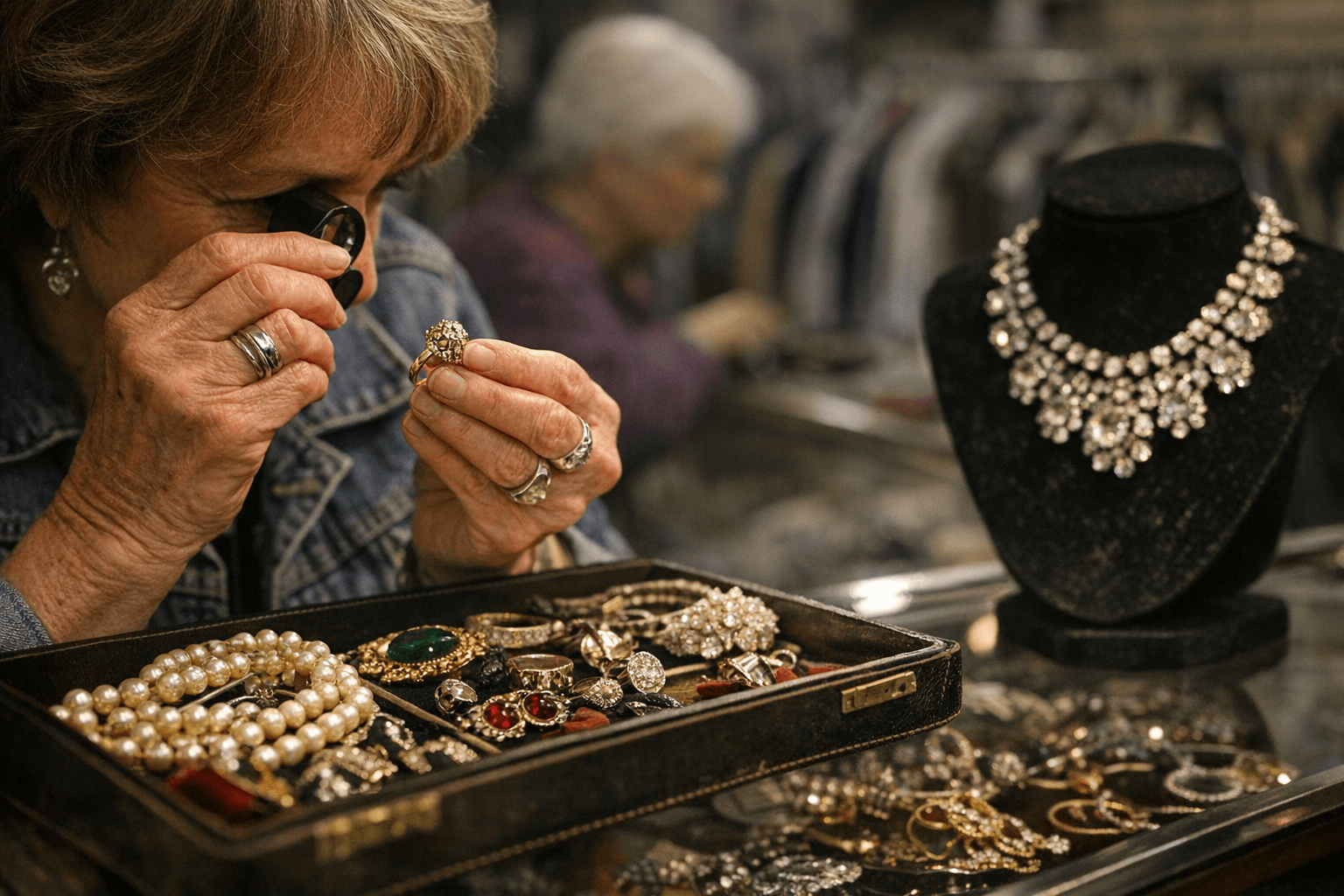
Safe cleaning of fire-affected pieces begins with a loupe inspection before any liquid contact at all. A prong that has been heat-stressed may appear sound to the naked eye but be brittle enough to release a stone the moment it enters an ultrasonic cleaner. Warm water, a soft-bristled brush, and mild dish soap constitute the appropriate first pass for most metal-and-stone combinations. Ultrasonic cleaning should be avoided entirely on any piece with suspected heat fractures, thermally treated stones, or settings that have not been professionally examined since the event. Bring every recovered piece to a qualified bench jeweler before any deeper intervention.
Re-setting is where sentiment and craft converge most directly. If a stone you inherited survived a disaster but its original setting was destroyed or rendered structurally unsafe, the stone is the archive, and a new setting is an act of continuation rather than replacement. A bezel setting in 18-karat gold provides more physical protection than a traditional four- or six-prong configuration, surrounding the full circumference of the stone's girdle rather than gripping it at discrete points. For antique cuts, which often feature thin girdles and hand-finished facets that a modern prong can chip, a bezel or partial bezel is frequently the wiser choice regardless of the owner's aesthetic preference. The new setting becomes part of the object's biography, not an erasure of it.
Rebuilding a meaningful vintage collection after a total loss is a fundamentally different exercise than building from scratch, and the distinction matters. The goal is provenance and personal continuity, not catalog replacement. In West Maui specifically, the return of long-established local dealers carries weight that anonymous sourcing cannot replicate. A shop that operated in the same town for 34 years, handled estate pieces from local families across generations, and maintained the kind of community trust that produces 350 individual donations in a crisis, is a reference point for provenance that no online marketplace can substitute.
Victoria Doan built Lahaina Jewelry from nothing twice. The first time required 34 years. The second took 32 months.
Know something we missed? Have a correction or additional information?
Submit a Tip