Lost Fish Pendant Recovered from Chevy Chase Backyard by Metal Detection Specialist
A Chevy Chase family recovered their fish-shaped heirloom pendant after a specialist from TheRingFinders grid-searched their yard on April 11, proving the piece was never truly gone.
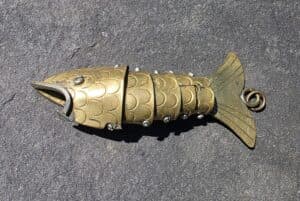
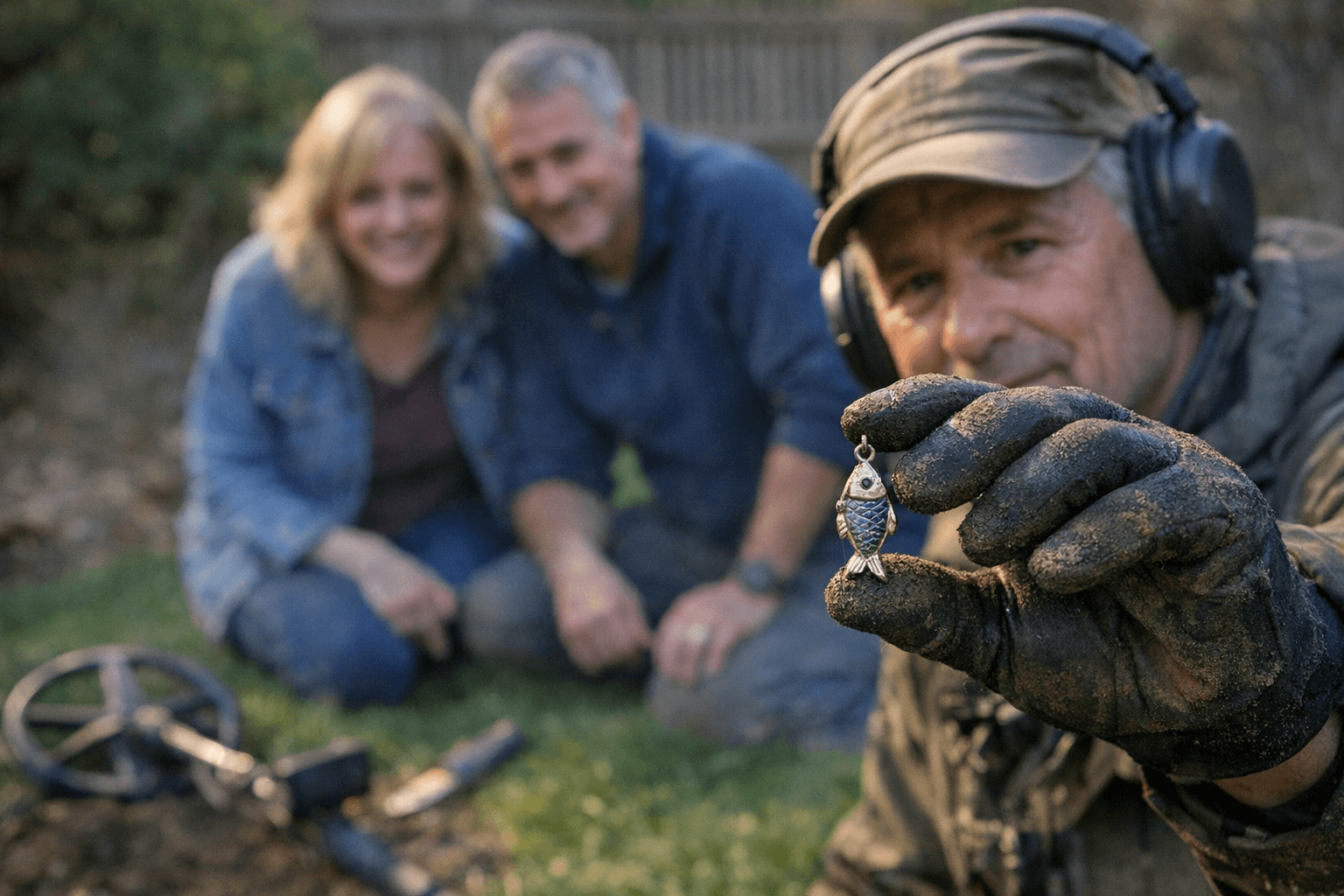
The fish pendant had been underground in a Chevy Chase, Maryland backyard long enough that the family had begun grieving it rather than searching for it. Shaped like a swimming fish, small enough to disappear into a patch of lawn without a trace, it was the kind of piece that accumulates meaning quietly over years of being worn and passed down. When a metal detection specialist recovered it on April 11, the path that led there was as instructive as the moment itself.
The family started exactly right: they pulled the security footage. Reviewing camera angles helped narrow the probable loss zone to the backyard, ruling out the car, the front walk, and the street. A neighbor who owned a metal detector agreed to sweep the area. That sweep came up empty. It is the moment when many recovery attempts stop, the owner accepts the loss, and the piece stays in the ground.
Instead, the family turned to TheRingFinders, an international directory of independent metal detecting specialists designed for precisely this situation. The network spans 22 countries. Chris Turner, its founder, has cited a network-wide success rate of roughly 80 percent. Members operate on a reward basis and typically ask only for a gas money guarantee up front, which makes professional recovery accessible even when the piece at stake has sentimental rather than high monetary value.
The specialist who answered the call brought something the neighbor could not: methodology. A trained detectorist divides the search area into a grid, walking overlapping parallel lanes at a deliberate pace, a pattern the detecting community calls low and slow. The coil stays one to two inches above the ground. Once the grid is complete in one direction, the same ground is covered again at a perpendicular angle to catch any signal missed on the first pass. When a signal registers, a handheld pinpointer locates the exact target before a single shovelful of soil is disturbed. The fish pendant was found.
For anyone preparing to call a specialist, the information that sharpens a search before it begins includes recent photographs of the piece, particularly any image showing the clasp or bail, which reveal how a pendant is likely to fall and come to rest. A clear timeline matters too: when the piece was last seen and by whom, and whether the yard has been watered, mowed, or otherwise disturbed since. Property lines are equally important. A detectorist working through a directory like TheRingFinders will ask for explicit permission from the property owner before starting, and if the suspect zone extends into a neighboring yard, that conversation needs to happen in advance.
Prevention is simpler than recovery. The most common failure point on a necklace is a worn spring-ring or lobster clasp that has quietly lost its tension. A jeweler can test clasp integrity during any routine cleaning visit, and upgrading to a box clasp with a safety catch, or a toggle clasp on heavier pendants, costs far less than a professional search. At home, a dedicated drop zone positioned near the bathroom sink and again near the front door, nothing more elaborate than a small ceramic dish, eliminates the distracted moments when jewelry is most likely to be set down on an unintended surface and forgotten.
The Chevy Chase fish pendant spent time in the soil of its own family's backyard. A grid pattern and the right equipment brought it back. For any piece with real meaning, the difference between a neighbor's well-intentioned sweep and a trained specialist running a proper search is often the difference between loss and return.
This article was produced by Prism’s automated news system from verified source data, official records, and press releases, then run through automated quality and moderation checks before publishing. The system is built and supervised by the people who set the standards it runs under. Read our full AI policy.
Did this article answer your question?