Vintage Brooches Are Back: Fresh Ways to Wear Your Pins in 2026
Vintage brooches are having their biggest style moment in decades, and the lapel is just the beginning of where to wear one.
Pick up an estate sale brooch and you are holding something that resists easy categorization. It is not quite jewelry, not quite tailoring detail, not quite sculpture. The weight of it in your palm, whether it is a carved Bakelite cherry pin from the 1930s or a pavé rhinestone starburst from the 1950s, communicates intent. Somebody once chose this. Somebody once fastened it with care. The question, in 2026, is where you fasten it now.
The answer, it turns out, is almost anywhere. Brooches appeared on nine separate Spring/Summer 2026 runways across womenswear and menswear combined: Chanel, Celine, Gucci, Mugler, and Tory Burch on the women's side; Collina Strada, Dunhill, Fiorucci, and Wales Bonner in menswear. Jonathan Anderson's haute couture collection for Dior S/S 26 rivaled a florist's window with its blooming figural brooches. Ralph Lauren pinned vintage-feeling pieces to tweeds, Giorgio Armani tucked them into lapels, and Chopova Lowena went delightfully offbeat with kittens, squirrels, and butterflies. By late in the season, British fashion editors were calling brooches the biggest jewelry story of the year. Stylist Jatin Malik describes the shift as "thoughtful rather than trend driven," pointing to the way houses like Chanel, Tory Burch, and Schiaparelli are "embracing sculptural pins, refined minimal forms and dramatic statements" simultaneously: a range wide enough to include nearly every vintage brooch ever made.
Beyond the Lapel: 7 Placements Worth Trying
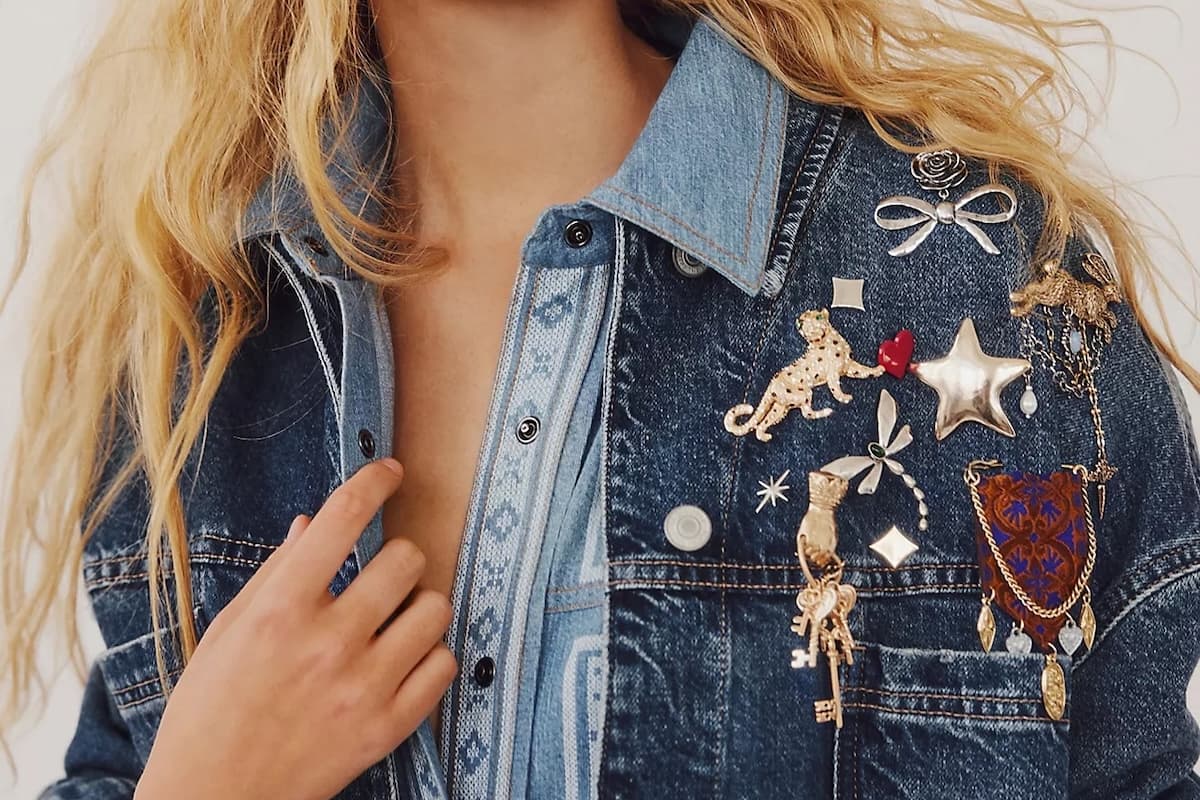
The blazer lapel is where most people start, and it remains a sound foundation. Pinning a statement piece approximately one to two inches below the shoulder seam on your dominant side gives an asymmetric finish that reads as polished rather than ceremonial. One larger piece feels graphic and considered; clustering two or three smaller vintage finds along the lapel edge turns them into a conversation. But the lapel is only the beginning.
The Scarf Knot
This is one of the most functional applications and also one of the most visually satisfying. Tie a silk scarf or a cotton bandana in a square knot (specifically a square knot, because the flat geometry holds the brooch flush against the fabric rather than letting it tilt). Pin through the knot itself, not the trailing ends, and the brooch becomes a centerpiece rather than an afterthought. At Altuzarra's SS26 show, scarves were fixed at the shoulder with a brooch-like pin and allowed to fall in flowing drapes. At Hermès spring/summer 26, silk scarves were fastened at the waist with similar ease. Both placements are achievable at home with a vintage piece and no alteration required.
The Bag Strap and Handbag Flap
Bag brooches are replacing bag charms as the accessory-on-accessory of the moment. On a fabric tote or crossbody strap, pin directly through the material near a seam for stability. On a leather or structured bag, wrap the pin around the strap itself rather than piercing the leather, which is both safer for the bag and reversible. A statement brooch on the flap of a structured handbag delivers exactly the kind of Parisian understatement that looks effortless precisely because it is not. Keep it to one piece per bag; two reads as decoration, three reads as panic.
The Hatband
A stiff-brimmed hat or a bucket hat with a grosgrain band gives you a natural channel for a brooch. Slide the pin through the band so the clasp rests on the inside of the hat, then position the decorative face at the front or at a slight angle toward the crown. Figural pieces, particularly animals, florals, and insects, work especially well here because the three-dimensional form casts a shadow that reads at a distance.
The Hair
Brooches have functioned as hair ornaments since long before the bobby pin existed. A wide bar-style pin or a flat enamel piece can be worked into a French twist, threaded through a bun, or positioned at a chignon the same way a barrette would be. Avoid heavy or three-dimensional brooches in this position unless your hair is dense enough to anchor the weight. The goal is an accent, not a structural element.
The Waist Seam
Pinning a brooch at the natural waist seam of a dress or a skirt achieves two things at once: it marks the waist visually, and it gives the pin a structural anchor so the fabric bears the weight rather than the weave. A tie-waist dress offers an even better surface: tie the sash in that same flat square knot and pin through it, turning a utilitarian closure into a focal point.
The Shoulder Seam
Stylist Susan puts it plainly: "You don't just need to wear it where everyone used to wear it, on a lapel. If you wear it much higher, it really can look fabulous. I style it on the shoulder." A brooch at the shoulder seam of a structured jacket or at the point where a draped sweater rests across the body creates an architectural anchor. It also makes practical sense: the seam reinforcement takes the stress of the pin, protecting finer fabric.
The Summer Pareo
The most seasonal of the seven, and perhaps the most liberating. A large brooch pinning a cotton or silk pareo at the hip or sternum turns resort wear into something with intentionality. As one SS26 stylist noted, pinning brooches onto pareos "gives them a very relaxed, effortless feel." That is the opposite of the stiff formality the brooch carries in collective memory, and exactly why it works.
Securing Pins Without Snagging
The practical barrier that keeps brooches in boxes rather than on bodies is the fear of damaging fabric. It is a legitimate concern and an entirely solvable one. For delicate textiles, silk, satin, fine wool, and chiffon in particular, a magnetic brooch converter is the cleanest solution. MagnaPin is the original patented magnetic pin converter that works on most types of fabric including satin, leather, suede, linen, silk, and fur. The mechanism places one magnetic disc on the front face of the garment behind the brooch and a second on the interior, so no pin ever pierces the fabric. The caveat: anyone with a pacemaker or defibrillator should avoid magnetic closures.
For heavier fabrics where you do want to use the pin, pierce through a seam allowance or interfacing rather than the main weave, which distributes the stress. A silicone brooch lock, a small double-looped stretchy band, clips around the C-clasp to hold it shut and greatly reduces the chance of a brooch falling off your clothes. This is particularly important with vintage hardware that may have loosened over decades. Inspect pins regularly: bent or rusty pins can snag or stain and should be replaced promptly. If the hardware is compromised, a jeweler can replace the finding for far less than the piece is worth.
A Mini-Guide to Brooch Safety
- Locking clasps: Look for a rollover C-clasp on vintage pieces, which locks with a fold-over tab. If your brooch has only a simple C-clasp, add a silicone stabilizer band as backup against accidental opening.
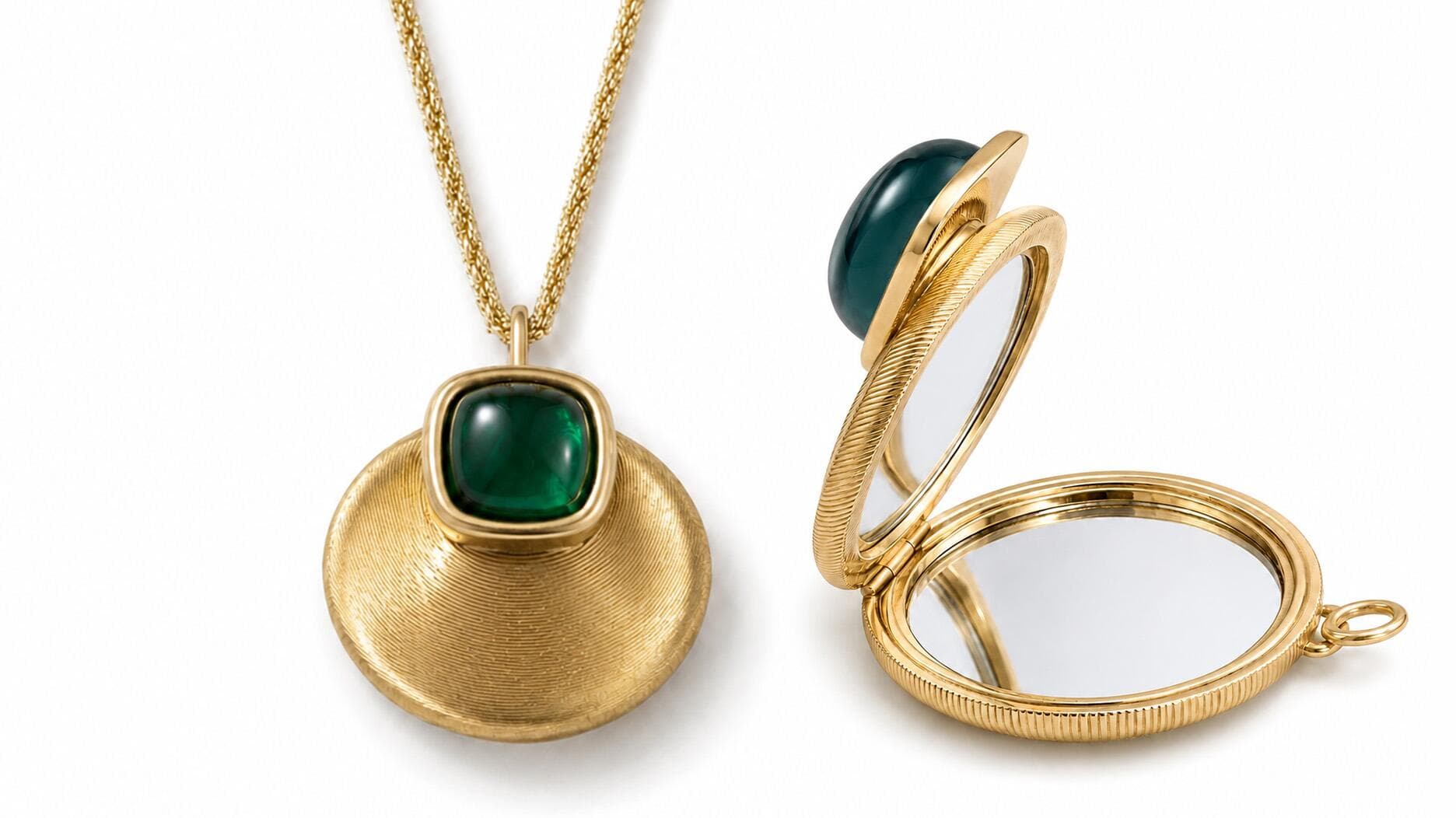
- Magnetic and pendant conversions: For a no-pierce option, magnetic converters clip directly to the existing pin stem. To convert a brooch to a pendant, thread a fine chain through the pin mechanism itself. Susan describes the technique simply: "You just get a chain and you put it through the pin part." This works best with bar-style pin backs and opens up an entirely different wearing context without any permanent alteration to the piece.
- Weight and fabric matching: Heavy rhinestone statement pieces belong on structured wool or denim, not silk blouses. Match the mass of the brooch to the density of the fabric, and the pin will hold cleanly rather than pulling the weave.
- Storage: Keep brooches in individual soft pouches to prevent pin ends from dulling or breaking. Loose in a shared tray, pin stems scratch neighboring pieces and oxidize faster. Anti-tarnish strips in a closed box slow oxidation on silver-toned findings considerably.
Three Vintage Styles to Seek Out Now
If you are shopping with intention at estate sales, flea markets, or online resale platforms, these are the categories worth prioritizing.
Bakelite figural brooches, 1930s to 1940s. Bakelite brooches are among the most popular and most copied vintage pins, and the most well-known are the little bar brooches with fruits dangling from them, particularly the carved cherry pin. The material comes in a palette that ranges from butterscotch and tortoiseshell to vivid scarlet and leaf green, and most pieces have visible carving marks and a satisfying density. The hot-pin test, pressing a heated needle briefly to an inconspicuous area, will release the distinctive formaldehyde smell that confirms authentic Bakelite versus later plastic imitations.
Art Deco rhinestone brooches, 1920s to 1930s. Geometric symmetry, pavé-set paste or crystal stones, and platinum or chrome-finished settings define this category. A well-preserved Art Deco brooch has closed-back settings with the metal folded over the girdle of each stone, and stones that are evenly matched in color and clarity. These read thoroughly modern against a minimalist outfit because the geometry never aged.
Signed midcentury costume pieces from Trifari, Weiss, and Miriam Haskell, 1940s to 1960s. Vintage brooches are highly collectible, especially those from renowned makers like Trifari, Weiss, and Haskell. The signatures matter because they are a shorthand for consistent quality and a reliable indicator of resale value. Trifari's jelly belly lucite animals and crown tiaras, Weiss's aurora borealis rhinestone clusters, and Haskell's hand-wired seed pearl florals are categories unto themselves. Look for clear, un-worn signatures on the reverse finding. Haskell pieces in particular are characterized by seed pearls threaded on hand-twisted wire over a brass base, a construction technique so labor-intensive it has never been convincingly mass-produced.
The Case for Wearing What You Inherit
Stylist Harriet frames the brooch's staying power simply: "You can jazz up any boring outfit instantly and take it from day to night." That is the compact argument for the revival and the answer to anyone who worries an inherited piece will look dated. The brooch does not look dated when it is worn with conviction and placed with precision. It looks chosen; and if you picked it up at an estate sale or pulled it from a grandmother's jewelry box, that is exactly what it is. The best vintage pieces have already outlived every trend that dismissed them. They will outlast this one too.
This article was produced by Prism’s automated news system from verified source data, official records, and press releases, then run through automated quality and moderation checks before publishing. The system is built and supervised by the people who set the standards it runs under. Read our full AI policy.
Did this article answer your question?