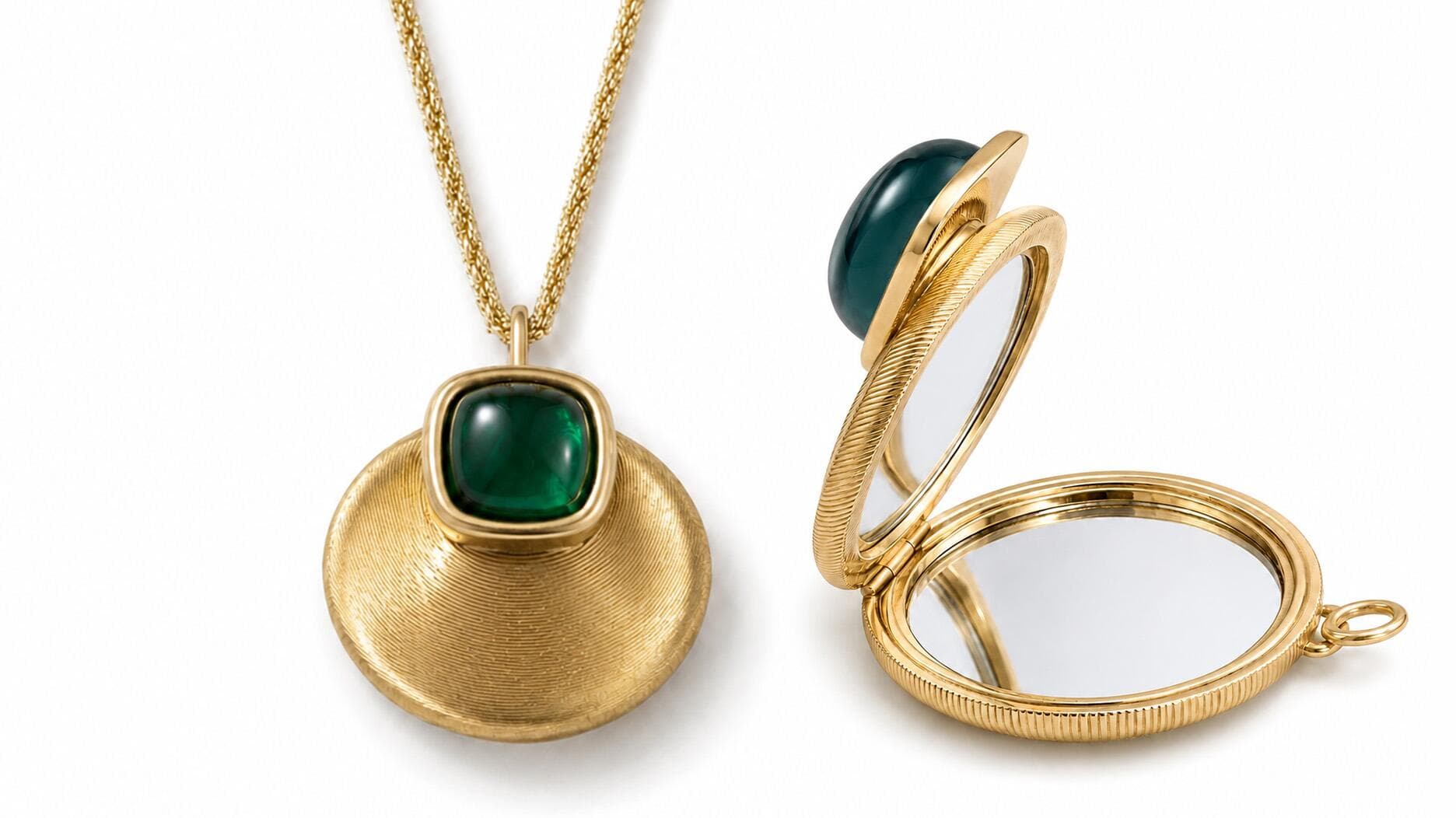
MAD About Jewelry 2026 spotlights upcycled designs, ceramic plate transformations
Upcycled metals and antique earthenware define MAD About Jewelry 2026, but the collector’s real task is spotting where history ends and transformation begins.
A fair built for the collector’s eye
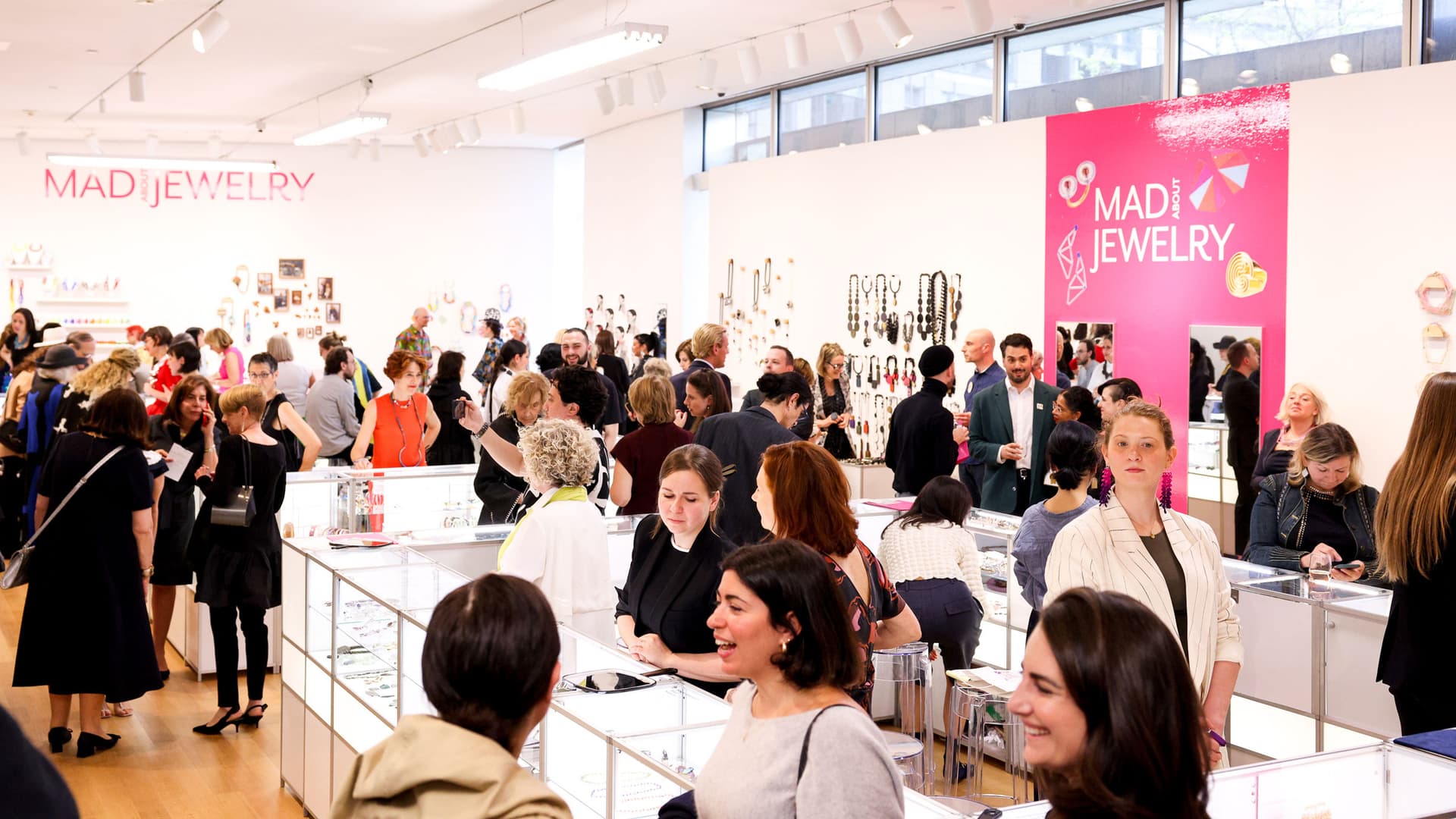
MAD About Jewelry 2026 arrives as a tightly curated field of 45 visionary creators from more than 20 countries, and that scale matters. The Museum of Arts and Design positions the annual sale as one of the most influential showcases of contemporary artist-made jewelry in the United States, with proceeds supporting participating artists and the museum’s educational programs.
For collectors, the significance is not just the roster. Curator Bryna Pomp reviewed nearly 1,000 collections before choosing the final participants, which gives the show the feel of a jury room rather than a shopping floor. The result is a selection that rewards close looking, especially for readers who read jewelry the way others read archives.
Why this edition feels different
The 26th edition lands inside a broader run of strong international representation, but with a slightly leaner artist count than recent years. The 2025 edition featured 50 artists from 23 countries, and 2024 also brought 50 designers from around the world. This year’s total of 45 still preserves the global spread while sharpening the edit, which is often where the most interesting work surfaces.
That matters because MAD is not simply hosting a sale. The museum says it is the only American museum with a dedicated gallery for both special jewelry exhibitions and its own collection of contemporary and modern studio and art jewelry. That institutional frame gives the event a different weight from a standard market preview: it is part exhibition, part market test, and part argument about where jewelry is headed next.
The new collector’s clue is transformation, not imitation
The strongest thread in this year’s field is reuse, but the key is learning to distinguish transformation from period work. Upcycled jewelry can look historic at first glance because it often borrows the visual language of age, but the collector should be watching for signs of deliberate reworking rather than untouched survival.
Look closely at where old material meets new structure. A piece built from a ceramic plate fragment, for example, should reveal the maker’s intervention through the mount, the frame, the clasp, or the edge treatment. A historical shard held in a modern setting is not trying to masquerade as an original antique jewel; it is asking to be read as a new object with an old surface.
That distinction is essential. Collectors should ask whether the material is being preserved, repurposed, or quoted. In the best work, the answer is visible in the construction itself.
Clélia Chotard shows how a plate becomes a jewel
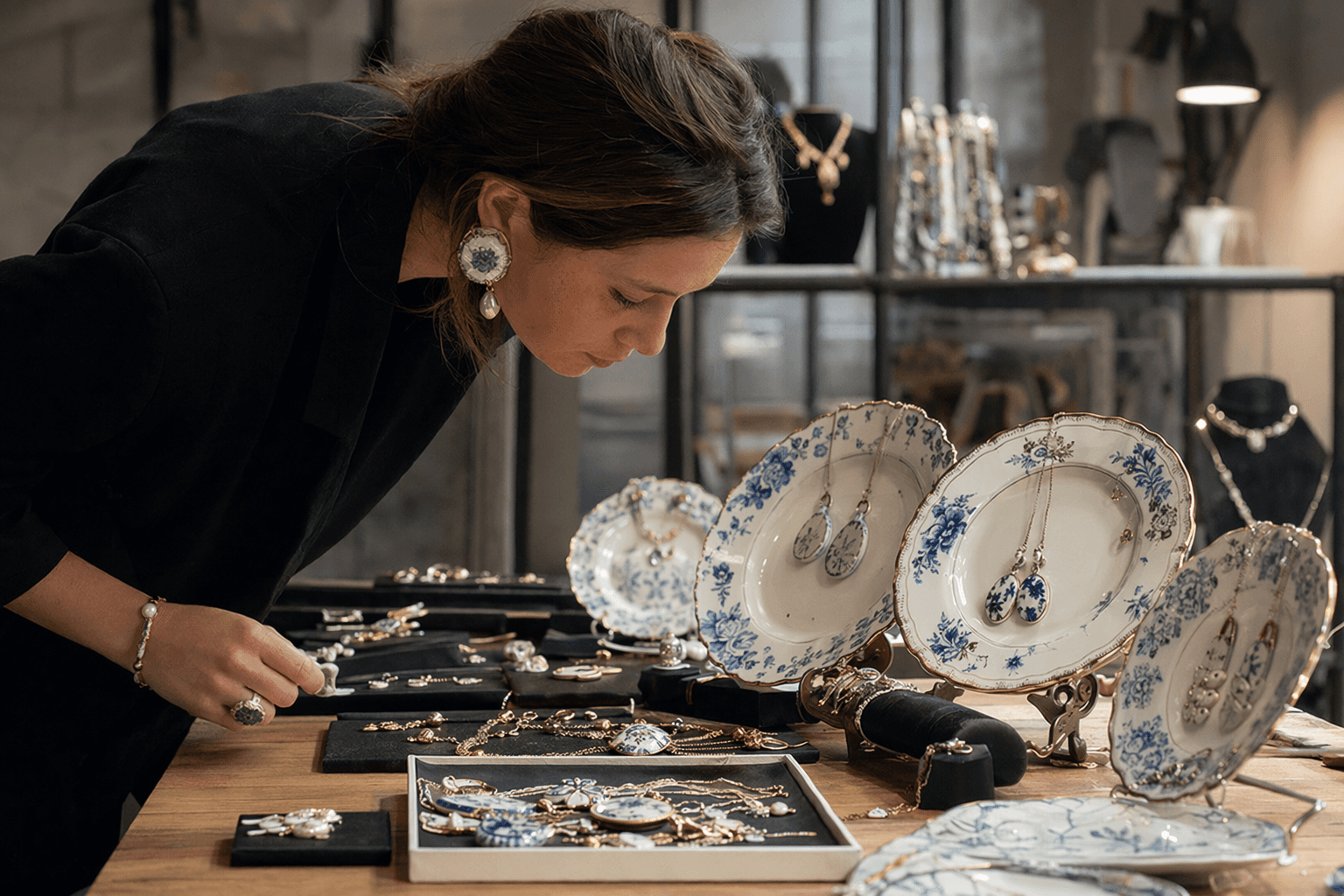
Clélia Chotard offers the clearest lesson in that reading. Her pieces are made from antique earthenware and mounted in 24-carat gold-plated frames, a combination that makes the line between object and ornament feel intentionally unstable. The description of the work as wearable paintings is useful, because it tells you what to look for: image, surface, and frame working together, not a simple conversion of dinnerware into decoration.
For collectors, the value here lies in the recontextualization. Antique earthenware carries the patina of domestic life, while the gold-plated frame shifts it into the language of display and adornment. The piece is not pretending to be period jewelry, and that is precisely why it matters. It is a contemporary artwork that borrows the authority of old material without surrendering its own authorship.
Sustainability is strongest when it is specific
Andrea de Navarrete’s practice is grounded in unconventional materials and sustainability, which is the kind of claim worth reading carefully. Sustainability in jewelry is often reduced to broad language about ethics, but the more persuasive version is material research you can see and name. When a maker foregrounds experimentation with nontraditional materials, the work should offer more than a green gloss. It should show how the material choice changes the form, wear, and meaning of the piece.
That is what makes de Navarrete important to watch here. Sustainability becomes legible when it is built into the object itself, not when it is added as a marketing adjective. For collectors, that means paying attention to whether the material story is central to the design or merely attached to it.
Wood, craftsmanship, and the return of tactility
Srečko Molk brings another useful counterpoint, with work rooted in wood and traditional craftsmanship. In a field where innovation can sometimes mean digital polish or conceptual excess, wood reasserts touch, grain, and joinery. Traditional craftsmanship also gives collectors something tangible to assess: the finish, the balance, and the discipline of the hand behind the object.
This is where the show’s broader themes of identity, memory, architecture, nature, and material innovation become more than curatorial language. They describe a shift toward jewelry that looks built rather than merely styled. The most compelling pieces in the room may not be the loudest, but the ones whose surfaces still carry evidence of making.
Brooches and smaller earrings are no longer supporting acts
WWD’s reporting points to another collector-friendly shift: a men’s and unisex focus, with brooches and smaller earrings gaining momentum beyond the red carpet. That is a meaningful change in how artist-made jewelry is entering daily wear. A brooch on a lapel or coat has become a way to show taste without resorting to scale, and smaller earrings often carry more of the maker’s precision than oversized statement pieces.
For readers who collect with an eye toward use, this is the moment to pay attention to proportions, closures, and wearability. A brooch can tell you as much about a maker’s control of composition as a necklace can, and a compact earring often reveals whether a design has been truly resolved or merely reduced in size. The shift toward men’s and unisex jewelry also widens the field, making these works less about occasion and more about personal signature.
What to inspect before you buy
If you are looking at MAD through a collector’s lens, the most useful questions are practical:
- What is the material, exactly, and is it named with precision or wrapped in vague language?
- Where is the old element, and where does the new construction begin?
- Does the piece preserve a fragment, such as ceramic, wood, or metal, or does it transform it so thoroughly that only the memory of the original remains?
- Are the joints, frames, and fastenings part of the design language, or are they hidden to mimic an antique object?
- Does the work feel like a historical object remade, or a contemporary piece in dialogue with history?
That last distinction is the one collectors should trust. MAD About Jewelry 2026 makes clear that the future of artist-made jewelry is not just about precious materials, but about provenance, reuse, and the intelligence of transformation. The most memorable pieces will not simply look old or new. They will let you see both at once.
This article was produced by Prism’s automated news system from verified source data, official records, and press releases, then run through automated quality and moderation checks before publishing. The system is built and supervised by the people who set the standards it runs under. Read our full AI policy.
Did this article answer your question?