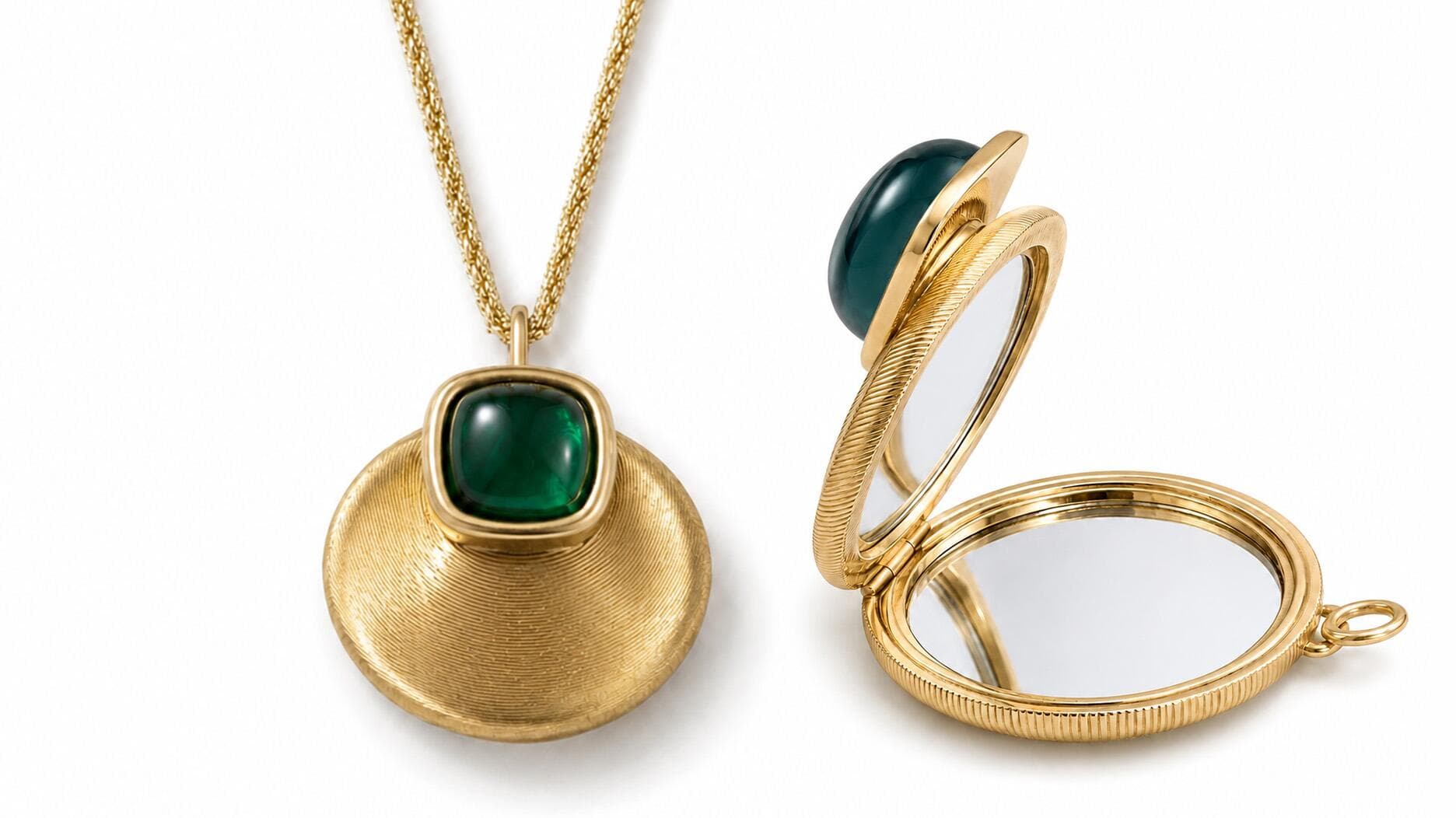
Sophie Bille Brahe turns family archives into heirloom jewelry collections
Sophie Bille Brahe treats family jewels as daily armor, not museum pieces. Her pearl and diamond language shows how provenance, wearability, and memory turn adornment into inheritance.
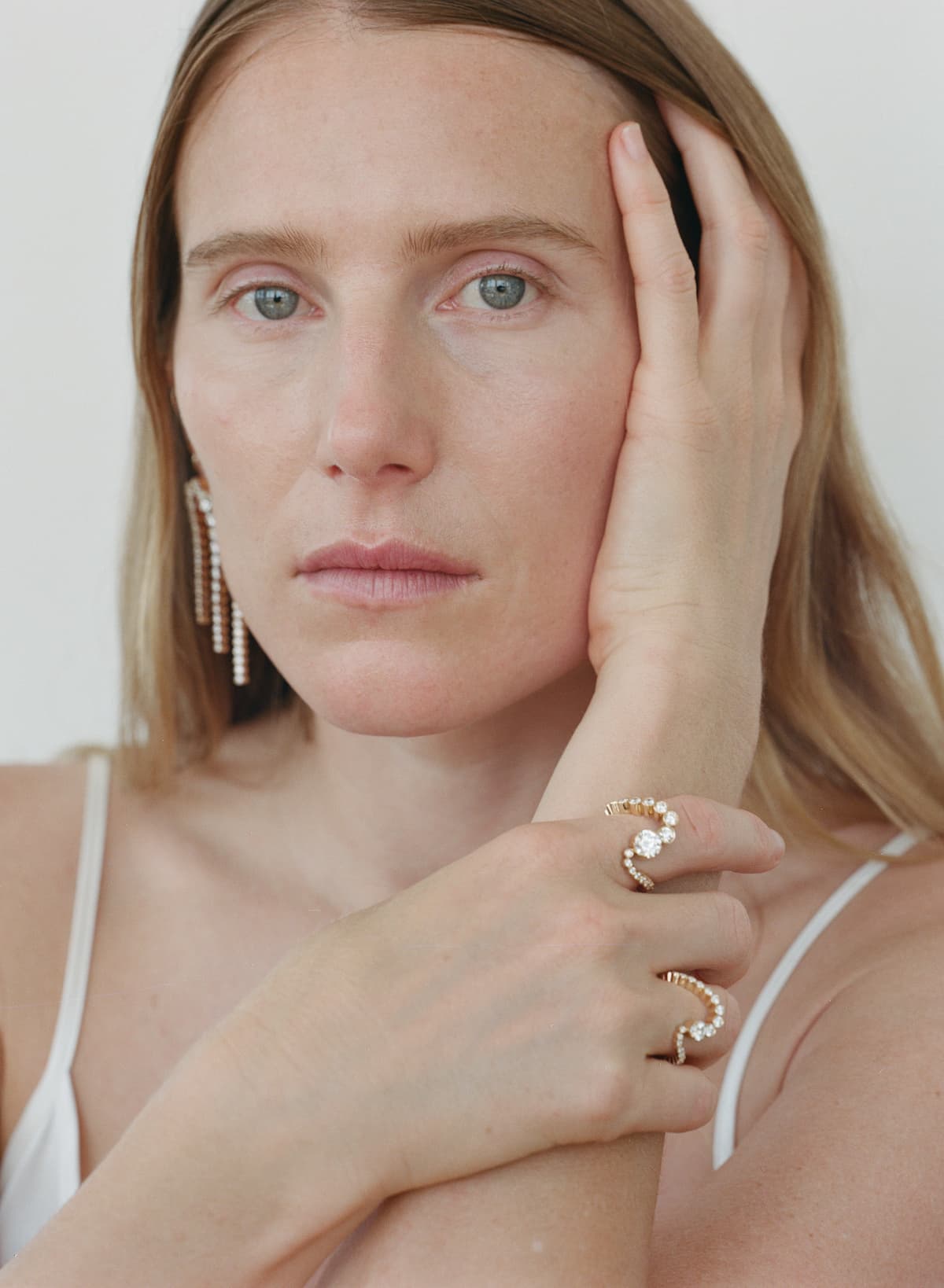
A family archive meant to be worn
Sophie Bille Brahe’s jewelry begins with a simple refusal: heirlooms should not stay locked away. Raised in an old noble Danish family, she treats inherited pieces as living material, the kind that gathers meaning through wear rather than storage. That instinct gives her work its quiet force. It is not about nostalgia for its own sake, but about carrying memory forward in a form that can be clasped, stacked, and lived in.
Her own story reinforces that point. Born in Copenhagen, trained as a goldsmith, and later earning a master’s degree from London’s Royal College of Art, she returned home in 2011 to establish her namesake brand. The path matters because it explains the balance in her work: the discipline of a craftsperson, the eye of a designer, and the emotional logic of someone who understands jewels as family narrative. When she describes her collections as continuations of her family history, she is not speaking metaphorically. She is defining the brief.
Why her pieces feel inherited from the start
The easiest way to understand Brahe’s appeal is to look at what she favors. Pearls and diamonds sit at the center of her universe, and both materials are part of jewelry’s most durable visual language. Pearls have a softness that reads intimate rather than showy, while diamonds bring clarity, structure, and longevity. Together, they create pieces that feel ceremonial without becoming precious in the fragile sense of the word.
That is why her jewelry reads as heirloom-minded even when it is new. A jewel becomes easier to pass down when its design does not depend on a passing silhouette. Clean lines, measured proportions, and settings that do not overwhelm the stone age better than elaborate ornament. If a piece is meant to move from a grandmother’s case to a granddaughter’s hand, the strongest designs usually leave room for the wearer’s life to show through.
A practical detail matters here too: the setting. A bezel setting, which wraps metal around the edge of a stone, tends to protect the gem and suits daily wear. Prongs, by contrast, lift a stone into more light and openness, but they also ask for more care. For inherited jewelry, that difference can determine whether a ring becomes an everyday companion or a piece reserved for special occasions. The right setting often decides whether a jewel is worn often enough to become personal.
How to read inherited jewelry before you change it
Family jewelry is easiest to value when you learn to read its physical clues. A clasp that has been replaced, a band that has thinned at the back, or a row of tiny repairs can tell you more about a piece’s life than its carat weight. Hallmarks, maker’s marks, and engraved dates may reveal where a jewel came from, while the wear on a shank or the softness of a stone’s facet edges can show how long it has been in circulation.
The most useful instinct is to preserve what still works. If a necklace sits beautifully at the collarbone, or a ring balances well on the hand, those proportions are part of the inheritance. Alterations should clarify a jewel’s purpose, not erase its history. That is the difference between remaking and refining.
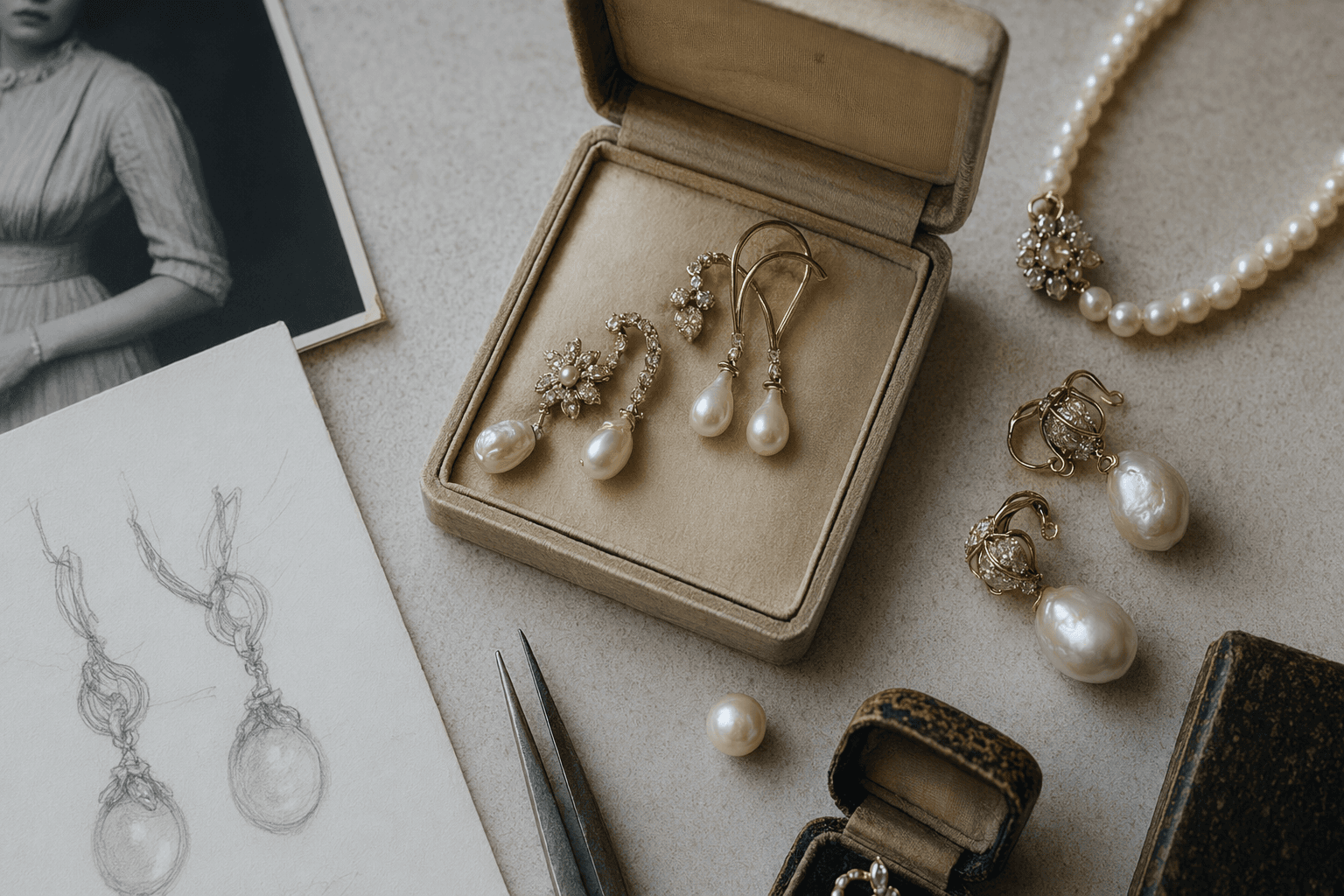
- Keep original clasps, stamps, and engravings whenever possible.
- Prioritize comfort on the hand, neck, or ear, because jewelry that is worn becomes meaningful faster than jewelry that is stored.
- Preserve evidence of age that does not compromise safety, such as a softly worn surface or a discreet repair.
- If you reset a stone, choose a setting that respects the original scale and character of the piece.
Brahe’s philosophy offers a useful lens for all of this. Her work suggests that the best heirlooms are not those frozen in their first form, but those capable of moving with the family that owns them. Provenance matters because it gives a jewel a story, yet usefulness is what keeps the story alive.
From Copenhagen to New York, and into the retail conversation
The brand’s reach also helps explain why her family-led aesthetic resonates now. Sophie Bille Brahe Inc. is sold at luxury retailers including Dover Street Market and Bergdorf Goodman, placing it in a sphere where customers already understand the value of design with a strong point of view. That positioning matters because it shows Brahe is not making sentimental objects alone. She is building a recognizable language for a contemporary luxury client who wants intimacy without losing polish.
Her boutiques in Copenhagen and New York extend that idea into space. The New York address, an appointment-only salon on the second floor of 1000 Madison Avenue, opened in 2024 and marked a deliberate step into the American market. The format is telling: appointment-only retail encourages close looking, and close looking is exactly how inherited jewelry is understood, whether it is a family ring or a modern pearl necklace. Jewelry of this kind asks to be held, turned over, and read from all sides.
That physical expansion also reflects demand. In an era when many brands chase scale through constant turnover, Brahe has chosen a more selective path, one built around recognizable forms and emotional permanence. It is a reminder that luxury does not have to announce itself loudly to feel substantial. Sometimes it is enough that a piece is designed to survive both trend cycles and family stories.
Memory, in objects and beyond jewelry
Brahe’s world extends beyond rings and necklaces. The brand also includes glass vases and a scented candle inspired by travel memories, which broadens her idea of what can hold inheritance. A vase can catch light the way a diamond does. A scent can summon a trip, a room, or a person with the force of a private archive. In that sense, the brand’s universe is not really about categories at all. It is about the objects that preserve feeling.
That is the larger lesson in her family archive approach. Jewelry becomes heirloom-worthy not because it is untouched, but because it remains part of life. A pearl strand that is clasped for dinner, a diamond ring worn to work, a brooch moved from coat lapel to silk dress: these are the gestures that give a jewel its second and third life. Brahe’s example makes the case plainly. The pieces worth passing on are the ones that never stop being worn.
This article was produced by Prism’s automated news system from verified source data, official records, and press releases, then run through automated quality and moderation checks before publishing. The system is built and supervised by the people who set the standards it runs under. Read our full AI policy.
Did this article answer your question?