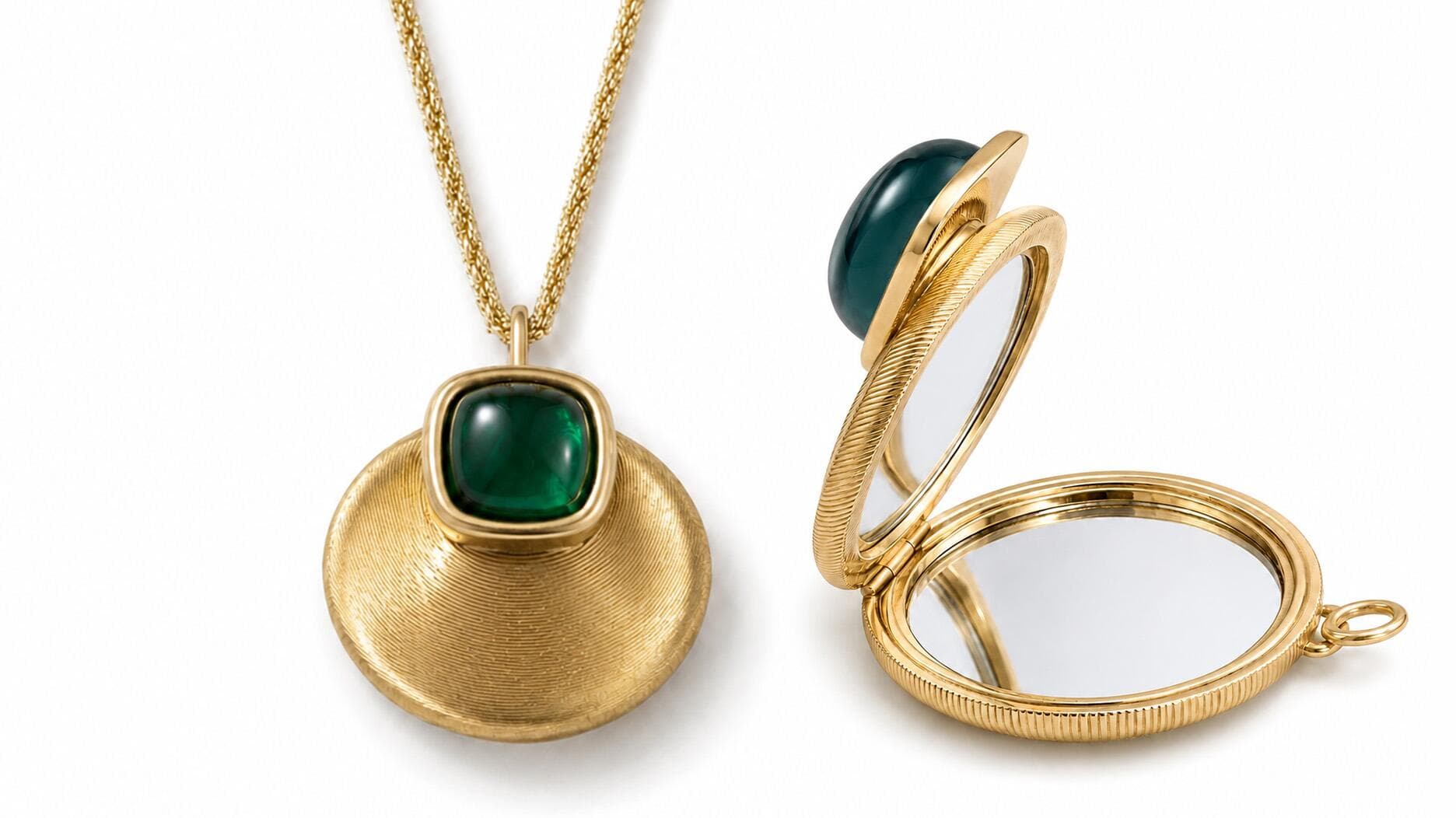
MAD About Jewelry 2026 Unites Global Artists, Collectors in May Showcase
Forty-five studio jewelers from 20 countries converge on Manhattan's Museum of Arts and Design in May; here's how to shop it like a vintage collector.
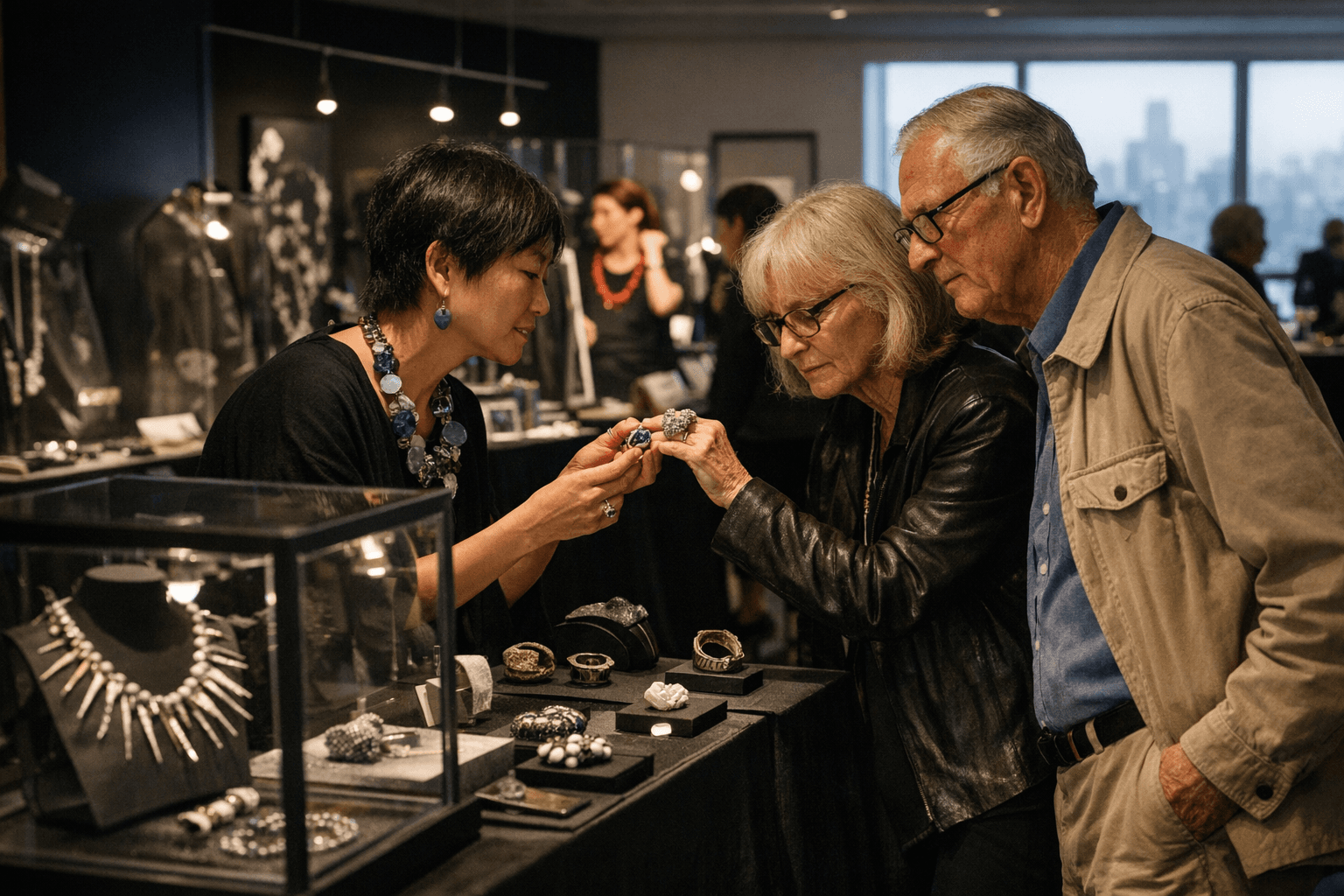
Pick up a piece pulled from an estate sale and you're holding a small archive: evidence of who made it, how metals were alloyed, how stones were set, and what a particular moment in craft history valued. The harder question — which objects being made right now will carry that same archival weight in fifty years — is the one to bring to MAD About Jewelry 2026.
*Below is the full formatted article, refined for publication:*
SUMMARY: Forty-five studio jewelers from 20 countries converge on Manhattan's Museum of Arts and Design in May; here's how to shop it like a vintage collector.
CONTENT:
Pick up a piece pulled from an estate sale and you're holding a small archive: evidence of who made it, how metals were alloyed, how stones were set, and what a particular moment in craft history valued. The harder question — which objects being made right now will carry that same archival weight in fifty years — is the one to bring to MAD About Jewelry 2026.
Now in its 26th year, the Museum of Arts and Design's annual benefit sale runs May 5 through May 9 in New York, gathering 45 artists from 20 countries for one of the most influential showcases of contemporary studio jewelry in the United States. For vintage and estate collectors accustomed to reading a piece through the grammar of its construction — the gauge of its wire, the logic of its findings, the integrity of its joinery — this is a rare chance to apply that literacy in real time, watching how contemporary makers translate historical precedent into work that could one day sit in an estate box of its own.
The event opens with a Benefit Preview on Tuesday, May 5, from 4 to 9 pm: early-access shopping alongside cocktails, followed by a buffet dinner at Robert restaurant with the participating artists. The general sale continues Wednesday through Friday from 11 am to 8 pm and Saturday, May 9, from 10 am to 6 pm, free with museum admission. The preview is the better entry point for serious buyers. The floor is thinner, every piece is still available, and the conversations with makers happen without the distraction of a crowded room.
MAD holds a singular position in the American jewelry landscape: it is the only museum in the country with a gallery permanently dedicated to jewelry, housing both special exhibitions and a permanent collection of modern and contemporary studio and art jewelry. That institutional context shapes what gets selected for the sale. Work here has been chosen for the quality of its ideas, not its retail appeal — precisely the filter that produces pieces worth collecting.
Plan to walk the full perimeter before committing anywhere. The 2026 edition spans an unusually wide material range, from traditional metalsmithing to glass, paper, textiles, and reclaimed objects, and the most instructive comparisons come after you've seen the full field. Then go back to the makers whose techniques have historical precedents.
Eunhee Cho of Korea works in hanji, the traditional Korean paper, using the jiseung method of twisting and weaving paper strips into sculptural jewelry forms. That technique has documented centuries of lineage, and Cho's rings and brooches put her directly within a tradition that already has auction comparables in major Asian art holdings. When you can trace the lineage from a technique's origin to its current execution in a single object, you are looking at something that will read well in an estate catalogue.
Sabrina Formica of Italy builds in recycled brass, bronze, and silver, her practice explicitly framed as honoring the history and memory embedded within materials. For a vintage-trained eye, this is the contemporary counterpart of old-stock metal: the alloy carries its own timestamp. In fifty years, Formica's bronzes will carry the same layered provenance that an Arts and Crafts-era copper brooch carries now. Ask her how the surfaces are intended to age. That answer tells you whether you're buying a static object or a living one.
Fatma Mostafa of Egypt integrates traditional embroidery with metal, producing richly textured pieces where textile and metalwork meet at the surface. The tension between those two materials is one of the oldest problems in jewelry construction, and its solutions trace a line of descent from Renaissance bib necklaces through Edwardian lace-and-platinum colliers. Mostafa's embroidered cuffs show how that problem is being resolved in 2026.
Elvira Cibotti pairs recycled paper with silver; Raluca Buzura of Spain fires porcelain through high-temperature kiln work. Both are working in fragile materials with significant historical analogues — ceramic jewelry in the Japanese and Meissen traditions, paper jewelry in East Asian and Latin American folk practice — which means comparative frameworks for valuation already exist. Ana Norman of the United States hand-sculpts polymer clay into small narrative assemblages encoding specific moments, places, and memories. The archival impulse is explicit in the work itself, and Norman's assemblages are an early entry in a category that will attract sustained collector attention as studio clay's forty-year history continues to lengthen.
On the sale floor, evaluate construction the way you would an antique. Find the join first: where two materials meet is where construction holds or fails. Run your thumbnail along it. Check reversibility next — can the clasp or pin mechanism be replaced without destroying the piece? In studio jewelry, findings are often integral to the design, which can make wear on the mechanism terminal. Ask the artist directly what they recommend for repair. Finally, understand the material's long-term behavior. Every artist at MAD About Jewelry will have a clear answer. If they don't, that itself is information.
The questions worth asking every maker: Is this a unique work or part of an edition? What specific alloys or materials are used — not just "silver" but the actual construction? Has this technique appeared in historical jewelry traditions, and which ones? How does the surface develop with wear, and in which direction?
These are not questions most sale visitors ask. They are exactly the questions that separate a piece bought impulsively from one that earns its place in a collection.
Save this checklist before you go:
Confirm benefit preview tickets if you want first access on May 5; general sale days are free with museum admission starting May 6.
Write down three material categories you already collect in vintage. They become your baseline for comparing historical and contemporary technique side by side.
Look up jiseung, hanji paperwork, and at least one historic embroidery-metalwork tradition before you arrive. The artist conversations will be sharper for it.
Carry a 10x loupe. It fits in any pocket and lets you read hallmarks, examine joins, and check stone seats in thirty seconds.
Bring the dimensions of a piece in your existing collection that has never fit you quite right. Many MAD artists take commissions on-site or directly after the sale closes.
Ask every artist you are seriously considering: "Is there a waitlist if this sells today?" Many regular MAD buyers hold work for collectors who ask. The best pieces often move that way.
MAD About Jewelry functions, at its best, as a living study collection: the place where the techniques that will define the next generation of studio jewelry are still attached to the people who invented them. That access ends the moment a piece enters a private collection. The window, this year, closes May 9.
This article was produced by Prism’s automated news system from verified source data, official records, and press releases, then run through automated quality and moderation checks before publishing. The system is built and supervised by the people who set the standards it runs under. Read our full AI policy.
Did this article answer your question?