Thomas Gentille, Pioneering Studio Jeweler Who Redefined Wearable Art, Dies at 89
Gentille's nine works in the Met's permanent collection outnumber those of any other contemporary jeweler — a fitting measure of a career built on eggshells and pumice.
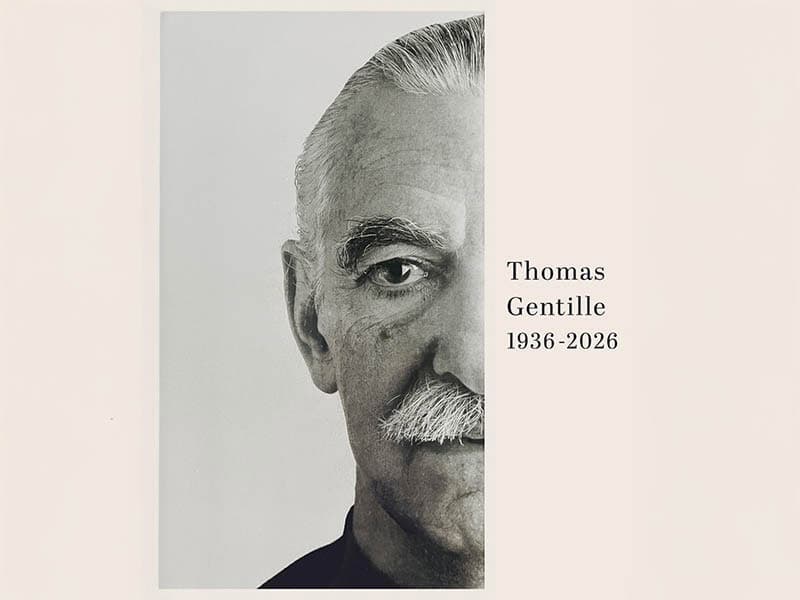
Thomas Gentille, who built one of the most distinctive bodies of work in American studio jewelry by finding monumental possibilities in eggshell, pumice, and sawdust, died in Manhattan in March 2026. He was 89.
Born in Mansfield, Ohio, in 1936, Gentille devoted more than six decades to a practice that consistently challenged what jewelry was permitted to be. Working with materials that most jewelers would discard rather than select — cork, bone, zinc, resin, egg tempera, pure pigment — he created objects that Susan Grant Lewin, writing for the Art Jewelry Forum, described as possessing "remarkable precision, balance, and quiet intensity." His pieces were small in scale, as jewelry demands, but the conceptual and aesthetic weight they carried was not.
The breadth of institutional recognition that followed reflects how seriously the field took his work. Nine pieces by Gentille are held in the permanent collection of the Metropolitan Museum of Art, more than those of any other contemporary jeweler, according to Galleryloupe. His work is also held by the Cooper-Hewitt, Smithsonian Design Museum; the Victoria and Albert Museum in London; the Philadelphia Museum of Art; the Cleveland Museum of Art; the Los Angeles County Museum of Art; the Schmuckmuseum in Pforzheim; and the National Gallery of Victoria in Melbourne, among many others. From 2019 to 2020, his work was included in Jewelry for America, drawn from the permanent collection and displayed in the Metropolitan Museum's American wing.
In 2016, he became the only American artist to receive a solo exhibition at Die Neue Sammlung, The Design Museum at the Pinakothek der Moderne in Munich. The exhibition, titled Untitled. Thomas Gentille. American Jeweler, ran from February 27 through June 5 of that year and was accompanied by a major catalog. He had also exhibited at the Calouste Gulbenkian Foundation in Lisbon and at the Victoria and Albert Museum in London, and since 1968 had been the subject of what Galleryloupe described as "countless solo exhibitions."
His European recognition included the Herbert Hofmann Prize in 2001 and the Bavarian State Prize in 2004. In 2006, he was designated Klassiker der Moderne, or Modern Classic, at Schmuck during Munich Jewellery Week. In 2018, the American Craft Council inducted him into its College of Fellows.
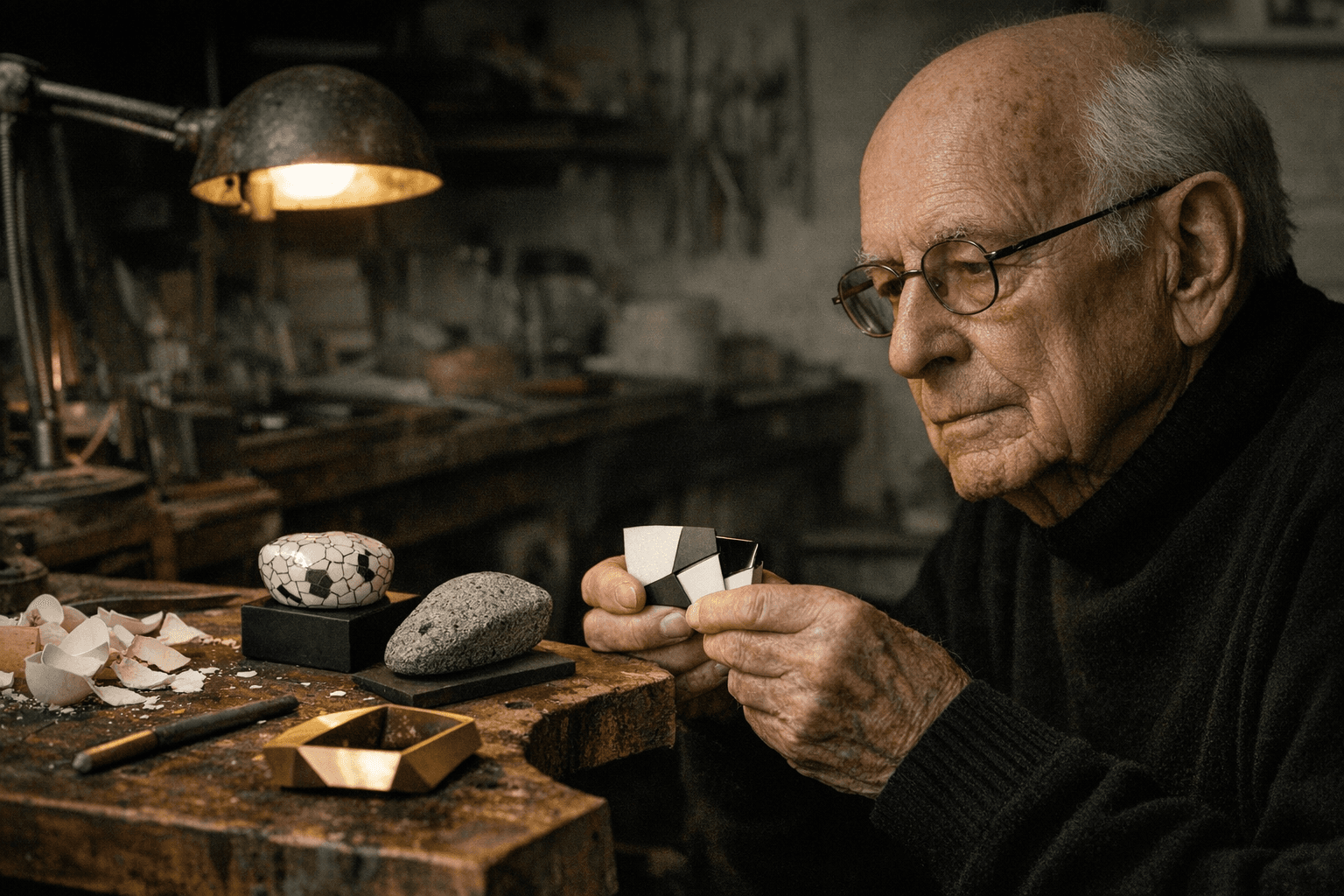
Gentille's influence on the field extended well beyond his objects. He founded the jewelry program at the 92nd Street Y in New York, a program that continues today. His book Step-by-Step Jewelry, published in 1968, is acknowledged by many metalsmiths as a standard text; the Museum of Arts and Design called it one of the go-to guides for jewelry artists. Christine Leitner, who studied under Gentille at Parsons School of Design, noted after his death that she still saves, boils, and cracks eggshells to make art — a direct transmission of his material thinking across decades.
The Museum of Arts and Design, where Gentille's work is also held, posted a statement on March 9 describing him as "a giant in the world of contemporary art jewelry." Barbara Paris Gifford, the museum's Senior Curator of Contemporary Art, Craft, and Design, wrote: "while he did not like to recognize dates in his work, he's too important not to mark this momentous moment. A great artist, teacher, author, friend, and colleague, may he rest in peace, knowing he made a significant impact on this earth."
That resistance to marking dates in his work was, in its way, consistent with everything else Gentille made: objects that refused the conventional signals of value and insisted, quietly and precisely, on their own terms.
Know something we missed? Have a correction or additional information?
Submit a Tip