Wealthy Buyers Turn to Jewelry as Investment Amid Economic Uncertainty
Christie's set an auction record in December as ultrarich buyers snap up rubies, sapphires, and emeralds at 2-3 times their estimates.
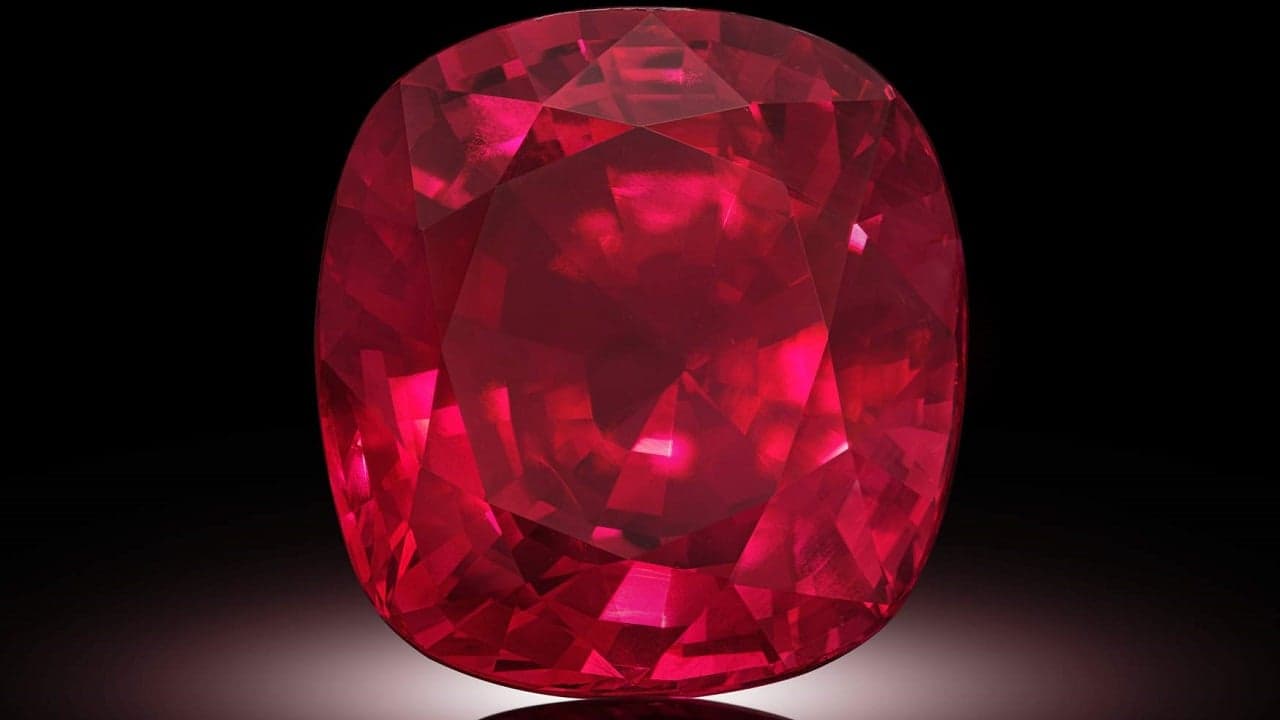
Pick up a Burmese ruby at auction these days and you may find yourself bidding against someone who used to buy handbags. When the gavel came down at Christie's in December, the house set a record that sent a ripple through the auction world — a signal, experts say, of something larger shifting in how wealthy consumers think about where to put their money.
Colored gemstones, particularly rubies, sapphires, and emeralds, have emerged as the asset of the moment for ultrarich buyers navigating market volatility and geopolitical uncertainty. Auction houses have seen high-quality colored gems sell for two to three times their pre-sale estimates, a phenomenon driven by record-high gold prices, the durability and resale value of branded jewelry relative to handbags, and the singular appeal of stones that cannot be precisely duplicated. Unlike diamonds, colored gemstones are more difficult to replicate in a lab, and each stone carries its own color saturation, inclusions, and origin story.
"Whenever you have macroeconomic volatility, the appeal of hard asset investing goes up," said Thorne Perkin, president of investment management firm Papamarkou Wellner Perkin. "Tangible assets, they tend to retain their value or even increase when inflation rises."
Mario Ortelli, managing partner at strategic and M&A advisor Ortelli&Co., agreed there was clearly a "defensive element" to the trend, but was careful to draw a boundary around the enthusiasm. "Jewelry should not be viewed as a financial asset equivalent to equities or ETFs," he said. "Liquidity, transaction costs, and dispersion of returns are much higher." He added that the long-term outlook for branded luxury jewelry is positive, but cyclical.
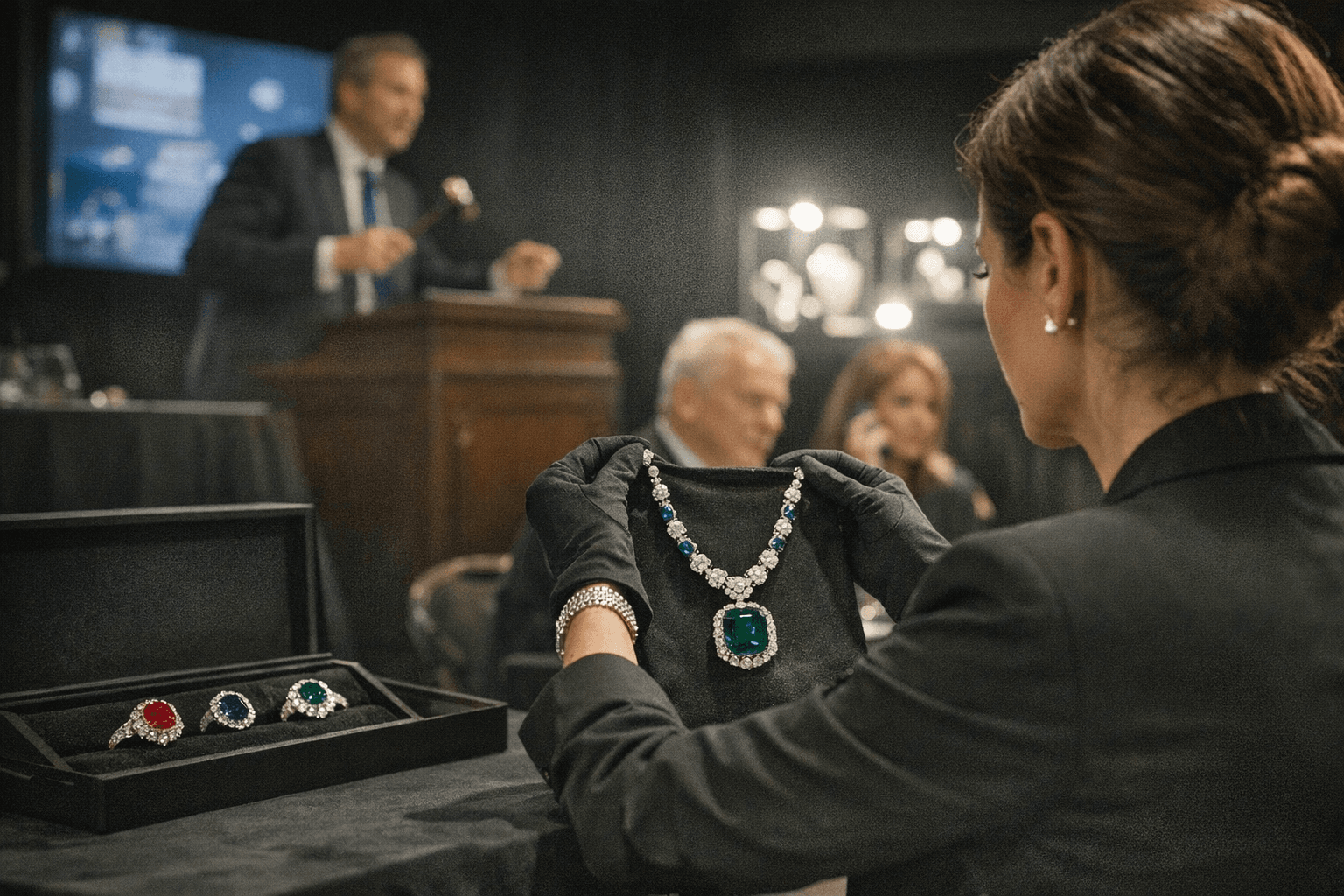
That caution is worth holding alongside the auction results. Unlike stocks or real estate, jewelry generates no income for its owner. Illiquidity is a genuine constraint: a sapphire ring cannot be sold in seconds on an exchange. Storage and security costs add further drag on returns, expenses that rarely appear in the more aspirational accounts of jewelry as an investment category.
Still, the structural case is not without merit. Resale markets have reinforced jewelry's reputation as a long-term store of value, and lofty gold prices have made the underlying materials more compelling. Jacqueline DiSante, vice president and head of sales of Christie's New York jewelry division, has been cited as a central voice in explaining why the market matters at this moment. Experts including Reyl expect jewelry investing to continue if macro uncertainty persists, and Buccellati has said she expects jewelry, within high luxury, to continue growing and surpassing soft luxury goods.
The broader shift, away from handbags and toward gemstones, reflects both financial calculation and something harder to quantify: the emotional weight of owning something rare, irreplaceable, and wearable. For the collectors now driving auction prices past estimate, a Kashmir sapphire is not merely a store of value. It is also an object with a provenance, a color that exists nowhere else, and a history that accumulates rather than depreciates.
Know something we missed? Have a correction or additional information?
Submit a Tip