Victorian seed-pearl parures reveal modular elegance and hidden craftsmanship
Victorian seed-pearl parures are modular suites, not static sets, and their detachable parts, horsehair construction, and completeness shape how collectors wear and value them.
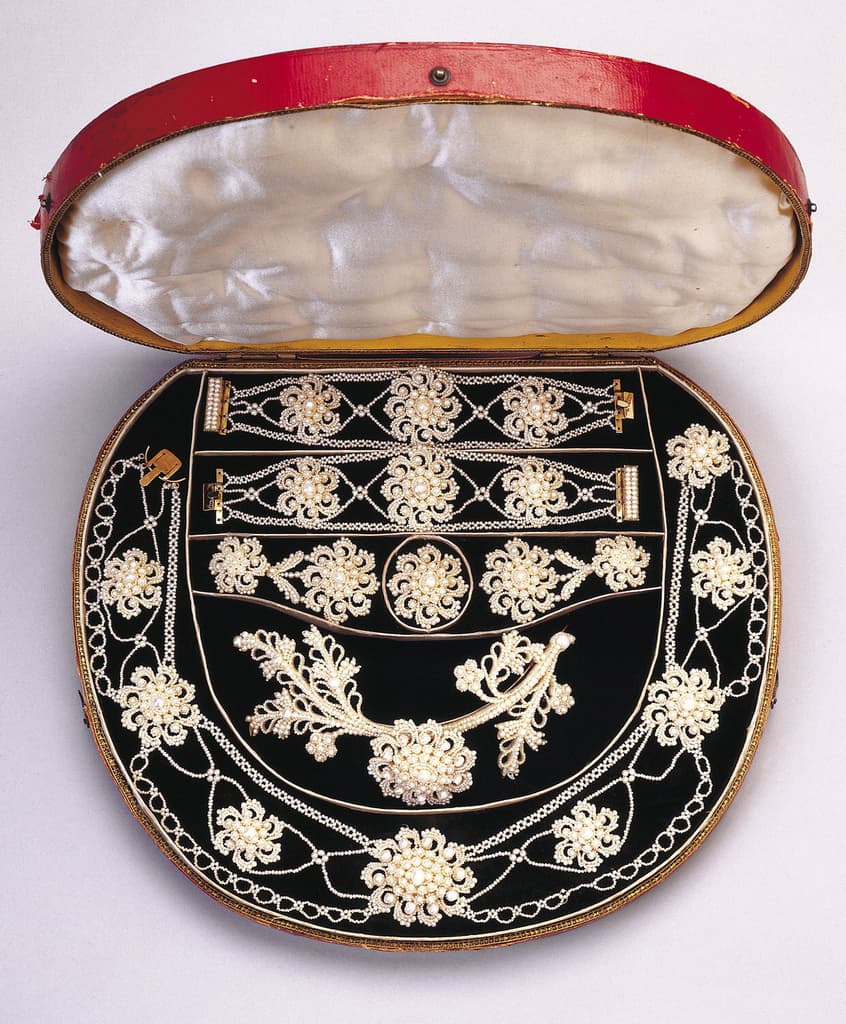
A Victorian seed-pearl parure is the rare antique jewel that behaves like a wardrobe system. One suite can include a necklace, earrings, a brooch, bracelets, a diadem or tiara, and even an aigrette, with each piece designed to stand alone or join the others as the occasion changed. That modularity is the collector’s key to the category, because the same set can shift from neckwear to hair ornament to brooch, and its value changes just as quickly when a piece goes missing.
Why the parure still reads as practical
A parure was never meant to be admired only as a matched display. It was built for social occasions, with pieces intended to be worn together or separated into smaller combinations as fashion changed. That makes it unusually legible to modern collectors: you are buying a system of interchangeable parts with a defined logic.
For a buyer, that logic matters in three ways. Wearability depends on whether the surviving elements still connect comfortably and securely. Completeness depends on whether the suite still retains the pieces it was designed to include, or whether it has been reduced to a necklace alone, a brooch alone, or a later assembled grouping. Appraisal depends on how convincingly the pieces still read as one original concept, because a coherent suite tells a fuller story than an orphaned survivor or a later marriage of mismatched parts.
What the construction reveals up close
Seed-pearl work looks light, but the engineering is precise. In the Met’s 1845 to 1850 seed-pearl necklace, hundreds of seed pearls are strung on fine white horsehair, with silk backing for comfort. The pale surface depends on flexible support and careful assembly.
The V&A’s circa 1850 seed-pearl necklace uses gold-wire frameworks and seed pearls attached with horsehair or silk, along with recurring vine-and-grape motifs drawn from ancient jewelry. The design does two jobs at once: supporting tiny pearls structurally and borrowing a classical visual language Victorian makers used to signal refinement and continuity.
For collectors, those materials offer useful clues when you inspect a suite. Fine white horsehair, silk backing, and gold-wire frameworks are period-appropriate signs of a piece built for lightness and precision. If one element looks heavier, shinier, or mechanically different from the rest, the set may have been altered, repaired, or expanded later.
Why seed pearls carried so much meaning
Seed pearls were never only about delicacy. During Victoria’s reign, they could stand in for tears in mourning jewelry when paired with jet, yet they were also considered chaste and elegant, which made them suitable for brides and young women entering society. That dual symbolism gave the material unusual range: it could speak to grief, virtue, and status without changing its essential form.
Seed-pearl jewelry was often presented to a bride at her wedding, became popular in the Federal period, and by the mid-19th century was considered de rigueur in the ballroom. The pearls were imported from India or China, a reminder that these airy-looking jewels sat inside real global trade networks.
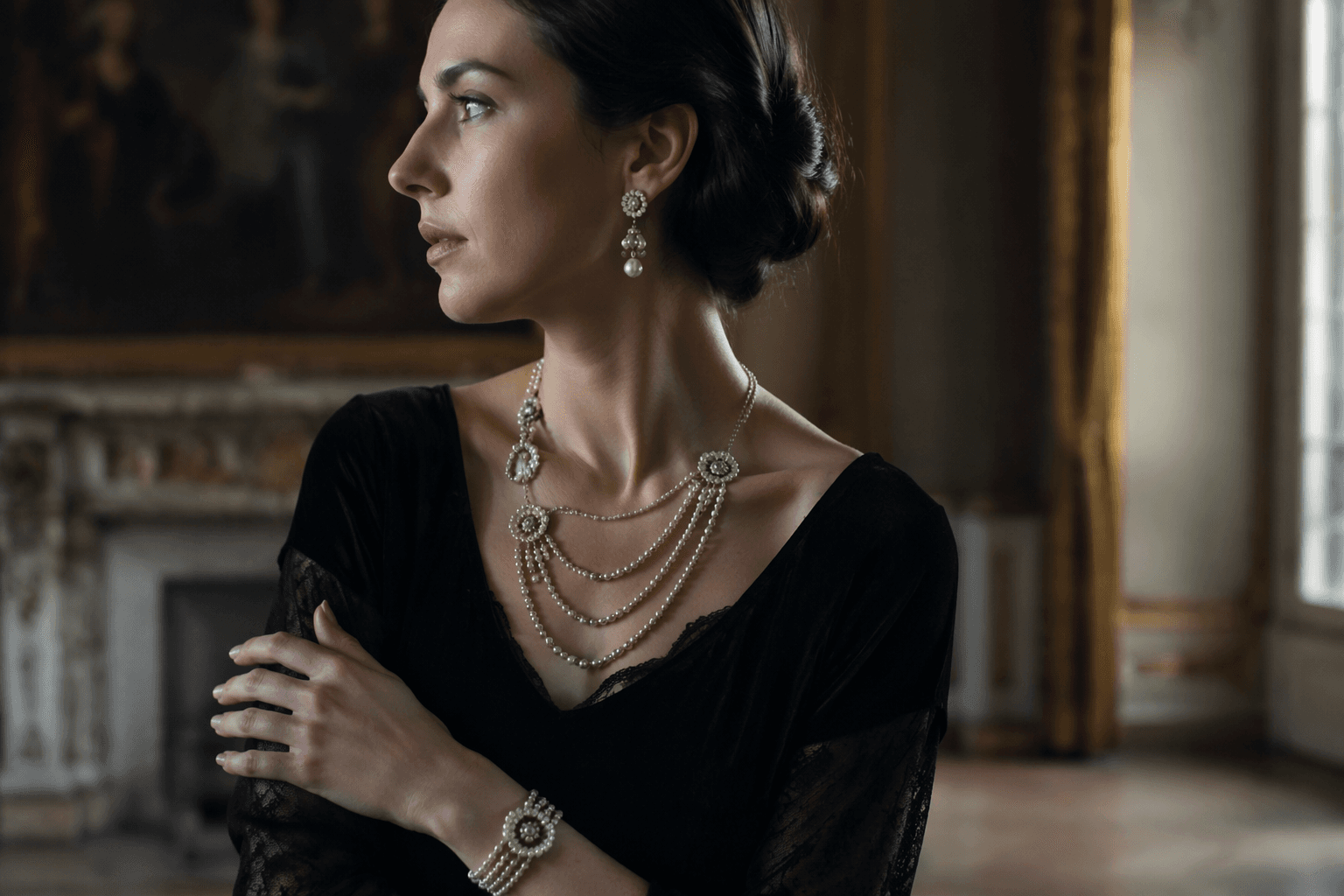
The V&A’s vine-and-grape motifs echo ancient jewelry, which means a Victorian suite often carries a classical memory in addition to its own era’s taste.
How to judge originality, completeness, and later marriages
A seed-pearl parure is best approached like a set of related objects, not a single jewel. Start by asking whether the pieces share the same visual grammar. Matching pearl size, consistent spacing, similar gold tone, and repeated motifs such as vine and grape forms are strong signs that the suite was conceived together.
Look closely at the detachable logic of each component. Original suites often reveal themselves through fittings that make sense across the group, whether on a necklace, earrings, or a brooch that clearly belongs to the same design family. If one piece looks visually compatible but mechanically different, or if the scale of the pearls shifts abruptly from one element to another, you may be looking at a later marriage rather than an untouched set.
- Check for repeated construction methods across every piece, including horsehair, silk, and gold-wire work.
- Compare pearl size and luster from one component to the next. A true suite usually feels coordinated rather than assembled from near matches.
- Study the motifs. Vine-and-grape patterns, floral bends, and classical references should recur with the same design rhythm if the set is original.
- Watch for gaps in the suite. Missing earrings, a lost brooch, or only part of a necklace can change both the wearing options and the collecting interest.
- Examine the physical joinery. Detachable pieces should make structural sense, not just visual sense.
A full suite shows how the maker expected it to be worn, while a partial set may preserve the craftsmanship but lose the original rhythm of the design. Later marriages can still be beautiful, but they should be understood as assembled objects, not as complete Victorian intentions.
This article was produced by Prism’s automated news system from verified source data, official records, and press releases, then run through automated quality and moderation checks before publishing. The system is built and supervised by the people who set the standards it runs under. Read our full AI policy.
Did this article answer your question?