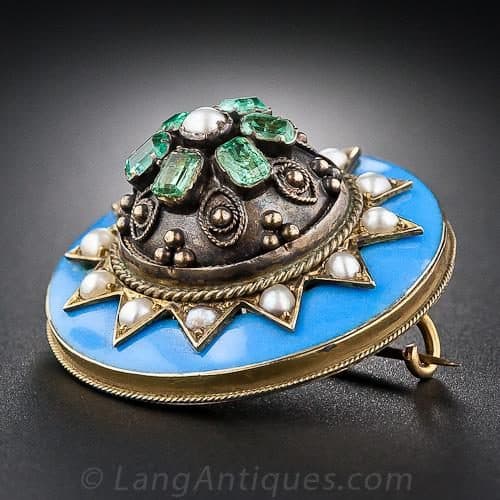
What is a parure? The vintage jewelry suite explained
A parure is more than a matching set: completeness, detachable fittings, and original cases can turn vintage jewelry into a stronger appraisal story.
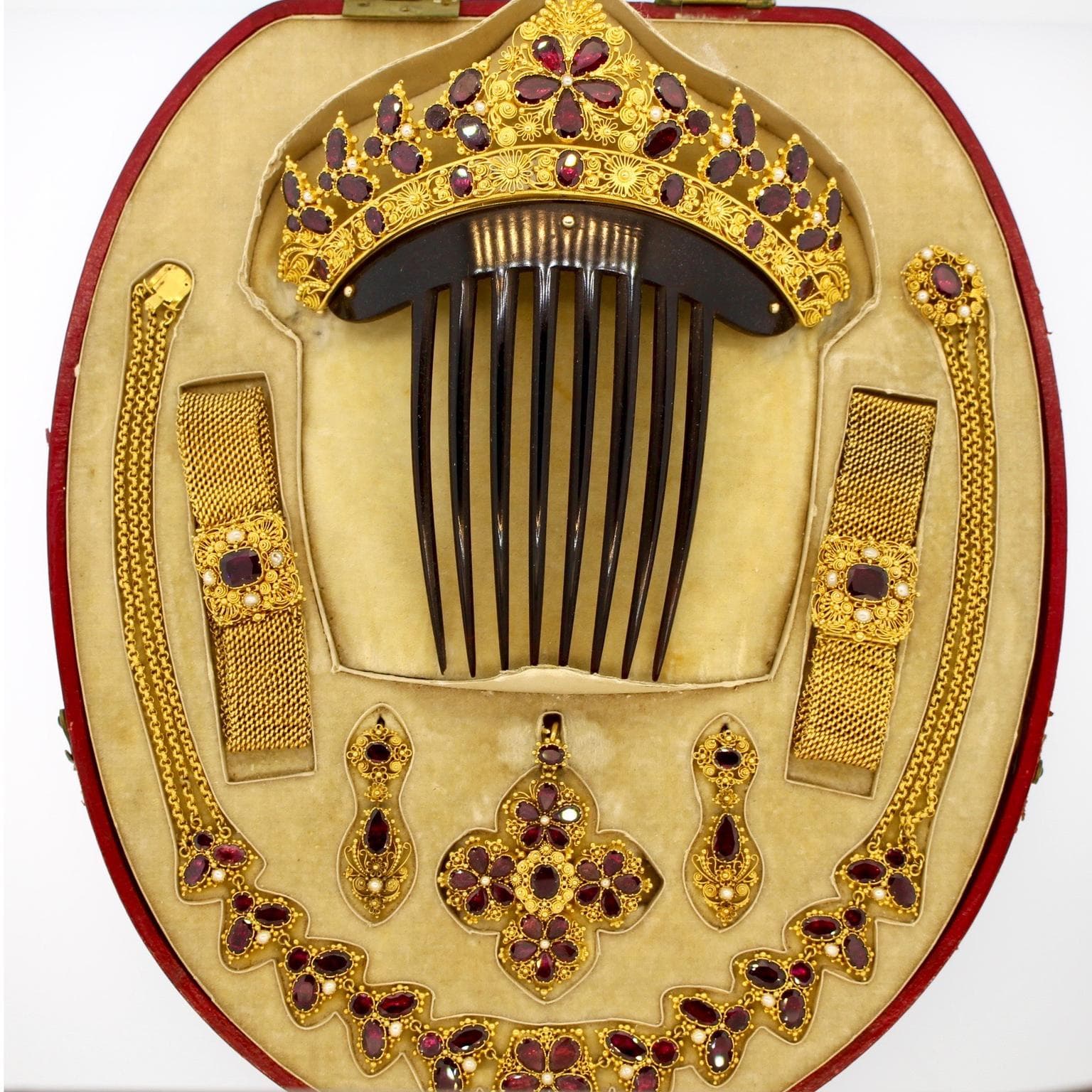
One 18th-century five-piece parure in the Metropolitan Museum of Art's collection still sits in its original case with a necklace, earrings, and two hair ornaments. A parure is a matched set designed to be worn in multiple combinations, and the pieces that keep their original relationships, fittings, and case usually carry the strongest collector appeal. Missing components can strip away both beauty and value, especially when the design was built around transformation.
What a parure actually is
A parure is a matched set of jewelry, typically including a necklace, brooch, earrings, bracelets, and a tiara. In practice, the idea could be more expansive. Full parures might also include a ring, a diadem, or a stomacher, and The Jewellery Editor puts the grandest royal examples at 16 pieces. Smaller demi-parures distilled that same logic into tighter pairings, such as a brooch with earrings or a necklace with a pendant element.
The word itself comes from the French verb *parer*, meaning to adorn. It was engineered as a system, a set that let one owner shift from formal display to a quieter presentation without changing the identity of the jewel.
Why collectors care now
Parures have become especially compelling in today’s vintage market because completeness is visible value. A full suite tells a cleaner provenance story than a lone survivor, and original cases, matching elements, and intact detachable parts make the object easier to understand, appraise, and insure. When a set still contains the pieces it was born with, the buyer is not simply purchasing stones and metal. The buyer is acquiring the original design logic.
In the Met's example, the detachable parts made the jewel suitable to wear by day or at night.
From court luxury to practical display
Parures first became fashionable in the late 1600s, then fell out of favor through much of the 1700s before returning under Napoleon, whose appetite for jewelry revived demand for elaborate suites. Fashionable jewelry in the 1830s and 1840s could make a strong visual impact at a modest expense, which helps explain why matched sets became such an efficient expression of taste. They offered conspicuous effect without always requiring the most extravagant materials.
Materials tell you the era
The metal and stone choices inside a parure often point straight to its period. Napoleonic, Georgian, and Regency examples were often made in diamonds and other gemstones set in silver-topped or high-carat gold. Victorian suites broadened the vocabulary with seed pearls, micro mosaics, cameos, and coral. Those shifts are useful for dating, but they also matter for appraisal, because the market rewards coherence between style, materials, and construction.
In the Met's collection, one early-19th-century parure of garnets is mounted in gold with pink metal foil behind the stones to intensify their color. Another suite there is made of cut steel, a fashionable substitute for precious metals and gemstones in the 18th and 19th centuries. Napoleon presented a cut-steel parure to Archduchess Marie Louise of Austria, and Louis XVIII bought a similar set at the 1823 Paris Exposition des Produits de l’Industrie.
Convertible jewelry, and the mechanics that raise value
Parures and convertible jewels are related, but they are not identical. A parure is a matching suite; convertible jewelry is a design problem solved with hinges, clasps, pins, and detachable sections. Multi-use jewelry existed long before the Art Deco era, but the Great Depression pushed convertible design to a higher level of ingenuity. That economic pressure created jewels that had to work harder, and the engineering became part of the appeal.
Examples include a Cartier necklace that could double as a diadem, Boucheron clips that joined into a brooch, and the Van Cleef & Arpels Zip necklace that transforms into a bracelet. The Art Deco period, roughly the 1920s through the 1930s, took its name from the 1925 Paris exposition of decorative arts, and its clean geometry suited transformation. Cartier still markets transformable jewelry today.
How to judge whether a convertible piece still has its edge
The difference between a prized convertible jewel and a compromised one often comes down to the mechanics. A Victorian convertible butterfly brooch from Lang Antiques, for example, can also be worn as a pendant because the pin mechanism detaches for another form of wear. If that mechanism is gone, altered, or permanently fixed, the piece may still be attractive, but it has lost the very feature that made it collectible.
That same logic applies to parures. Look for matching elements, original cases, and evidence that detachable parts still work. A suite missing its hair ornaments, its pendant section, or its original fittings is no longer the complete design the maker intended. It changes the jewel from a documented system into a partial survivor, and partial survivors rarely command the same premium as intact suites.
This article was produced by Prism’s automated news system from verified source data, official records, and press releases, then run through automated quality and moderation checks before publishing. The system is built and supervised by the people who set the standards it runs under. Read our full AI policy.
Did this article answer your question?