Allendale standpipe tells story of the town’s early water system
Allendale’s standpipe is one of only three in South Carolina, and its 100,000-gallon origin shows how the town entered modern water service.
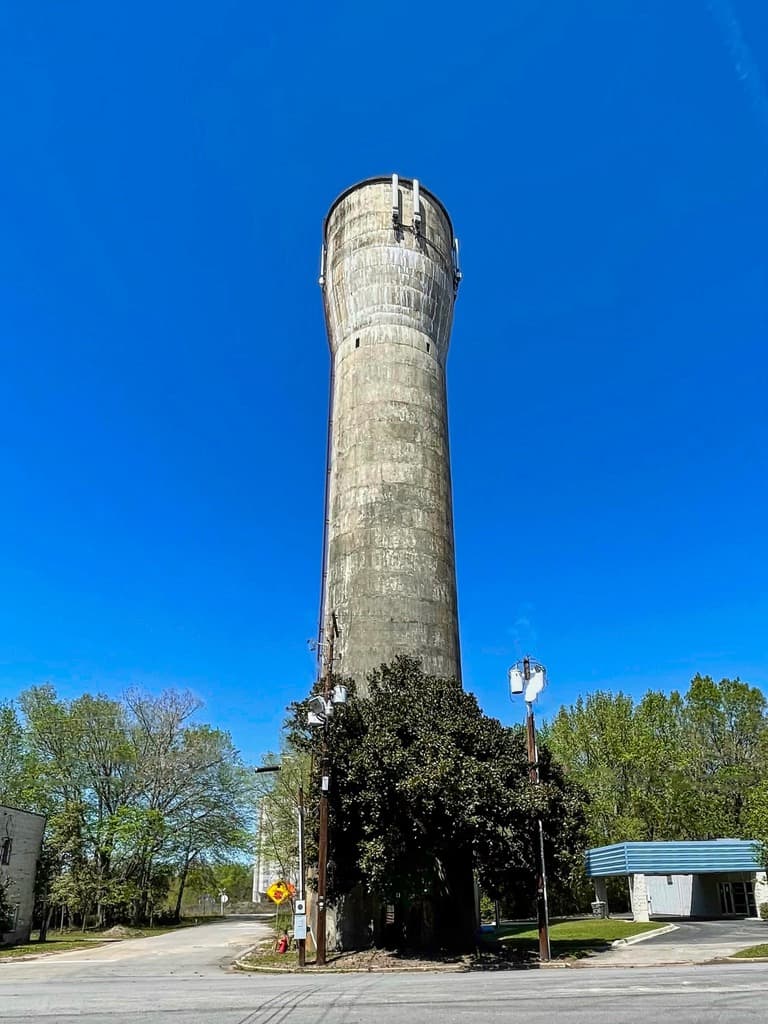
At Memorial Avenue and Butler Street, Allendale’s standpipe still marks the moment the town moved into modern water service. One of only three standpipe water towers left in South Carolina, it is a rare survivor from an era when a town’s water system could change how families lived, how businesses operated, and how downtown itself grew.
A rare landmark in a small town
The Allendale standpipe belongs to a very short list. South Carolina has only three surviving standpipe water towers: the Allendale structure, one in Belton, and one in Walterboro. That rarity gives the tower weight beyond its size or age, because it is not just an old utility structure but part of a tiny group of historic public works that still stand in the state.
The tower was likely built around 1915, after a 1914 contract with the Jaudon Engineering Company of Savannah, Georgia, called for a sewer and waterworks system that included a 100,000-gallon tank and tower. That detail matters because it places Allendale inside a larger moment of municipal improvement, when small towns across the South were investing in the infrastructure that made daily life more reliable and public health more manageable.
What a standpipe did for a town
Standpipes were popular in the late nineteenth and early twentieth centuries because they solved a practical problem: how to store water and maintain pressure in a growing town. The Allendale tower is part of that engineering history. The county’s historic-site information notes that maintenance access was often external, with a ladder running up the tower, a reminder that these structures were built to be serviced in plain view, not hidden away like much of today’s utility infrastructure.
For Allendale, that meant more than a tank on a tall frame. A standpipe was part of the system that carried water into homes, supported local businesses, and gave the town a reserve when demand rose. In practical terms, that kind of reliability changed routines. It meant households could count on a more consistent supply, storefronts could operate with greater confidence, and the town had a stronger base for fire protection and downtown growth than it had in the days before municipal waterworks.
How the tower fits Allendale’s growth
The standpipe is also a marker of how Allendale changed over time. The 1914 contract for a sewer and waterworks system shows the town was building out basic services early in the twentieth century, not waiting for outside growth to arrive first. By the time the modern water tower replaced it in 2009, the historic standpipe had already outlived the job it was built to do, but it remained in place as a visible record of the town’s first major leap into utility modernity.
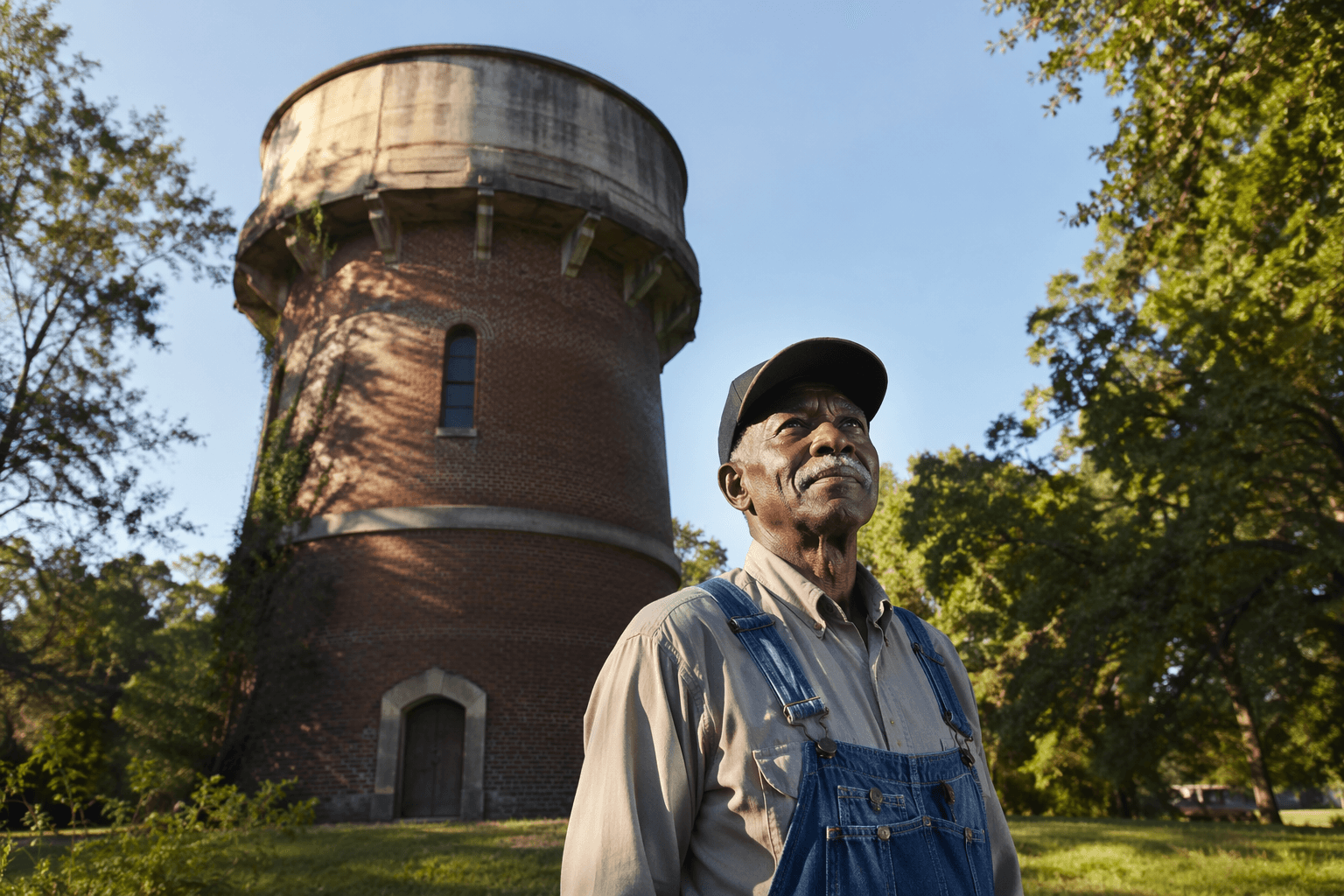
That transition matters because it shows a pattern that many small towns recognize: infrastructure is often invisible when it works, but the older version can become one of the clearest physical reminders of a community’s development. Allendale’s standpipe does that in a single frame. It points back to the moment the county invested in sewer and water service, and it stays in view even after the town moved on to newer equipment.
A comparison with Belton and Walterboro
The other two surviving South Carolina standpipes help show why Allendale’s tower stands out. Belton’s standpipe was built in 1908-1909 and rises 155 feet high. Its water tank holds 165,000 gallons, and the tower became such a civic symbol that the image appeared on the town seal and letterhead. In 1987, Belton held its first annual Standpipe Festival to raise money for renovations, a sign of how a utility structure can become part of a town’s shared identity.
Walterboro’s water tower adds a different comparison point. Built of reinforced concrete and standing 133 feet tall, it is also one of the state’s only three standpipe systems. Taken together, the three towers show how rare this form of water infrastructure has become in South Carolina. Allendale’s version may no longer carry the town’s water, but it still belongs to that small and recognizable class of municipal landmarks.
Why preservation matters here
The standpipe’s place in South Carolina’s historic record matters as much as its engineering past. The state’s National Register listings are maintained by the South Carolina Department of Archives and History and the National Park Service, the official system for identifying historic places worthy of preservation. That framework makes clear that the tower is more than an old object at a crossroads. It is a documented piece of public-works history tied to Allendale’s growth and to the broader story of how communities built modern services.
What remains at Memorial Avenue and Butler Street is not a quirky relic. It is evidence of the point when Allendale committed to a town water system, when a 100,000-gallon tank and tower became part of everyday life, and when a small rural community took a lasting step into modern municipal services.
This article was produced by Prism’s automated news system from verified source data, official records, and press releases, then run through automated quality and moderation checks before publishing. The system is built and supervised by the people who set the standards it runs under. Read our full AI policy.
Know something we missed? Have a correction or additional information?
Submit a Tip