Appleton’s historic homes reveal Allendale County’s layered past
Appleton’s surviving houses and schoolhouse let Allendale County trace faith, schooling, and family life across two centuries. These places still connect named residents to the county’s living memory.
Appleton is one of the few places in Allendale County where the past still sits close together. In a short stretch of ground, the Colding-Walker House, Erwin House, Miss Arnold’s School House, and Gailee Baptist Church show how families lived, argued over faith, taught children, and built institutions that outlasted the county lines around them. For neighbors in a county of 8,039 people, those buildings are not abstract landmarks. They are some of the clearest physical links to the people who shaped local life before and after Allendale County was formed in 1919 from parts of Barnwell and Hampton counties.
Appleton as a readable landscape
The value of Appleton lies in how many layers remain visible at once. The National Register of Historic Places, the official federal list of places worthy of preservation, was created under the National Historic Preservation Act of 1966, and Appleton’s historic sites fit squarely into that preservation framework. The county’s historic-sites listings place plantation-era architecture, a church born from denominational conflict, a one-room schoolhouse, and a rural Baptist congregation within the same community story. That makes Appleton less a stop on a map than a place where Allendale County residents can still see how homes, worship, and education grew side by side.
The sites also matter because they are not generic examples. Each one carries names, dates, and specific changes that mark real lives. The result is a rare local landscape where ordinary domestic space, religious history, and early schooling remain tied to the same small community.
The Colding-Walker House and the life of a rural home
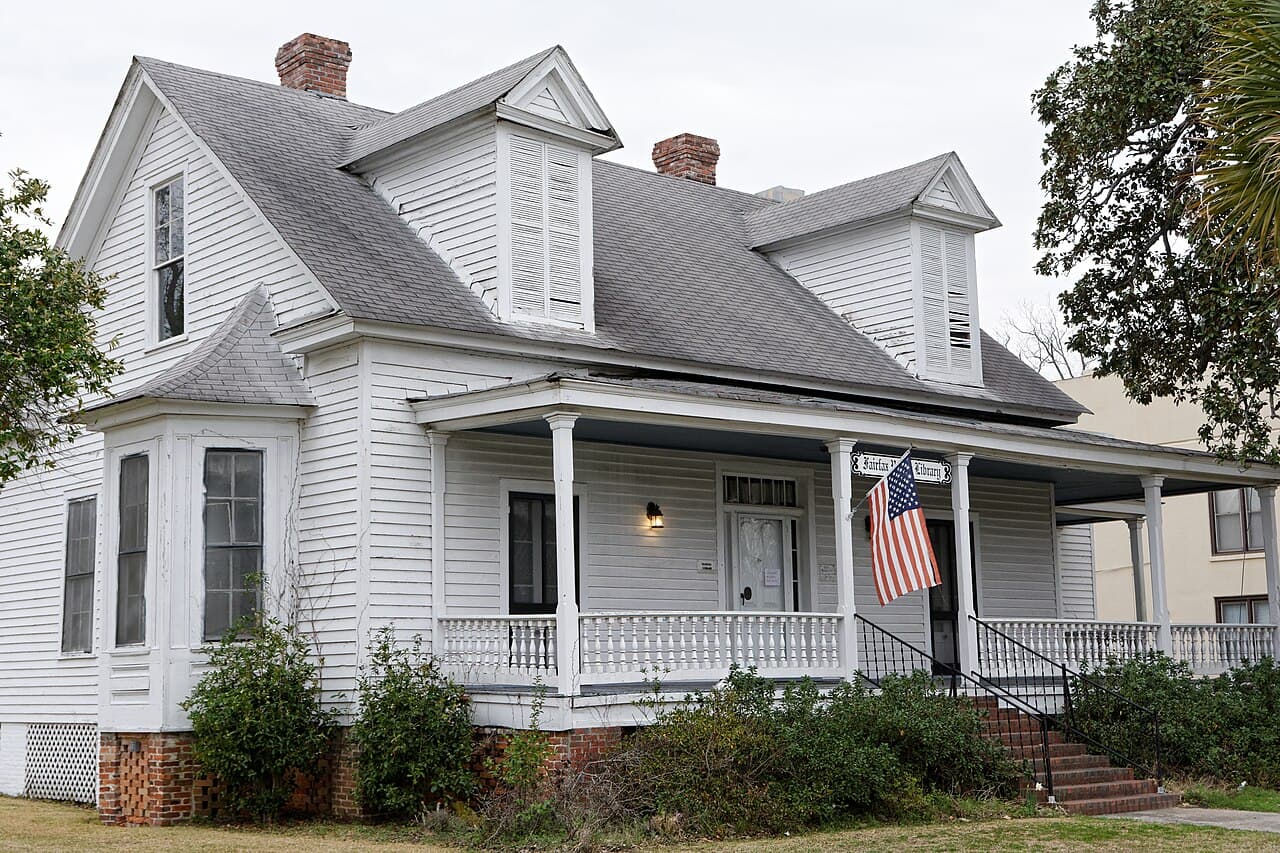
The Colding-Walker House, also known as Robwood, is one of Appleton’s strongest anchors. The county describes it as a one-and-one-half-story residence dating to about 1853, with a raised brick basement, a side-gable form, and a central-hall layout. National Register nomination materials identify 1853 and 1897 as key dates in its history, which helps show how the house developed over time rather than remaining frozen in one period.
That later change matters. In the late 1890s, the house was extensively renovated and gained the Victorian character that still marks it today, including a full-width wraparound porch, spindlework, and gabled dormers. The South Carolina Department of Archives and History preserves that renovation history as part of the record, and the house’s National Register listing in 1998 gave it added protection and recognition. For local readers, the house tells a familiar story in a concrete form: a rural Lowcountry dwelling that was updated by changing tastes, new materials, and later generations trying to make an older home work for their own time.
Erwinton, the Erwin family, and a church split that built something lasting
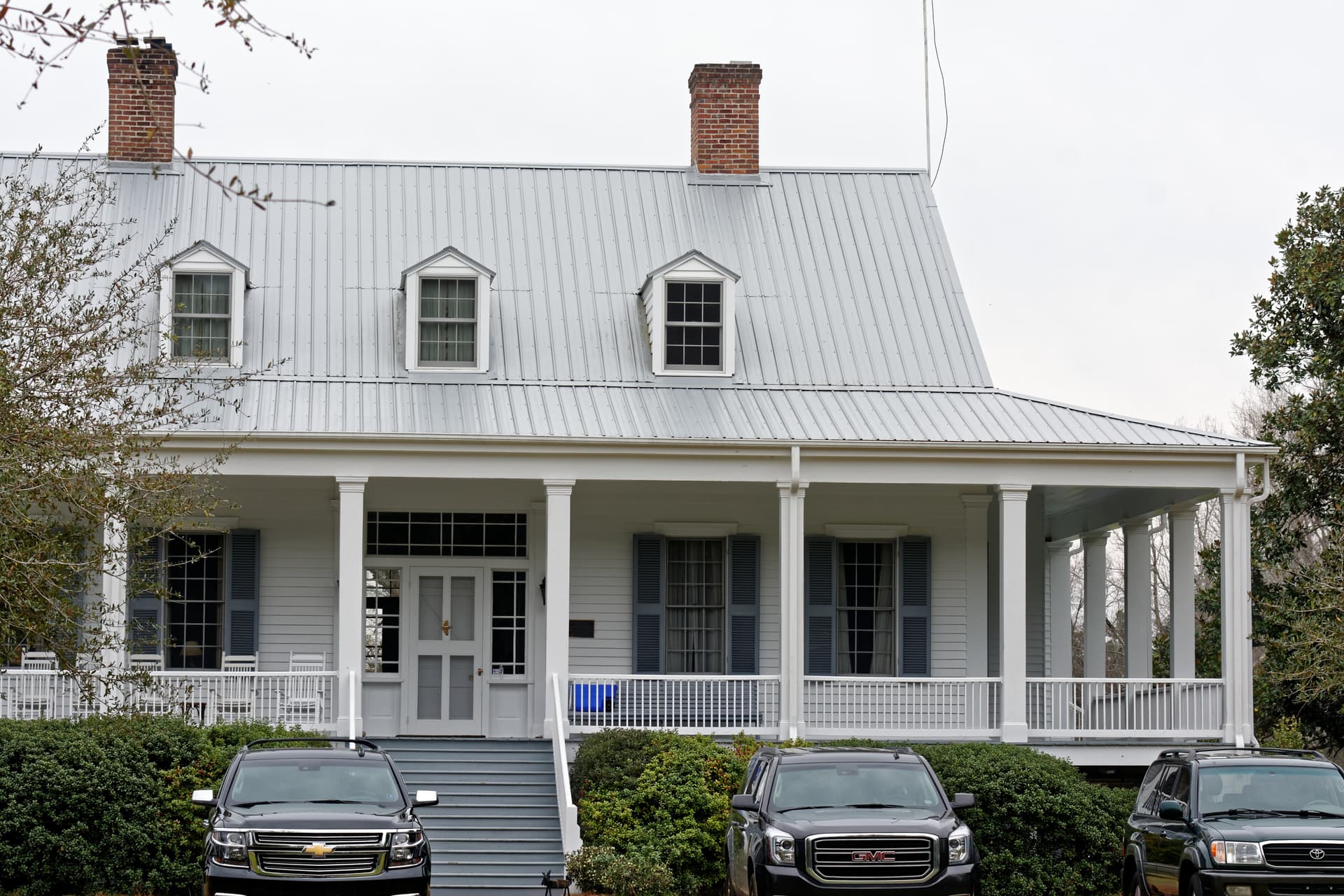
Erwin House, on Erwinton Plantation, reaches even farther back. Built around 1828 for Dr. William Robinson Erwin, it is tied to a sharp religious break that helped create one of South Carolina’s earliest Disciples of Christ communities. In July 1833, Dr. William Robinson Erwin, his wife, and his sister-in-law were excommunicated from Kirkland Church, now Smyrna Baptist Church, over communion and denominational issues. That dispute did not just divide a family from a congregation. It helped lead to the formation of Antioch Christian Church in 1833, with the meeting house completed in 1835.
Antioch Christian Church is described as the second Disciples of Christ congregation established in South Carolina. The South Carolina Disciples also identify it as the oldest standing structure of that faith in the state, a place sometimes called the “Mother Church.” That detail gives Appleton unusual weight in the state’s religious history. The South Carolina Historic Property Record describes Erwinton as a Bahamian-influenced raised cottage, a reminder that the house itself carries architectural history as well as church history.
The property’s later life adds another layer. The house sat vacant since the Civil War until Houston Rawls bought it in 1955. Rawls restored the house and used it as a winter home, and in the 1960s the property was sold again and converted into a hunting club. That sequence shows how one building passed through abandonment, recovery, private use, and a new recreational identity without losing its place in the county’s story.
Miss Arnold’s School House and the shift from private to public schooling
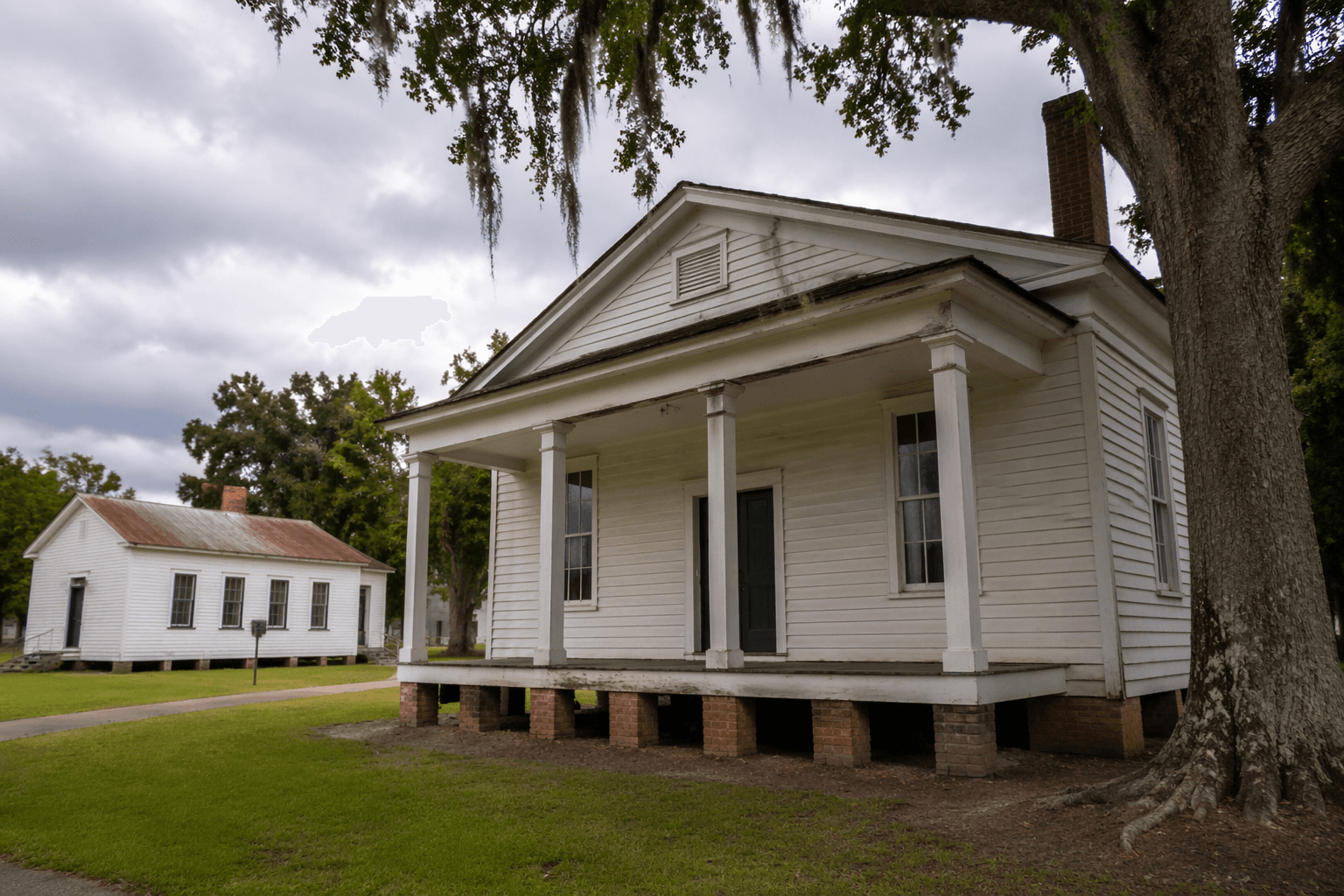
Miss Arnold’s School House brings education into the same landscape. Built around 1875 by Augusta Salena Arnold, the tiny one-room schoolhouse taught children from Barnwell and Hampton counties before Allendale County existed in 1919. The South Carolina Historic Property Record says the school closed around 1890, when the Allendale Graded School was built, marking the shift from a private school run by a single teacher to a more formal public system.
Arnold herself was widely known in educational circles across Florida, Georgia, South Carolina, and Tennessee. She taught for about 50 years and died in 1930 at age 85. The county notes that she closed her private school only after the first Allendale public school was built on the corner of Main and Bay Street, when she joined the public school system. Today the schoolhouse stands on the Salkehatchie Arts Council grounds as an historic exhibit, where it continues to show how early education in this part of the county depended on one teacher, one room, and the determination of local families.
Gailee Baptist Church and the institutions that held communities together
Gailee Baptist Church rounds out the Appleton story by showing how faith communities endured after Reconstruction. The county says the church was organized in 1869 in a small wooden building in Appleton, with Rev. D. P. Walker as its first minister. A rectangular wooden building replaced the original structure in 1920, giving the congregation a new physical home while preserving its rural identity.
Placed beside the Erwin house and Antioch Christian Church, Gailee helps show how deeply religion shaped the area’s social life. These buildings were not only places of worship. They were gathering points for family ties, local leadership, and the slow making of a community that outlasted slavery, war, and county reorganization.
Why these places still matter in Allendale County
Appleton’s historic sites matter now because they are still legible to the people who live nearby. The county’s 1919 formation makes the surviving houses and churches even more important: they predate county borders, and in some cases they preserve the only direct connection to the people who lived here before Allendale County had a name. In a small county with just 8,039 residents, each surviving structure carries more of the local past than a label on a museum wall ever could.
What remains in Appleton is not just architecture. It is a record of family dispute, religious formation, women’s education, postwar reconstruction, and the long reuse of old homes. For Allendale County residents, that makes Appleton one of the places where the county’s layered past can still be seen, named, and walked past in a single afternoon.
This article was produced by Prism’s automated news system from verified source data, official records, and press releases, then run through automated quality and moderation checks before publishing. The system is built and supervised by the people who set the standards it runs under. Read our full AI policy.
Know something we missed? Have a correction or additional information?
Submit a Tip