FBI surges investigators into Arizona tribal communities, affecting Apache County
Fourteen FBI agents are now staged in Phoenix for Operation Not Forgotten, a federal surge aimed at unresolved violent crimes affecting the Navajo Nation and White Mountain Apache Reservation.
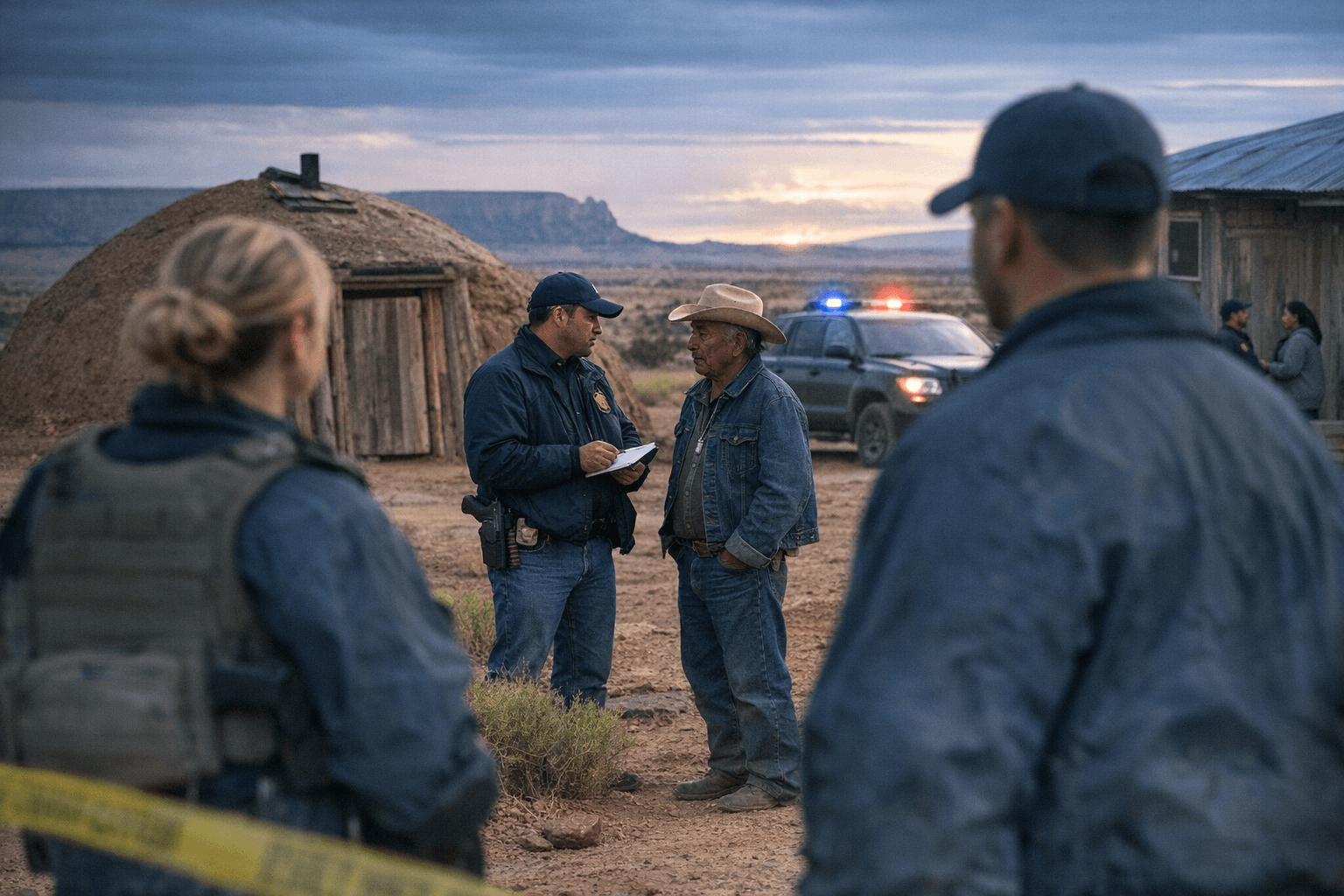
Fourteen FBI agents have been staged in Phoenix as part of Operation Not Forgotten, the fourth-year personnel surge the Department of Justice and FBI announced on April 2, 2026, to target unresolved violent-crime cases in Indian Country, officials said. The surge is organized under the broader Operation Steadfast Promise and lists the U.S. Attorneys’ Offices, the Bureau of Indian Affairs Missing and Murdered Unit, and ATF as coordinating partners.
The mobilization promises forensic support, victim-witness assistance, and coordinated federal-tribal task forces intended to address cases of missing and murdered Indigenous people and violent crimes against women and children on the Navajo Nation and the White Mountain Apache Reservation, communities that overlap or border Apache County. The prior six-month surge reported in late 2025 deployed 64 FBI personnel rotating on 30-to-90-day assignments to 10 field offices, and included 36 BIA Missing and Murdered Unit personnel assisting in more than 330 investigations, the Justice Department disclosed.
Statewide outputs tied to the Indian Country program in fiscal 2025 underscore the scale federal officials say they are aiming to replicate in Arizona: 1,260 individuals charged, 1,123 arrests, 304 weapons recovered, and 458 child victims identified or located across the program’s operations. The Justice Department described that earlier deployment as "the longest and most intense" national deployment of FBI resources to address Indian Country crime to date, a benchmark local leaders say sets expectations for measurable results in Apache County.
Local context sharpens the accountability question: the Navajo Nation’s public listings show roughly 70 to 75 currently missing people, and county-level records indicate Apache County logged 466 violent crimes from 2019 through 2024. Tribal task forces, including the Missing and Murdered Diné Relatives Task Force, are continuing regular meetings in Window Rock and have pushed for interoperable data systems and a dedicated Navajo data institute to track cases.
That combination of federal muscle and local need raises immediate questions officials have not yet answered for Apache County families: precisely how many agents will be assigned to county and reservation jurisdictions, which local cold cases will be formally reopened, how many cases will receive forensic testing such as sexual assault kit processing or digital forensic reviews, and how long this surge will remain in place. The 2025 rotations suggest temporary assignments are likely, but federal spokespeople have not published a local timeline or case-by-case reopening count, and U.S. Attorney Timothy Courchaine has noted Arizona "continues to bring the most cases related to crimes affecting tribal members in the country."
History shows surges can produce arrests and charges when staffed and resourced: the 2025 deployment credited dozens of arrests and hundreds of assisted investigations. For Apache County, that potential will only translate into material changes in justice outcomes if Phoenix-staged agents, the FBI Phoenix Field Office, the U.S. Attorney’s Office for the District of Arizona, Navajo Nation Police, and White Mountain Apache law enforcement commit to public metrics—how many agents on-site, how many cases reopened, forensic completion rates, and a clear timeline—so families can track whether Operation Not Forgotten delivers sustained results rather than a temporary spike in investigations.
This article was produced by Prism’s automated news system from verified source data, official records, and press releases, then run through automated quality and moderation checks before publishing. The system is built and supervised by the people who set the standards it runs under. Read our full AI policy.
Did this article answer your question?