Springerville museum complex spotlights Casa Malpais and local history
A free Main Street museum cluster gives Springerville a compact history stop, linking Casa Malpais, family archives and White Mountain stories in one walkable visit.

Springerville’s strongest downtown draw is not a single stop but a paired destination: the Heritage Center and Casa Malpais. Together they give Apache County a compact place to spend hours on Main Street, and the visitor numbers already show real pull for a town with about 1,980 year-round residents.
A Main Street stop with room to grow
The Springerville Heritage Center sits at 418 E. Main Street in the town’s historic school building, and admission is free. Inside are four museums, the Casa Malpais Archaeological Museum, the Renee Cushman Museum, the Becker Family History Museum and the White Mountain Historical Society Museum, with ten rooms dedicated to the people and towns of the White Mountain area. That setup matters because it makes the site easy to enter, easy to repeat, and easy to pair with the rest of a day in downtown Springerville.
For merchants and civic leaders, that is the opportunity. A visitor who comes for one museum can stay for the whole cluster, then continue on to nearby businesses instead of treating the stop as a quick photo opportunity. In a town that sits in the Apache-Sitgreaves National Forest region and calls itself the Gateway to the White Mountains, a destination that is free, central and layered gives Springerville a stronger reason to hold travelers longer.
Casa Malpais is the anchor
Casa Malpais gives the complex its most powerful draw. The site is a National Historic Landmark, designated in 1964, and Springerville describes it as an 800-year-old pueblo hidden among ancient lava flows. The pueblo was built and occupied by the Mogollon people between about 1240 and 1350 AD, and visitors can still see the remains of a 50- to 60-room village, stand inside a Great Kiva and learn about a solar calendar used to track the seasons.
The archaeological significance is not abstract. Frank Hamilton Cushing documented the site in 1883, and National Park Service records place its key years around A.D. 1250 to 1325. Those same records describe Casa Malpais as a site of information potential tied to prehistoric archaeology, with the pueblo sitting on a basalt flow cliff and talus in the White Mountain Volcanic Field. Arizona State Parks and Trails adds that the pueblo was built about A.D. 1250 and inhabited for perhaps the next 120 years.
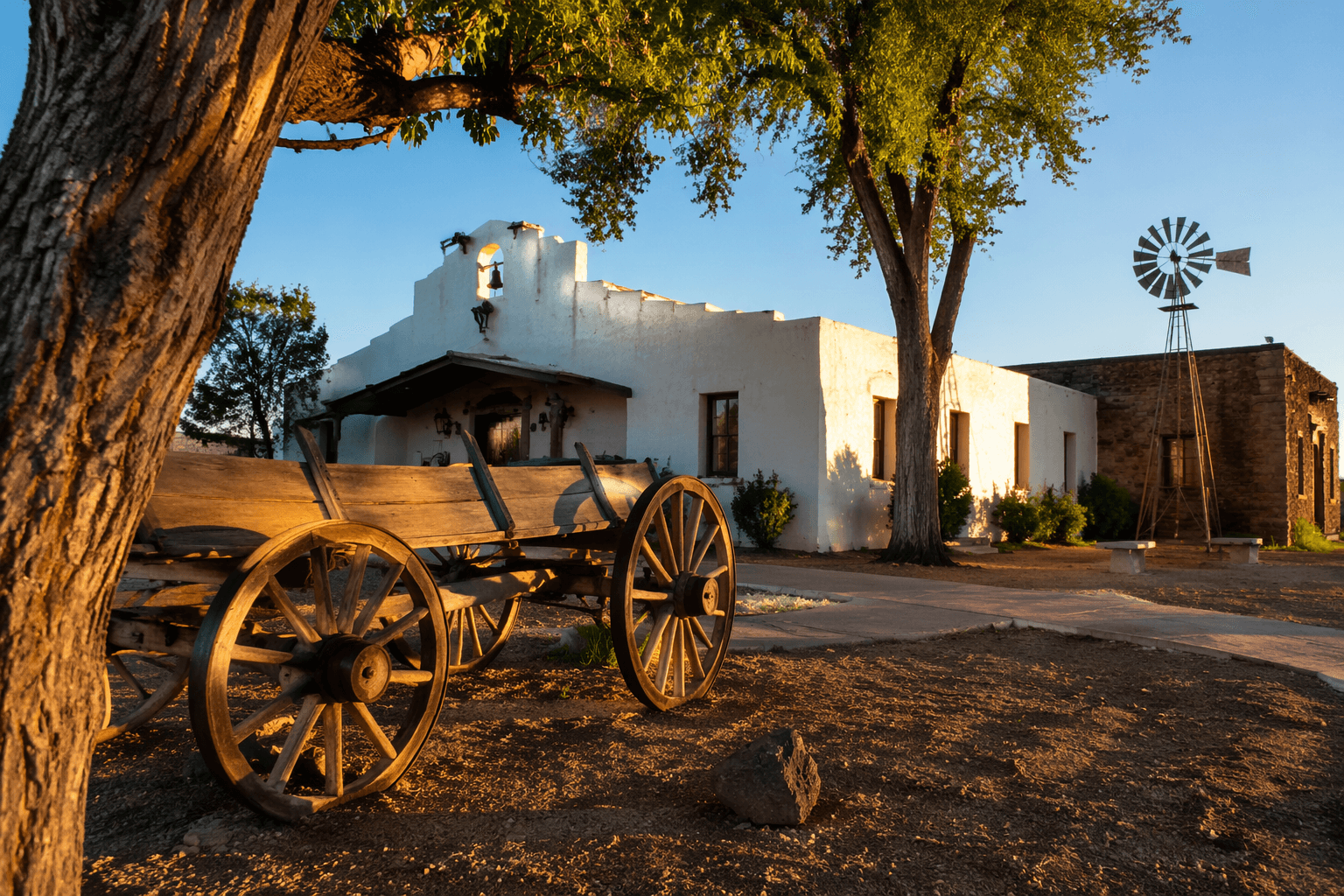
That combination of age, architecture and documented research gives Springerville something rare: a nationally recognized landmark that is still legible to everyday visitors. It is a real archaeological site with a defined time period, a named cultural tradition and specific features that can be explained without turning the stop into a lecture.
The rest of the story lives in the museum rooms
The Heritage Center does more than funnel visitors toward Casa Malpais. It also layers in the family, business and community history that shaped Round Valley and the White Mountains after settlement. The Becker Family Collection includes correspondence, photographs, legal documents and financial records tied to the Becker Mercantile Company and the family’s role in Apache County development.
The White Mountain Historical Society Museum brings that history down to the level of ordinary objects. Its displays span roughly 1870 to 1940 and include a wooden aqueduct, a telephone switchboard, a blacksmith shop and a jail cell. That range helps explain how communities in the area worked, traded, traveled and governed themselves long before the county’s modern tourism identity took shape.
Springerville’s own history fits into that arc. The town says it was originally established in 1879, grew around Henry Springer’s trading post and was incorporated in 1948. At an elevation of about 7,000 feet, the community has long sat at a crossroads between ranching, logging, trade and, later, heritage tourism. The museum cluster makes that story visible in one place instead of scattering it across separate stops.
Why the combined stop matters now
The numbers show that the site is already active, not just symbolic. Town agenda packets reported about 52 museum guests in January 2024, about 455 museum visitors and 161 Casa tours in June 2023, and roughly 368 museum visitors with 91 Casa tours in June 2024. Those same packets listed June 2023 tour revenue at $1,636 and June 2024 tour revenue at $952. A 2025 staff report said March was the busiest month yet that year, with a surge of visitors.

That kind of traffic is exactly why marketing the Heritage Center and Casa Malpais together makes sense. One stop gives travelers archaeology, family history and local settlement history without a long drive between sites, which is a real advantage in a county where people often plan around highway corridors, forest access and seasonal travel. The more the complex functions as a single Main Street destination, the more likely it is to support repeat visits, school trips, road trips and the kind of daytime foot traffic that benefits nearby businesses.
Springerville’s location adds to that logic. The town’s year-round population is small, but summer visitor numbers rise, and the area’s setting near the White Mountains gives it a built-in stream of travelers looking for places to stop, stretch and learn. A free museum cluster in the center of town gives those travelers a reason to stay longer than a gas stop and a photo.
How to plan the visit
Casa Malpais visits are available by guided tour only, and tours depart from the Springerville Heritage Center. The town says the tours are weather dependent, so timing matters, especially for anyone trying to fit the site into a one-day route through Apache County.
The programming is still evolving. A January 2026 council packet said staff were exploring special tours around equinoxes and solstices, with one-time event tours offered instead of regular tours on those days on a first-come and or pre-paid basis. The June 2026 Springerville calendar listed a Casa Malpais Special Solstice Tour, showing that the site continues to use the ancient solar alignment theme as part of its public programming.
That mix of free museum access, guided archaeology and local-history rooms gives Springerville a compact civic asset with room to do more. If the town keeps presenting the Heritage Center and Casa Malpais as one destination, it strengthens not just preservation, but the Main Street economy that depends on bringing people in, keeping them there and giving them a reason to come back.
This article was produced by Prism’s automated news system from verified source data, official records, and press releases, then run through automated quality and moderation checks before publishing. The system is built and supervised by the people who set the standards it runs under. Read our full AI policy.
Know something we missed? Have a correction or additional information?
Submit a Tip