St. Johns youth learn pioneer skills through hands-on heritage program
St. Johns youth are getting their hands dirty with pioneer-era work, tying Apache County history to the skills families still value for self-reliance.
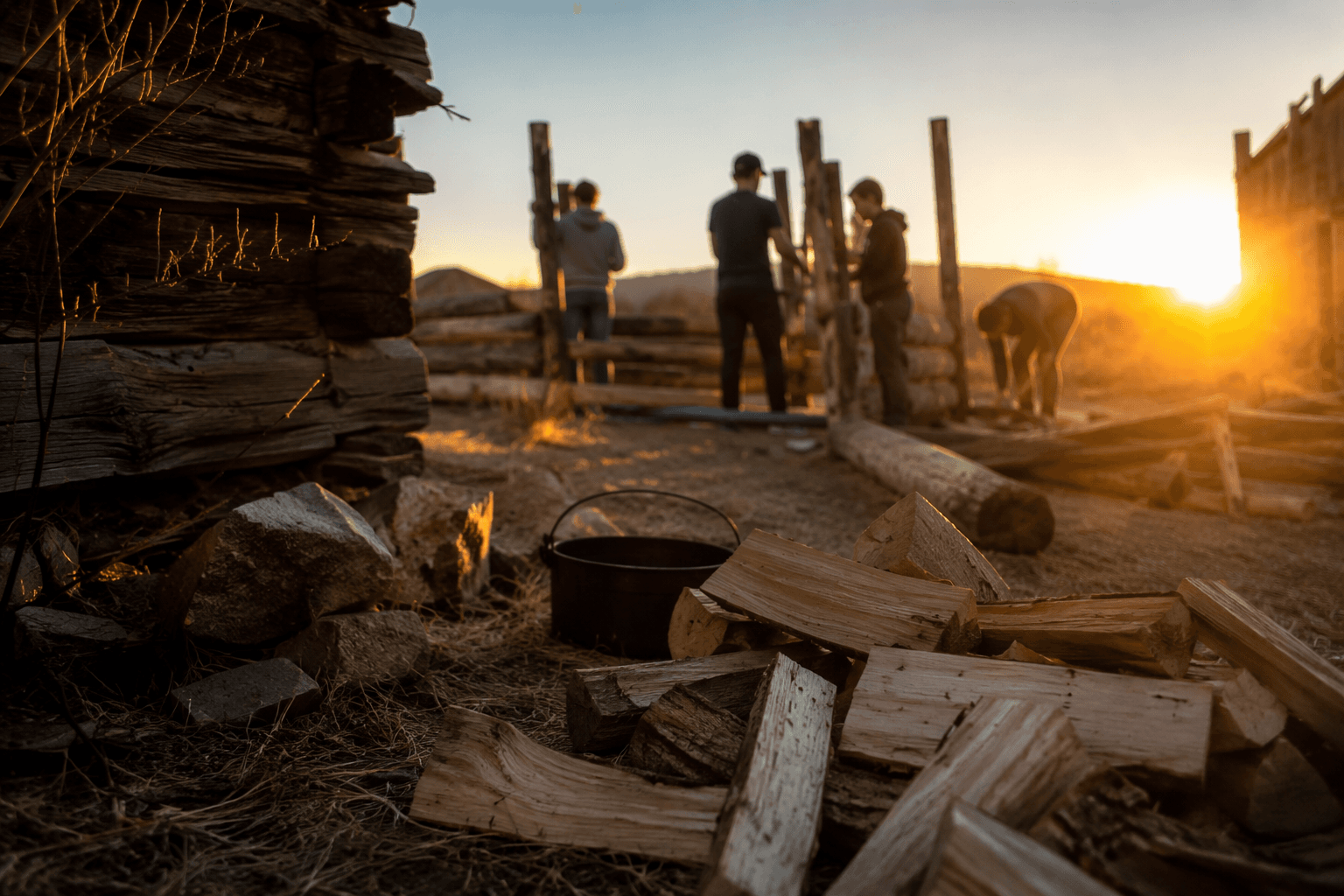
The clearest thing about St. Johns’ hands-on heritage programming is that it treats pioneer skills as something to practice, not just admire. In Apache County’s seat, young people are being introduced to the work older generations once depended on, and the lesson reaches beyond nostalgia. It connects children to a place where history, school life, and family identity still overlap.
Why this story matters in St. Johns
St. Johns sits in Apache County, Arizona, and it has long carried countywide symbolic weight. The town was designated the county seat in November 1879, and that role still makes local events there feel bigger than a single neighborhood program. A community profile places St. Johns at about 3,499 people and 5,650 feet in elevation, which helps explain why practical knowledge and close civic ties remain part of daily life.
That is the backdrop for any youth program built around old-time skills. In a rural county, families often value learning that can be used, repeated, and passed along, especially when it comes from the same landscape where those skills once mattered. The point is not to freeze the past in place, but to keep knowledge alive in a way children can actually use their hands to understand.
What young people are learning
The title of the St. Johns feature makes the teaching method plain: young people are putting old-time skills to work. That means the learning is active, with children doing rather than only listening, so history becomes physical and memorable. The broader local tradition suggests these lessons are tied to pioneer-era life in northern Arizona, where ordinary work once required patience, stamina, and cooperation.
That kind of instruction does more than fill a day. It helps students see how much effort earlier settlers and local ancestors put into basic tasks without modern conveniences, and it gives families a way to talk about resilience in terms children can see and try. In a place like St. Johns, that matters because identity is often built through shared labor, not just shared stories.
Who helps carry the tradition
St. Johns does not have to invent a support system for this work from scratch. Apache County maintains a public education page on its official website, and the St. Johns Unified School District describes its connection to the community on its own site. The district’s community page lists its location at 450 S 13th W in St. Johns, AZ 85936, a reminder that local schools sit close to the families they serve.
Apache County Libraries also plays a local role in keeping knowledge accessible. Its St. Johns branch is at 30 South 2nd West, PO Box 2760, St. Johns, AZ 85936, with the phone number 928-337-4923. In a county seat town, a library, a school district, and county offices can all reinforce the same idea: community history is not separate from public life, it is part of how public life is organized.
A tradition that reaches beyond one program
The St. Johns feature fits into a larger pattern of heritage programming that has appeared in local coverage for years. WMI Central published “Pioneer Children’s Village brings history to life in St. Johns” on July 30, 2024, and an earlier piece, “St. Johns celebrating Pioneer Days,” ran on July 24, 2015. WMI Central also maintains a multimedia page titled “St. Johns Pioneer Days Parade,” which points to a recurring civic tradition rather than a one-off event.
That history matters because it shows families and students are not encountering pioneer themes in isolation. They are stepping into a local rhythm that already has a public home in St. Johns, where heritage events have returned often enough to become part of the town’s seasonal identity. The result is a civic memory that can be passed from one generation of students to the next.
The wider historical frame
The pioneer skills being taught in St. Johns also sit inside a much older documented history of Arizona. James H. McClintock’s 1916 book, “Arizona, Prehistoric-Aboriginal-Pioneer-Modern,” places the pioneer period within a long, written record of the state’s development. That matters because it shows these lessons are not merely decorative or sentimental, they connect children to a frontier past that shaped settlement, agriculture, and community life in northeastern Arizona.
In Apache County, that connection can be especially powerful. When youth learn by doing, history stops feeling remote and starts looking like something lived by neighbors, grandparents, and earlier residents of the same town. St. Johns keeps that bridge open by treating pioneer knowledge as community knowledge, and by placing it in the hands of children who will decide whether it lasts.
This article was produced by Prism’s automated news system from verified source data, official records, and press releases, then run through automated quality and moderation checks before publishing. The system is built and supervised by the people who set the standards it runs under. Read our full AI policy.
Did this article answer your question?