Atchison County Register of Deeds preserves property records, explains filing process
A deed filing can make or break a home sale, inheritance, or refinance in Atchison County. Electronic recording is cutting courthouse trips, paper delays, and costs.
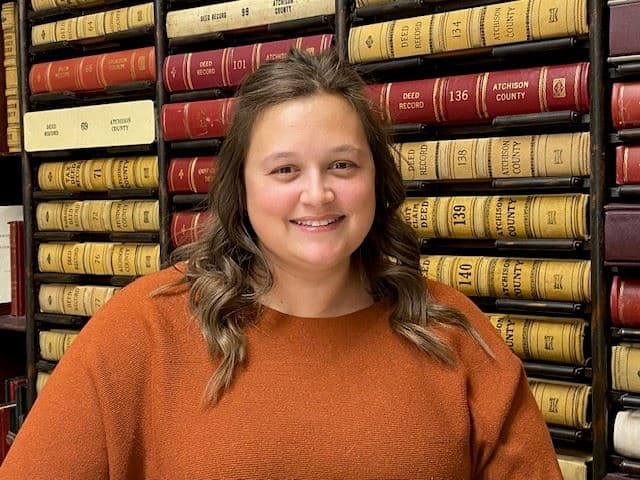
At the Atchison County Courthouse, 423 North 5th Street in Atchison, the Register of Deeds turns house closings, mortgage refinancings, and estate land transfers into official county records. The office preserves the documents that keep ownership clear for lenders, title companies, surveyors, and heirs.
Why the office matters when property changes hands
The Register of Deeds preserves property records and keeps the chain of title usable when land is sold, inherited, split, or released from a loan. That function comes up when a young family buys a first home, a farmer transfers acreage, a widow settles a deed after a death, or a homeowner tries to clear a mortgage release from the record.
Across Kansas, Register of Deeds offices preserve and maintain land records for public use. Douglas County’s Register of Deeds office serves as a recording and information center for real estate and acts as custodian and preserver of records. Franklin County’s office preserves and maintains land records in good working order for all to use. Atchison County’s version of that duty is visible in the way it manages filing standards, fees, and the shift toward electronic submission.
How filing works in Atchison County
Recording fees are due and payable before filing in Atchison County. Checks should be made payable to the Register of Deeds, and the office also accepts credit and debit cards. A filing is not complete until the payment is handled and the document meets the county’s recording rules.
The county publishes general recording requirements and a document filing checklist, which is where many property owners learn that a signature alone is not enough. If a deed, mortgage, release, or other document does not meet the filing requirements, it can be rejected, and that delay can hold up a closing, a refinancing, or the transfer of inherited land. For residents dealing with a property after a death in the family, that can mean another trip, more waiting, and more uncertainty at a time when the paperwork already carries emotional weight.
In rural property transfers, a single missed formatting issue, an unpaid fee, or a document that does not match county standards can send someone back to square one. The county’s checklist reduces those mistakes before a document reaches the recording desk.
What eRecording changes
Atchison County links to CSC eRecording, a system designed to save time, reduce risk, and lower costs. For people who file often, such as title professionals, lenders, and law offices, electronic submission can replace a paper trip to the courthouse with a remote filing that moves faster and is easier to track.
CSC’s electronic recording solution automates receipt, endorsement, fee payment, and return of electronic documents. That is the biggest operational change for a county recording office: the document still goes through the official record system, but the workflow removes some of the manual steps that slow paper handling.
In Douglas County, electronic recording is the fastest and most secure way to record documents, and submitters receive recording or rejection notices within minutes. Jefferson County accepts deeds, mortgages, and most other document types for e-recording.
Who benefits, and who can be left behind
Buyers waiting on closings, lenders releasing mortgages, and heirs trying to finish estate transfers benefit when a document can move quickly and come back with a recording notice in minutes instead of days. For title companies and law firms working across rural counties, eRecording reduces courthouse traffic and trims the back-and-forth that comes with paper handling.
In a county where property can change hands across farms, family parcels, and subdivision plats, people who still rely on paper may need to prepare documents by hand, verify county requirements more carefully, pay by check or card in person, and wait longer if the filing is rejected.
How Kansas fits into the bigger land-records system
Atchison County’s eRecording option sits inside a broader Kansas framework. The Kansas Register of Deeds Association has an e-recording page and points to the Kansas Uniform Real Property Electronic Recording Act. Johnson County began electronically recording documents in October 2009.
In Atchison, the office handles inheritance paperwork, closings, and title work whether a document arrives on paper or through eRecording. The county preserves the record and keeps the chain of title usable for the next owner, borrower, or heir.
This article was produced by Prism’s automated news system from verified source data, official records, and press releases, then run through automated quality and moderation checks before publishing. The system is built and supervised by the people who set the standards it runs under. Read our full AI policy.
Did this article answer your question?