Atchison County State Fishing Lake faces long-running water-quality challenges
The lake’s 75.5-acre pool sits in a 30:1 watershed, so storms and runoff can quickly trigger algae, muddy water and fishing-day cautions.
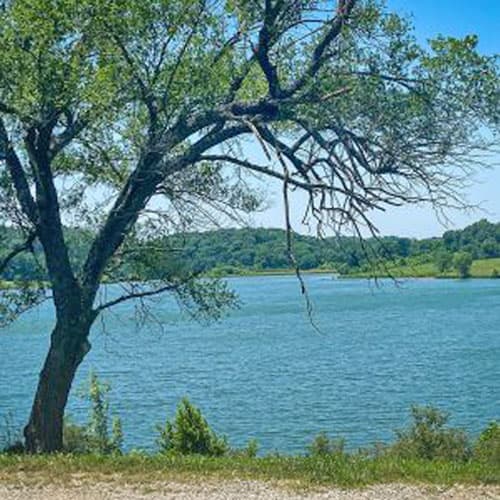
Atchison County State Fishing Lake is the kind of public place where water quality shows up in plain sight. KDHE’s numbers put the conservation pool at 75.5 acres, with a 30:1 watershed ratio and an estimated retention time of 0.72 years, so runoff from the surrounding landscape can change conditions fast enough for families to notice on the next visit.
What the lake’s size means for a day outside
The lake’s physical profile helps explain why it can swing from inviting to troubled. KDHE lists a maximum depth of 10.0 meters, a mean depth of 3.4 meters, and a storage volume of 746.8 acre-feet, all on a relatively small body of water. That is enough water for fishing and shoreline recreation, but not enough to buffer the lake from heavy rain, soil movement, fertilizer runoff, or seasonal warming the way a larger reservoir might.
The drainage area is roughly 3.3 to 3.5 square miles, which means the lake is fed by a much larger land area than its 75.5-acre pool suggests. That 30:1 watershed-to-lake ratio is the key number for local users: a storm anywhere across that surrounding landscape can quickly feed murky water, nutrients, and sediment into a lake people use for fishing, picnicking, and weekend visits.
A long record of nutrient and sediment stress
KDHE currently identifies the lake’s impairment as eutrophication bundled with pH, and the agency’s revision notes that the eutrophication portion was approved by the U.S. Environmental Protection Agency on August 28, 2001. An older Missouri River Basin TMDL shows that the lake had previously been listed for eutrophication bundled with dissolved oxygen and aquatic plants, which tells you the problem has been tracked across more than one water-quality category for years.
The lake also appears in the 1998 303(d) listing table for water-quality limited lakes, and a separate KDHE TMDL identifies siltation as an impairment. Put together, those labels point to a lake where nutrient loading and sediment are both part of the story, not just one isolated issue. KDHE’s Missouri River Basin TMDL lists the lake’s designated uses as secondary contact recreation, expected aquatic life support, and food procurement, so the water has to serve people on the shore and the fish in it at the same time.
Statewide, this problem is not unusual. A Kansas resource cites a 1994 KDHE report finding that 89 percent of Kansas lakes were impaired by excessive nutrients, which places Atchison County State Fishing Lake inside a broader pattern across the state rather than a one-off local flaw.
What visitors can actually see and why it matters
The most useful way to read the lake is by what shows up at the waterline. Eutrophication is not just a technical term in a file cabinet; at a county fishing lake, it can show up as reduced clarity, more visible algae, and tougher conditions for fish habitat when oxygen and aquatic plant balance are stressed. Siltation adds another visible layer: muddier water, shallower edges, and more sediment settling where people launch a line or sit near shore.
That is why the June 2025 blue-green algae advisory mattered so much to local use of the lake. KDHE and the Kansas Department of Wildlife and Parks issued a public health advisory for blue-green algae at Atchison State Fishing Lake, turning a water-quality label into a practical decision about whether to spend a day there. KDHE’s harmful-algal-bloom program operates during the water recreation season, which means the state treats these blooms as a recurring public-use issue, not a rare surprise.
A quick read of the shoreline can help families make sense of the water before settling in for the day:
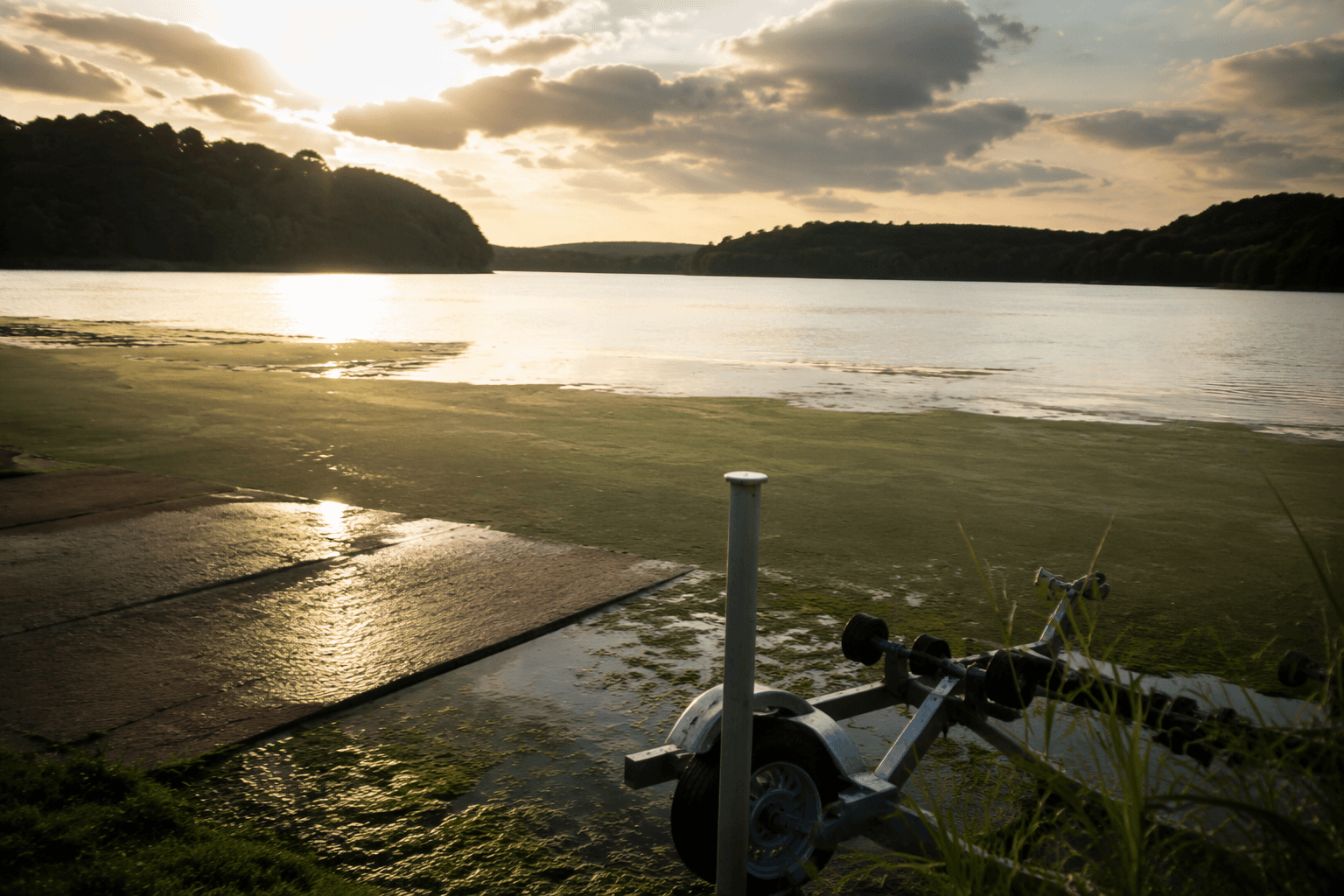
- Clearer water near the bank can still change quickly after rain because the watershed drains about 3.3 to 3.5 square miles into a 75.5-acre pool.
- Visible algae or surface scum deserves attention, especially in warm weather when blue-green algae advisories are more likely to affect use.
- Muddy water near inlets or shallow stretches signals sediment movement, which matters in a lake already identified by KDHE for siltation.
The lake’s public role is bigger than fishing alone
The recreation setting is larger than the lake itself. A Kansas fishing-lake brochure says the Atchison State Fishing Lake and Wildlife Area covers 248 acres total and sits about 3 1/2 miles north and 2 miles west of Atchison in the Missouri River Breaks region of northeast Kansas. The same brochure says the lake was constructed in 1956, stocked with fish in 1957, and first opened to fishing in 1959, giving the place a long public-history footprint in Atchison County.
The landscape around it also shapes how people experience the site. The brochure describes oak-hickory forested hills and native grass, and recreation descriptions note that the west end is shallow while deeper water lies toward the dam. That mix matters for anglers, shore visitors, and anyone trying to judge whether the lake is holding up well through a hot season or after a heavy rain.
County management keeps the place on the public agenda
Atchison County has also made the lake a formal policy matter, not just a recreation spot. On March 20, 2018, the county adopted Resolution No. 2018-1336, modifying rules for the Atchison County Lake. The resolution states that Atchison County owns and operates the lake for the use and benefit of the public, which places day-to-day stewardship squarely with local government.
The county’s Fish and Game page also notes that the County Clerk’s Office sells fish-and-game licenses, tying the lake to routine county administration rather than a separate agency alone. That matters because lake health, fishing access, and rule enforcement all depend on the same public machinery: county management, state monitoring, and the physical reality of a small watershed that reacts quickly to what happens around it.
Atchison County State Fishing Lake remains a public gathering place with a long history and a short environmental fuse. The lake’s numbers, from its 75.5-acre conservation pool to its 0.72-year retention time, show why water-quality problems can surface quickly and why families planning a day there need to pay attention to algae, sediment, and the look of the water before they settle in.
This article was produced by Prism’s automated news system from verified source data, official records, and press releases, then run through automated quality and moderation checks before publishing. The system is built and supervised by the people who set the standards it runs under. Read our full AI policy.
Did this article answer your question?