Atchison parks division maintains 333 acres, shapes city curb appeal
Atchison’s park system is a low-cost day plan built into city life, from Jackson Park’s hills to riverfront docks, festival crowds, and quiet neighborhood stops.
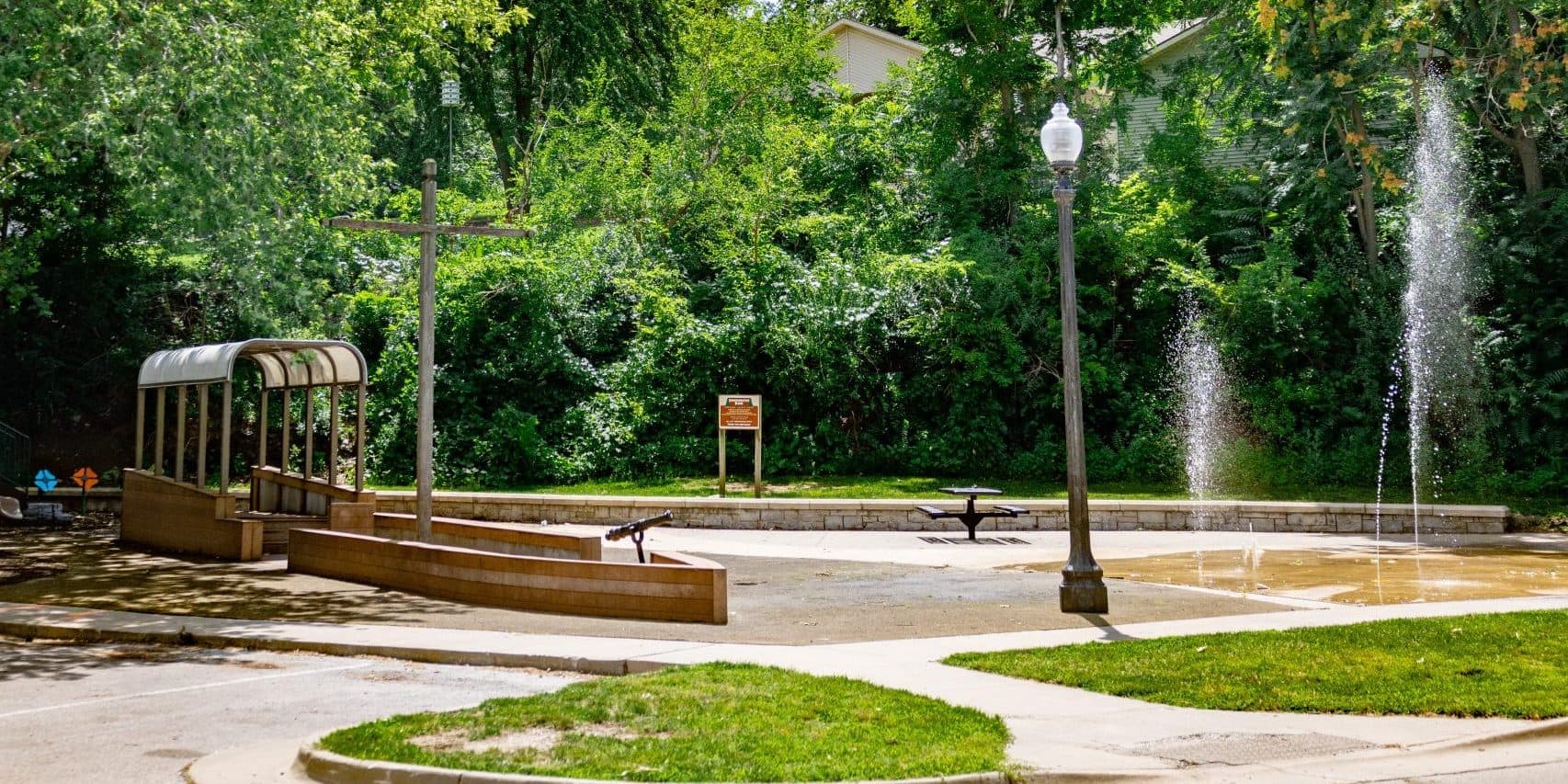
Atchison’s parks division does more than mow grass and empty trash cans. The city says it oversees 333 acres of clean, green parks and facilities, and its footprint reaches far beyond recreation land into Oak Hill Cemetery, Amelia Earhart Airport, City Hall, the downtown mall, vacant lots, and highway rights-of-way. That makes parks maintenance part of the city’s daily appearance, the kind of work that shapes first impressions before anyone reaches a trail, playground, or boat ramp.
A system built for curb appeal and everyday use
The city frames this work as a curb-appeal issue as much as a parks issue. Attractive public spaces help signal care, and Atchison ties that idea directly to community pride, which explains why the parks division also handles public landscaping, mulching, trail maintenance, park shelters, equipment, and in-kind services for the International Forest of Friendship next to Warnock Lake.
That broad mandate matters because the city’s outdoor network is not a single destination. It is a stitched-together system that supports play, fishing, walking, events, scenic drives, and the day-to-day look of downtown and neighborhood streets. In practical terms, that means a family can plan a cheap afternoon outdoors without leaving city limits, while a visitor can build an itinerary around river views, local history, and open space.
Start at Jackson Park for the classic Atchison park day
Jackson Park remains the system’s anchor. The city describes it as more than 100 acres, with a long history that goes back to its earlier life as City Park before it was renamed for Zaremba E. Jackson. Today, the park combines walking trails, picnic spots, frisbee golf, playgrounds, shelters, wooded hills, and scenic overlooks, along with views of the Missouri River.
That mix makes Jackson Park useful for almost any schedule. A family can settle in for a morning of playground time and lunch under a shelter. A walker can build a loop around the trails and ridgeline views. A casual day trip can turn into a longer stay simply because the park gives enough room for different kinds of outdoor time without requiring a fee-heavy outing. For a city that emphasizes low-cost recreation, Jackson Park is the place where Atchison’s park system feels most complete.
Warnock Lake adds water, wildlife and a built-in landmark
A short drive away, Warnock Lake shifts the day from hillside parkland to water access and scenery. The city says the lake offers fishing and no-wake boating, along with a campground, playgrounds, and walking trails. That gives the lake a different rhythm from Jackson Park: slower, quieter, and better suited to anglers, people with picnic plans, or anyone looking for a half-day outside that still feels local and manageable.
Warnock Lake is also home to one of Atchison’s most distinctive public art landmarks, the Amelia Earhart Earthwork. Kansas artist Stan Herd created the one-acre portrait in 1997, and it is viewed from a nearby hilltop rather than from ground level. That turns a stop at the lake into something more than a routine outing. Visitors can pair fishing, a walk, or campground time with a brief detour to one of the city’s best-known visual landmarks.
The area also connects to the International Forest of Friendship, which the parks division supports with in-kind services. That adjacency gives Warnock Lake a broader civic role, linking outdoor recreation with the memorial and arboretum setting that sits next to it.
The riverfront is the best fit for a short, mixed-purpose outing
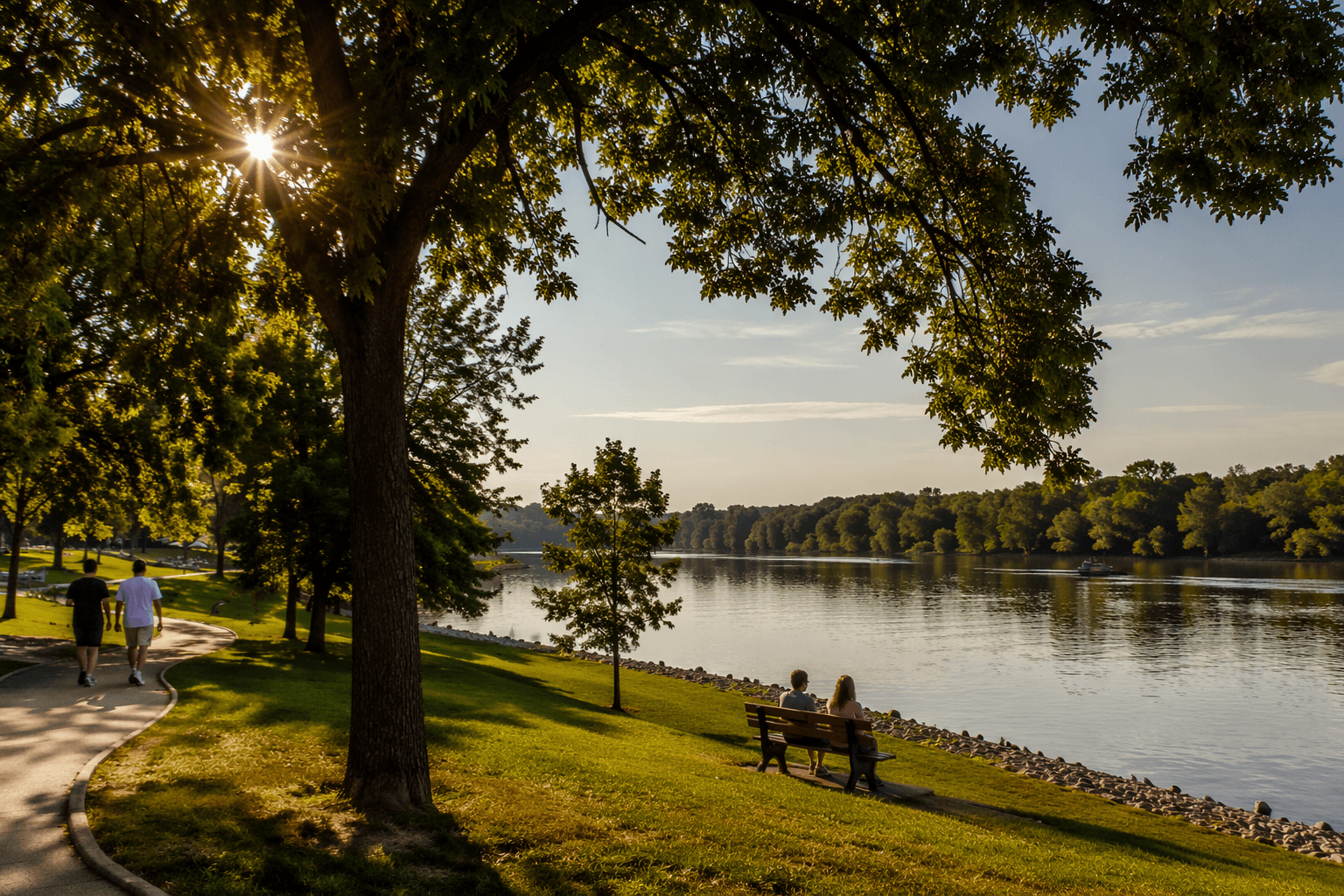
Riverfront Park is the place to go when the goal is a compact outing with the most variety in the least amount of time. The park sits on the Missouri River, includes river-accessible docks and a boat ramp, and is anchored by a veterans memorial to the south. It is also adjacent to Independence Park, where the playground and spray feature give families an easy way to extend a river visit without changing locations.
That combination makes the riverfront useful for several kinds of visitors. Anglers and boaters can use the docks and ramp. Walkers and photographers can come for the river views. Families can split time between the playground, the spray feature, and the memorial space. In July, the area changes pace again: the riverfront hosts thousands of guests each year for the Amelia Earhart Festival and fireworks display, turning the park into one of the city’s biggest public gathering spaces. The 2026 festival listing is set for July 17-18, 2026.
A fuller day can move from neighborhood parks to the lake and back downtown
Atchison State Lake adds another layer to the city’s outdoor map, with fishing, nature trails, and wildlife viewing for people who want a quieter setting than the riverfront or Jackson Park. LFM Park and the Sports Complex serve a different need, with courts, tournament fields, and structured recreation that fits organized games and weekend competition. Bromley Park and Reisner Park round out the system with calmer neighborhood-scale options for play, shade, and picnics.
That spread means a full day can unfold without a long drive. A family might begin at Jackson Park, break for lunch, spend part of the afternoon at Warnock Lake, then finish at the riverfront for a sunset walk or a look at the docks. A walker could link Jackson Park’s trails with a downtown stop and an evening at Riverfront Park. An out-of-town guest could pair the Amelia Earhart Earthwork, the river views, and a downtown pass through the city mall into a single low-cost itinerary.
Planning documents show the parks system is being shaped over time
Atchison’s park network has been guided by formal planning, not just routine upkeep. The city’s parks page points to a 2017 Jackson Park Master Plan and a 2019 Reisner Park Master Plan, and the Atchison City Commission adopted the Reisner plan on April 1, 2019. That plan envisioned more than $500,000 in capital improvement projects over 10 years, which signals that the city sees parks as long-term civic infrastructure rather than isolated amenities.
That matters because the system’s strength lies in how its pieces work together. The parks division maintains the places people visit for recreation, but it also shapes the streets, grounds, and public spaces that define Atchison’s appearance every day. In a city this size, that combination of maintenance, scenery, and access is what keeps the parks useful for residents and memorable for visitors.
This article was produced by Prism’s automated news system from verified source data, official records, and press releases, then run through automated quality and moderation checks before publishing. The system is built and supervised by the people who set the standards it runs under. Read our full AI policy.
Know something we missed? Have a correction or additional information?
Submit a Tip