Autauga County landmarks highlight the county’s rich historic legacy
Autauga County’s Alabama Register sites run from Prattville to Autaugaville, and several are easy to find, making the county’s preservation map useful for real-world weekend visits.
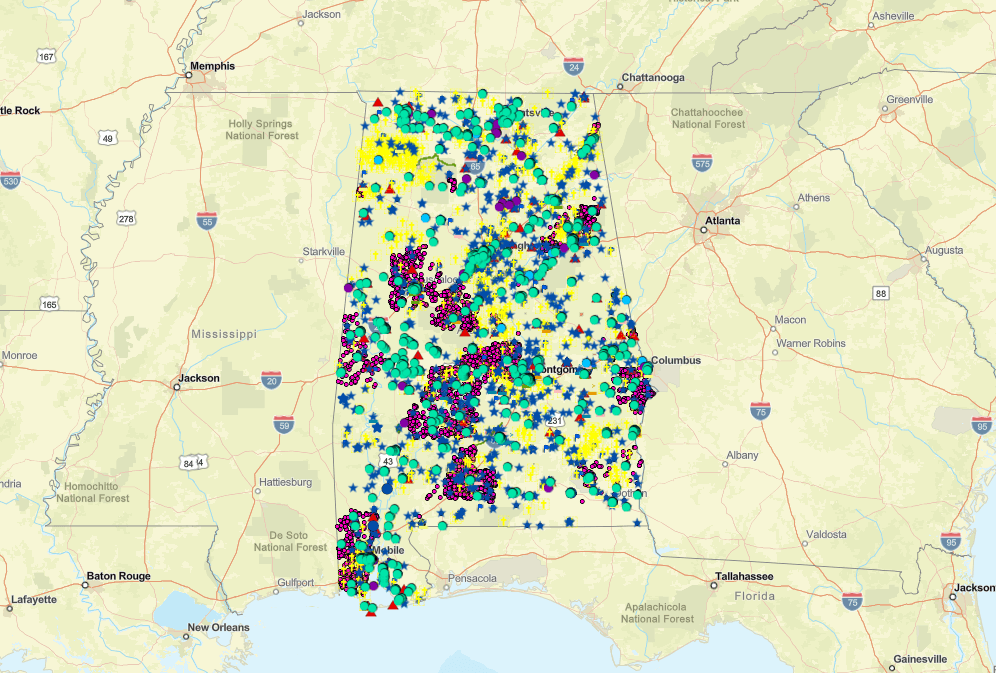
Autauga County’s historic landscape is easier to read when the Alabama Register of Landmarks and Heritage is used as a county map. The listed sites show where residents worked, learned, worshipped and buried their dead, and several still sit along routes people drive every day, from U.S. Highway 82 to County Road 55 and Gin Shop Hill.
How the Alabama Register works in Autauga County
The Alabama Historical Commission created the Alabama Register of Landmarks and Heritage to recognize Alabama’s historic places and encourage their continued preservation. Its historic-preservation map page traces the commission to the Alabama Legislature in 1966, and the register now documents buildings, sites, structures, objects, districts and cultural landscapes across the state.
That matters in Autauga County because the register is not limited to isolated showpieces. It includes districts like Autaugaville Historic District, as well as single properties such as Rawlinson Grist Mill and Machinery and Mount Sinai School. The commission also makes one practical point clear: all Alabama properties listed in the National Register of Historic Places are automatically considered listed in the Alabama Register, even if they do not appear on the state list unless they were first listed there.
The county’s preservation files reinforce how much information sits behind each name. The Alabama Historical Commission’s records for Autauga County include nomination forms, historic inventories and survey material, which is why the register works best as a working guide rather than a simple roster.
Prattville and the county’s industrial core
Prattville remains the county’s most obvious starting point because its historic identity is tied to industry, education and burial grounds that still anchor the landscape. The Autauga County Heritage Association said in 2025 that Prattville is the “birthplace of southern industrial development,” a framing that matches the county’s broader preservation record and the association’s own effort to build new public interpretation around that legacy.
The group announced “The PRATT” as a new history and education campus on August 12, 2025. It also operates the Prattaugan Museum & Archives / Heritage Center, which gives residents and visitors a place to start before heading out to the actual sites on the register. That combination of archives, exhibits and on-the-ground landmarks makes preservation feel present-day, not locked away in paperwork.
The sites residents can actually track down
Rawlinson Grist Mill and Machinery is one of the clearest examples of how the county’s old economy is still legible in the landscape. The Alabama Historic Inventory form identifies it as also known as Whitewater Pond Grist Mill, dates it to around 1875, and places it on U.S. Highway 82 on Whitewater Creek in the Prattville vicinity. Its thematic category is technology-commerce, which captures the way milling linked farm production to local trade.
For people trying to visit or at least see it, the location detail matters. It is tied to a rural corridor rather than a downtown address, so the site reads as a roadside historic landscape connected to Whitewater Creek and the old milling economy. That makes it especially useful for a heritage drive because it connects directly to the county’s water-powered agricultural past.
Daniel Pratt Cemetery sits on Gin Shop Hill south of Highway 82 in Prattville and is listed in the Alabama Historic Inventory with a period of 1843-1875. The cemetery ties the county to the founder era of Prattville and the industrial growth that followed, and its location means residents can place it within the built pattern of the town rather than treating it as an abstract burial ground. It is one of the most tangible links to the Pratt-era story because the burial site survives even as the larger development around it changed.
Mount Sinai School is listed in the Alabama Register nomination form as Mount Sinai School and Mount Sinai Community Center at 1280 County Road 55. The form classifies it as a public building with educational use, which makes it easier to understand as an active community place as well as a preserved one. Because it has a clear street address, residents can locate it directly, and its dual name shows how historic school buildings often continue serving the community in a new role.
Autaugaville Historic District broadens the county map beyond Prattville and points to the development of a small town shaped by a shared community pattern. Rather than one isolated building, the district preserves a whole landscape, which is exactly the kind of listing that helps readers understand how a town grows outside a commercial center. It also gives Autaugaville a place in the county’s preservation story, not just as a settlement name but as a visible historic place.
The register record also includes Lamar Estate Family Home and Statesville School, which adds a domestic-and-school layer to the county’s historic inventory. Even where a listing is not a single public attraction, it still matters because it documents how family life and education were woven into the county’s development. That broader record helps explain why the county’s preservation files matter beyond tourism: they preserve the full structure of community life.
Why these places still matter on the ground
Autauga County was created in 1818 by an act of the Alabama Territorial Legislature, and local history material describes it as “the county older than Alabama.” That early start helps explain why mills, schools, cemeteries and districts recur in the state register: the county’s oldest surviving places are tied to settlement, agriculture and the first phases of industry.
Autaugaville’s settlement history adds another piece. European Americans began settling the area about 1820, when William Thompson erected a gristmill and sawmill on Swift Creek. That detail connects directly to the county’s register sites, especially Rawlinson Grist Mill and Machinery, because it shows how waterways shaped where people built, traded and stayed.
For residents planning a weekend drive, the practical value is straightforward. The register helps you tell the difference between a place you can see from the road, a building with a public use, and a site whose significance is documented in the archive even if it is not set up like a tourist stop. It also points local traffic toward Prattville and Autaugaville businesses by turning history into a route people can actually follow, rather than a memory held only in files.
This article was produced by Prism’s automated news system from verified source data, official records, and press releases, then run through automated quality and moderation checks before publishing. The system is built and supervised by the people who set the standards it runs under. Read our full AI policy.
Did this article answer your question?