Prattville’s history, parks and downtown shape its local identity
Prattville’s downtown, parks and historic sites give residents easy after-work and weekend options, from Cooters Pond Park to the Daniel Pratt Historic District.
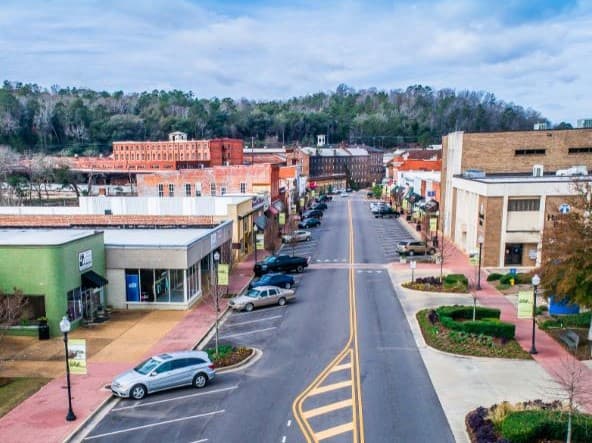
Prattville still reveals itself in the places people actually use after work and on weekends: a walkable historic downtown, a park system built for families and sports, and a legacy tied to Daniel Pratt and the city’s artesian wells. That mix keeps Prattville recognizable in Autauga County and gives newcomers a practical map for where local life happens.
History that still shapes the city
Prattville’s official history traces the city to Daniel Pratt, who brought cotton gin manufacturing from Georgia in the 1830s and became the world’s foremost producer of cotton gins. That industrial legacy is why Prattville still carries the nickname “Birthplace of Industry in Alabama,” and why the city’s identity feels tied to both work and place rather than to a single downtown block.
The city is also known as “The Fountain City” because of its free-flowing artesian wells. That detail matters because it links Prattville’s past to the way residents still talk about it now: a city with a distinct natural feature, a defined history, and public spaces that continue to anchor everyday use along Autauga Creek and beyond.
Downtown is more than a postcard
The Daniel Pratt Historic District is the clearest expression of that identity on foot. Tourism materials describe it as about fifteen city blocks with more than 200 properties dating from 1840 to 1930, including Greek Revival, Italianate and Bungalow architecture. For anyone trying to understand Prattville quickly, this is the part of town that explains why the city feels different from neighboring River Region communities.
That historic core is also where the city’s walkability becomes part of the experience. A short walk through the district shows old streets, preserved buildings and the kind of civic scale that works for errands, an evening stroll or a quick stop after dinner. It is not just a heritage zone for visitors; it is one of the places residents still use to meet, linger and move through the city.
A heritage stop that feels local, not staged
The Prattaugan Museum & Archives at 101 West Main Street, Prattville, AL 36067 adds another layer to that story. It is described as a c. 1840 Greek-revival house with artifacts and exhibits tied to Prattville and Autauga County history, which makes it a useful stop for anyone trying to connect the city’s built environment to the people who lived in it.
Because it combines a historic house setting with local archives, the museum works as both a visitor stop and a research point for residents. It fits the larger Prattville pattern: history is not treated as something separate from daily life, but as part of the places people already pass by downtown.
Parks are where the city’s routines really show up
Prattville’s park system is a major reason the city feels active after school, after work and on weekends. The Prattville Parks and Recreation Department maintains playgrounds, athletic fields, swimming pools and community centers, and it offers classes and programs for all ages. That turns the parks into more than open space; they are part of the city’s weekly rhythm.
Several named parks give that system shape:
- Cooters Pond Park, at 1844 Cooters Pond Rd, Prattville, AL, is described as a regional park with a dog park, boat launches, rental pavilions, restrooms and other passive recreation elements, plus an Olympic-sized community pool.
- Pratt Park includes a pool and splash pad, which makes it one of the most obvious family stops when the weather is warm.
- Wilderness Park, Spillway Park, Heritage Park and Old Prattvillage and Gardens broaden the recreation map for people looking for a walk, a picnic or a quieter place to spend time.
The city also supports youth sports that keep families returning to the same fields and facilities season after season. Soccer, softball, football, cheerleading, baseball and tennis are all part of the recreation program, which helps explain why Prattville parks remain active long after the school day ends.
Why this matters in Autauga County
Prattville’s scale helps explain why these places matter so much. U.S. Census Bureau QuickFacts lists the city’s 2020 population at 37,781, while FRED lists Autauga County’s 2024 resident population at 61,476. Census QuickFacts lists the county’s 2025 population estimate base at 58,805, a reminder that the county continues to change even as Prattville remains one of its most visible anchors.
That growth makes the city’s public spaces more important, not less. In a county where people move between Prattville, Millbrook and rural communities nearby, the places that hold local life together are the ones that can absorb a busy afternoon, a weekend outing or a quick stop after dinner. Prattville’s parks, historic district and downtown do exactly that.
The city’s civic and tourism organizations reinforce that identity. The Prattville Area Chamber of Commerce and Explore Prattville present the city as a place to visit, eat, shop, stay, golf and learn, which lines up with how residents already use it: as a practical, familiar place where history, recreation and daily routines overlap.
This article was produced by Prism’s automated news system from verified source data, official records, and press releases, then run through automated quality and moderation checks before publishing. The system is built and supervised by the people who set the standards it runs under. Read our full AI policy.
Did this article answer your question?