Big Island officials seek higher storm damage estimates for federal aid
Officials say March’s Kona lows caused more than $400 million in losses from the first storm alone, with total damage topping $1 billion. The fight now is how high to document.
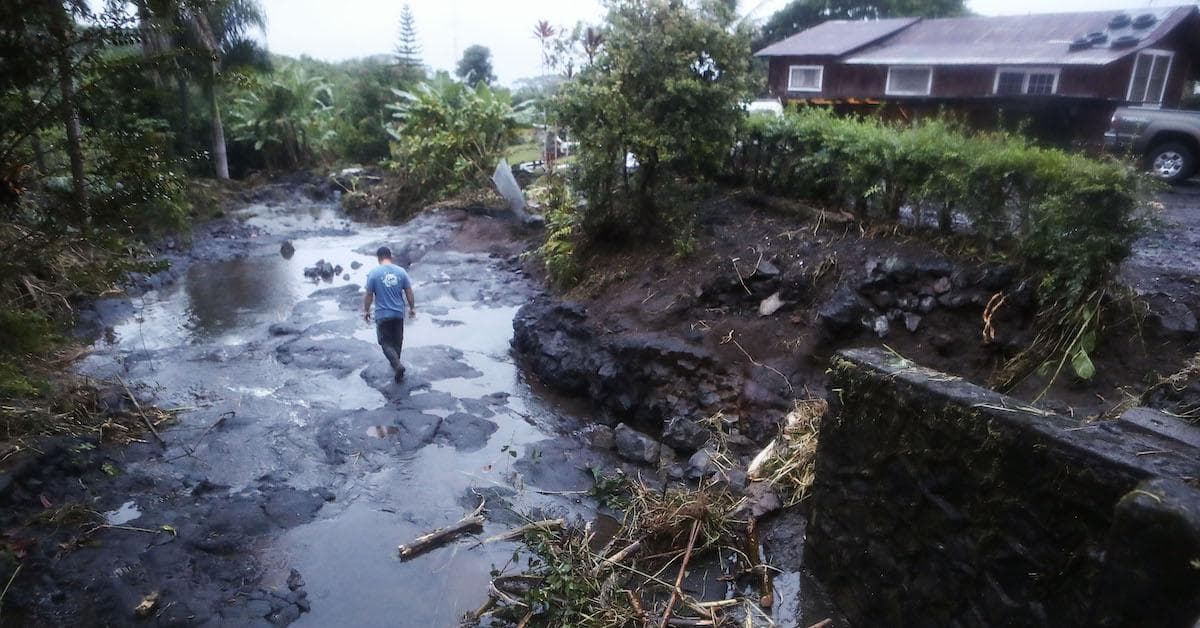
Hawaii County and state officials are pressing to document as much Kona storm damage as possible, because the federal aid formula can reimburse a large share of eligible recovery costs only if the losses are clearly counted. Gov. Josh Green said damage from the first March storm alone exceeded $400 million, while total losses from both storms were expected to pass $1 billion, a scale that could determine how much money flows back to the county and how much is left for taxpayers to absorb.
The debate centers on reimbursement math. Federal disaster aid can include FEMA Public Assistance for debris removal, emergency protective measures and permanent repairs, Individual Assistance for residents, hazard-mitigation funding and an enhanced federal cost share of up to 90 percent for eligible recovery costs. The more damage officials can document in Kona, South Kona, Puna and across the Big Island, the larger the pool of expenses that may qualify for outside help. Critics of the approach say that is exactly where the tension lies, between aggressive advocacy for hard-hit communities and inflated claims that could invite scrutiny later.

The damage followed two Kona low systems that hit Hawaii in March 2026. The first began around the evening of March 10 and brought heavy rain, damaging winds, flash flooding, mudslides and rockfalls. The second affected the state later in the week of March 15 to 23. In his disaster request, Green said debris, mudslides and rockfalls blocked major highways and isolated communities, cutting into emergency access across the islands.
On the county side, Mayor Kimo Alameda declared a local state of emergency effective March 12. Hawaii County then urged residents and businesses to submit damage reports so officials could identify priorities and direct resources where they were needed most if state or federal aid became available. County officials have said those reports help target help where it is needed most, a step that also strengthens the paper trail for reimbursement claims.
The federal response has already begun to open more doors for affected households. FEMA announced individual assistance for residents in Maui, Hawaii and Honolulu counties after the major disaster declaration, and Hawaii County Civil Defense listed a FEMA registration deadline of June 14, 2026 at 11:59 p.m. The state’s recovery site also said displaced households could be placed in short-term rentals or at Hale o Laiē, while the Major Disaster Fund would cover hotel stays for residents whose homes were rendered uninhabitable.
The pressure to document losses has played out amid repeated emergency proclamations by the governor and county through March and April, underscoring how quickly the weather turned a local storm response into a taxpayer-backed accounting fight over who pays, how much and for what.
This article was produced by Prism’s automated news system from verified source data, official records, and press releases, then run through automated quality and moderation checks before publishing. The system is built and supervised by the people who set the standards it runs under. Read our full AI policy.
Did this article answer your question?