West Hawaii goat and sheep overpopulation strains roads, ecosystems, budgets
Goats and sheep are no longer a roadside nuisance in West Hawaii; they are chewing up fences, watersheds and budgets while agencies struggle to keep pace.
West Hawaii’s hidden cost of inaction
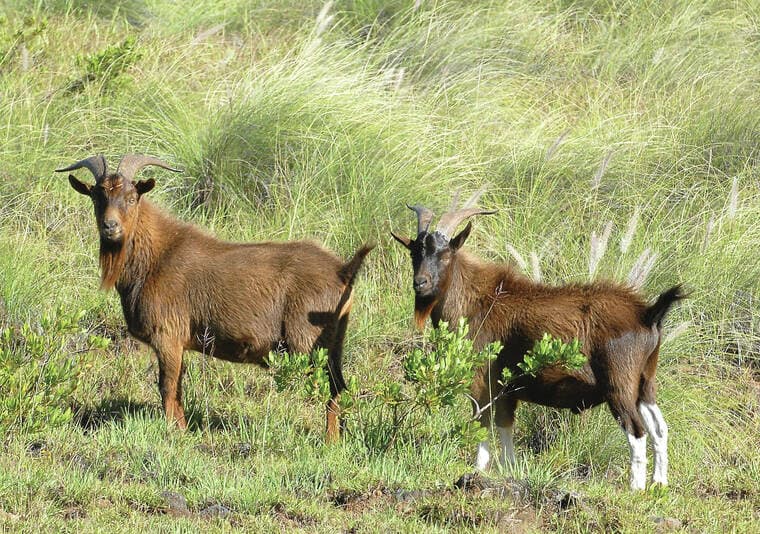
Roadside carcasses of wild goats and sheep have become an ugly reminder of a problem West Hawaii can no longer treat as a passing nuisance. The animals are visible on the highways, but the deeper damage reaches farther inland, where they tear at fencing, pressure fragile watersheds, and push public agencies into expensive, stop-and-start control efforts that never quite catch up.
The issue is especially stark because it is happening in plain sight. Drivers see the aftermath along major roads, while the Department of Land and Natural Resources works under budget constraints that limit how quickly it can respond. What looks like a daily inconvenience is really a long-running land-management failure that now shows up in safety risks, ecological stress, and higher public-control costs.
Why goats and sheep are a public problem, not just a wildlife one
On Hawaii Island, introduced ungulates are not harmless background animals. Goats and sheep can strip vegetation, damage sensitive terrain, and contribute to roadway hazards when drought or other pressures move them closer to traffic. In West Hawaii, that means the problem is not confined to ranchland or conservation acreage. It spills onto commuter routes, county roads, and the edges of neighborhoods where people encounter the consequences every day.
The bigger ecological concern is that these animals are part of a wider threat to the island’s dryland systems. DLNR’s Restore Mauna Kea materials say Mauna Kea’s high-elevation dry forest and the palila there are under constant threat from introduced animals, plants, insects, diseases, drought, and fire. That warning matters far beyond the summit area, because it shows how easily one pressure, like unmanaged ungulates, can magnify other stresses already bearing down on Hawaii Island ecosystems.
A problem with deep roots on Mauna Kea
This is not a new invasion. DLNR says Territory foresters rounded up more than 50,000 feral sheep from Mauna Kea in 1935, a reminder that sheep and goats have been part of this management fight for generations. The scale of that roundup also underlines a hard truth: these animals can spread widely enough to demand broad, sustained intervention, not one-off removals.
That history helps explain why current roadside sightings should be read as symptoms of a much larger land-use problem. When the landscape is dry, broken up by roads and fences, and already under ecological strain, unmanaged goats and sheep can move quickly from grazing pressure to public hazard. The result is a recurring cycle in which the same roads and hillsides keep producing the same costly outcome.
Who is responsible for control
Responsibility is shared, but the state carries the heaviest operational load. A 2022 request from the Hawaii Legislature asked DLNR to convene a task force to develop a feral ungulate management plan for West Hawaii, signaling that lawmakers recognized the issue as a public policy problem rather than a simple enforcement matter. At the county level, the discussion has continued through the Hawaii County Game Management Advisory Commission and related planning efforts.
According to a county-recorded West Hawaii feral ungulate plan, there are typically 1,000 to 1,400 hunter trips in a season, producing 350 to 500 goats harvested. The same plan says the Division of Forestry and Wildlife is the only agency with any type of steady, programmatic removal of goats from the landscape in West Hawaii. That detail is central: the problem persists not because nobody is trying, but because the effort is fragmented, labor-intensive, and costly.
What past efforts have achieved, and where they fall short
The record shows repeated attempts to treat the issue with a mix of hunting, fencing, closures, and targeted control. In April 2025, DLNR scheduled animal-control activities for feral goats, feral sheep, and mouflon and feral sheep hybrids in the Mauna Kea Forest Reserve, Mauna Kea Ice Age Natural Area Reserve, Palila Mitigation Lands, and Kaohe Game Management Area. Those actions show that the state is still relying on active management in critical areas rather than waiting for the animals to disappear on their own.
Even so, the scale of the problem has kept pressure on new infrastructure. A 2024 report said DLNR was planning nearly six miles of ungulate-proof fencing in Big Island state land reserves, a sign that physical barriers remain part of the long-term answer. But fencing is slow, expensive, and only effective where it is fully maintained, which means it can reduce pressure in one area while the broader population problem continues elsewhere.
Why the roads keep filling up with dead animals
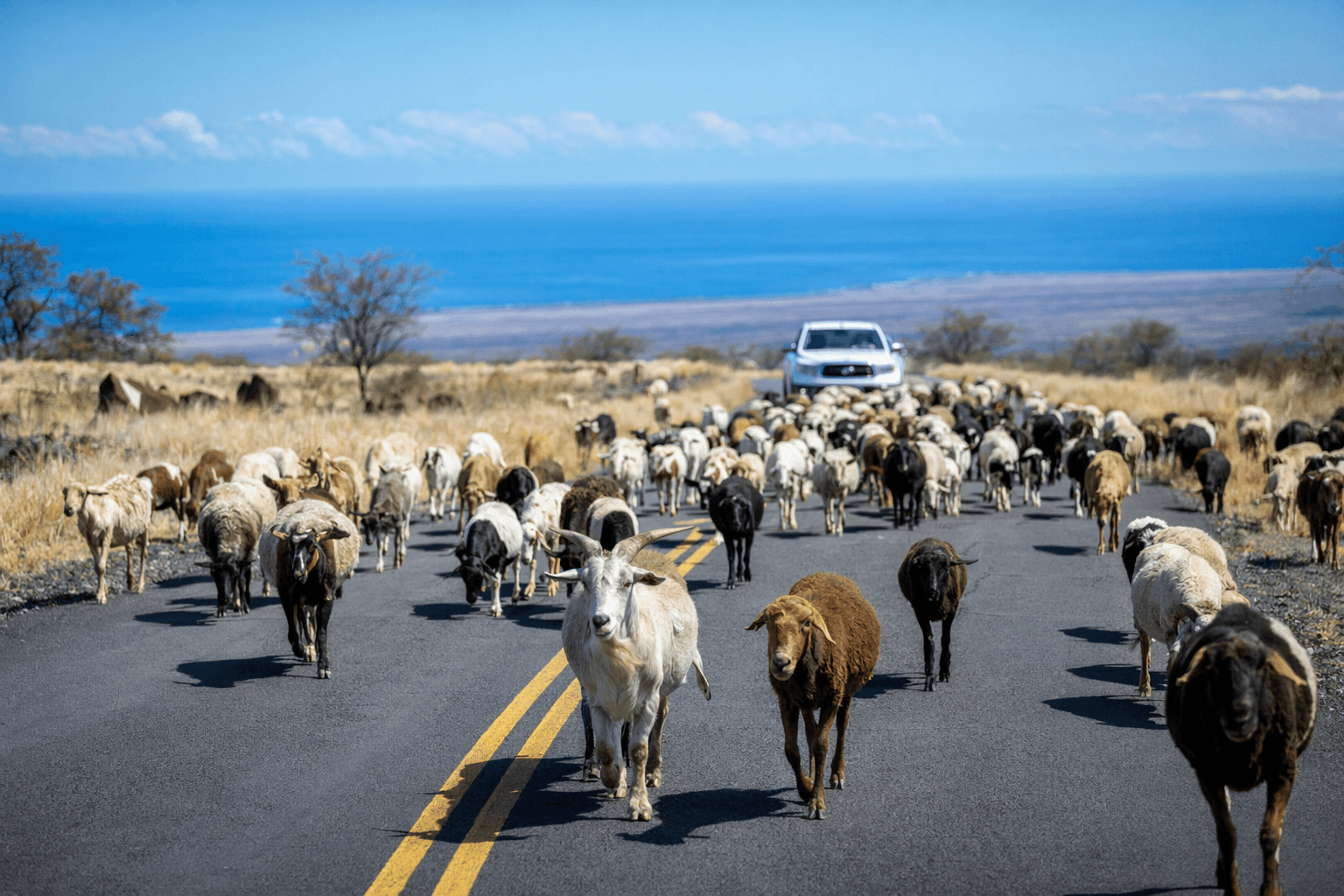
A 2023 report added another layer to the roadside hazard: drought was driving goats closer to roads in West Hawaii. That helps explain why the problem tends to flare in dry periods, when food and water become harder to find in the uplands and along open country. In those conditions, goats and sheep are not just spreading out randomly. They are being pushed into places where vehicles, fences, and people intersect.
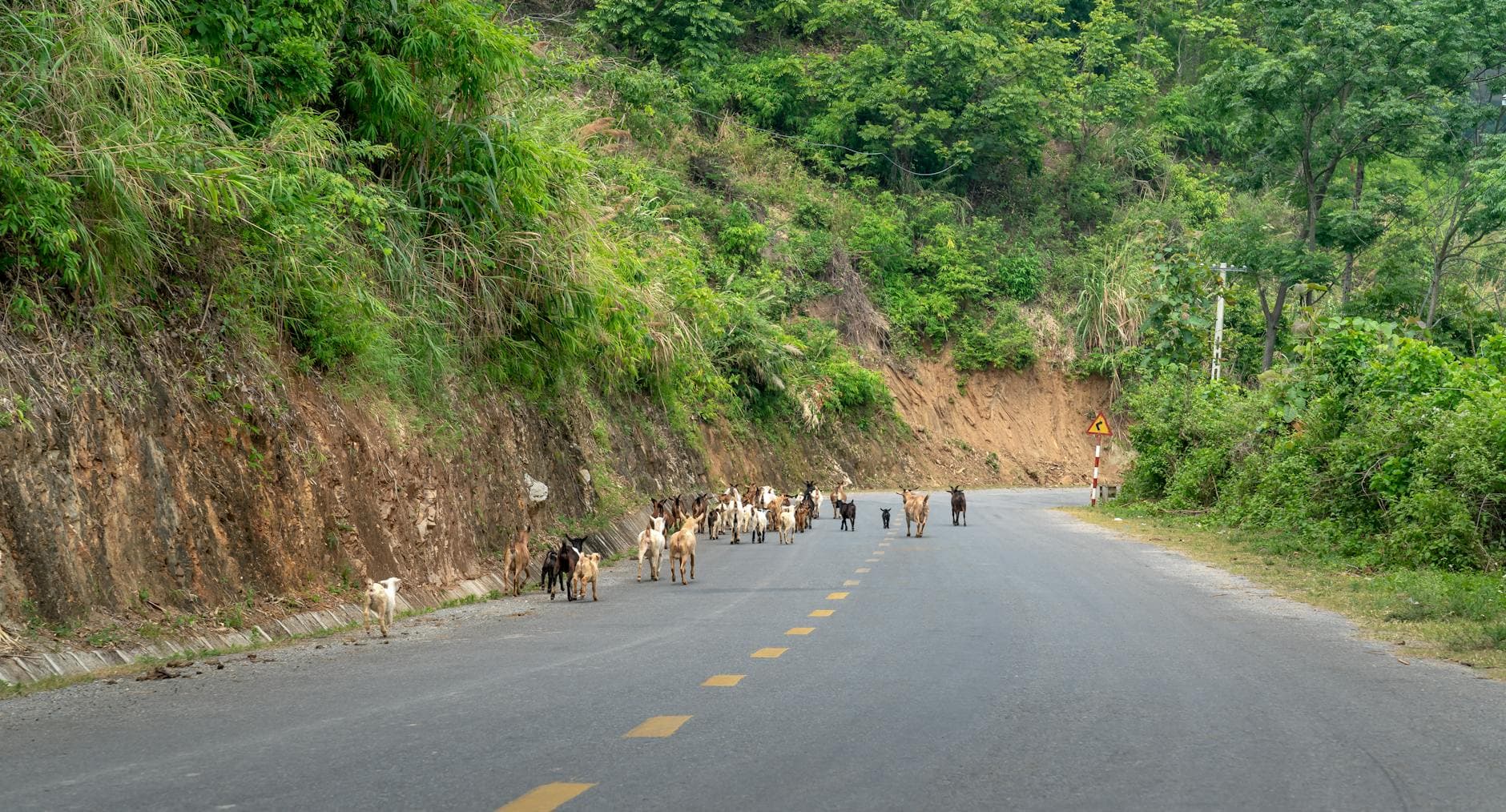
That is why the issue matters to daily life as much as to conservation policy. Roadkill is the most visible marker, but the real cost comes from the chain reaction behind it: more animals near roads, more damage to roadside fencing, more time spent by crews and hunters, and more public money needed to keep up. The cost of inaction is not abstract. It is measured in hazardous shoulders, damaged habitat, and agency budgets stretched thinner every year.
The larger statewide pattern
West Hawaii’s goat and sheep problem sits inside a broader Hawaii debate about invasive ungulates and land protection. Researchers and extension experts have long described feral goats, feral sheep, mouflon sheep, pigs, and deer as animals that alter ecosystems, imperil agriculture, affect fisheries, and cause economic harm. That larger perspective matters because it shows the state is balancing competing values: hunting access, habitat restoration, public safety, and the practical limits of enforcement and land management.
A 2024 Civil Beat report said a feral ungulate task force recommended strengthening roadside fences and adding four more Division of Forestry and Wildlife positions. That recommendation gets to the heart of the matter. The problem is not only how many animals are on the landscape, but whether the state has enough staff, infrastructure, and continuity to keep the population from rebounding after each removal effort.
West Hawaii’s roadside carcasses tell a story of delay as much as damage. The animals are visible, the causes are known, and the control tools are familiar. What remains unresolved is whether the island will keep paying the escalating price of piecemeal response, or invest enough in fencing, staffing, and sustained removal to change the outcome.
This article was produced by Prism’s automated news system from verified source data, official records, and press releases, then run through automated quality and moderation checks before publishing. The system is built and supervised by the people who set the standards it runs under. Read our full AI policy.
Did this article answer your question?