Brownsport Furnace preserves Decatur County’s earliest hot-blast ironworks
Brownsport Furnace still shows Decatur County's first hot-blast ironworks, and the county now stewards the ruins as a public park on Old Furnace Road.
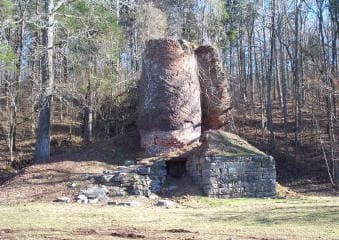
Brownsport Furnace is one of the clearest places in Decatur County to see how iron, river transport, and forced labor shaped the local economy. The site still holds the stack and parts of the charging bridge, enough for visitors to read the outline of Tennessee’s first hot-blast furnace even in ruin. That makes the old furnace a preservation question as much as a history stop: Decatur County Parks and Recreation now oversees the remains and the surrounding acreage, while the public pages tied to the site position it as a place to visit, learn, and remember.
What you can still see on the ground
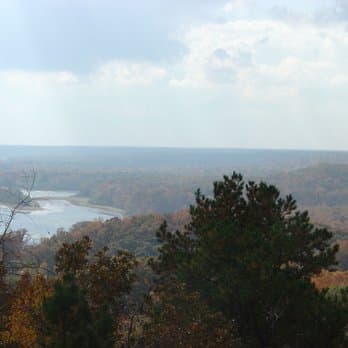
Brownsport Furnace sits about 13 miles southeast of Decaturville near the Tennessee River on Old Furnace Road, inside the area once known as the Coalings. The furnace grounds covered roughly 12,000 acres, a scale that shows how large the iron operation once was, and the county’s attractions page places the site among Decatur County’s outdoor-recreation and heritage offerings. Today, the visible remains are limited, but they are substantial enough to matter: the furnace stack survives, and parts of the charging bridge still stand, giving the park a physical link to the county’s earliest industrial era.
The site is also open and accessible to the public, which makes it more than a roadside landmark. It is a county-managed ruin that can be visited on foot, in daylight hours, as a quiet landscape of stone, earth, and surviving industrial fragments. Because the remains sit in place rather than behind glass, the park works best as an outdoor classroom where the terrain itself explains the scale and location of the old works.
How Brownsport Furnace operated
Brownsport Furnace began operating in the 1840s, and a historical marker dates its construction to 1848. The Tennessee River Valley materials describe it as the first hot-blast furnace built in Tennessee, a technology that marked a major step forward in iron production. A historical marker adds that iron was mined from nearby hematite deposits and processed there until 1876, while another source says operations ended in 1878, showing that the furnace had a long working life even as its era passed.
The process was physically demanding and deeply local. Ore was dug from the surrounding hills, moved by carts and wheelbarrows, and dumped into the furnace from a ramp above. The product was pig iron, which was hauled over the country road to Brownsport Landing on the Tennessee River and shipped by steamboat to foundries elsewhere. That connection to the landing is the reason Brownsport mattered in a county far from any seaport: the river turned a rural furnace into a shipping point for heavy industrial goods.
The labor behind the iron
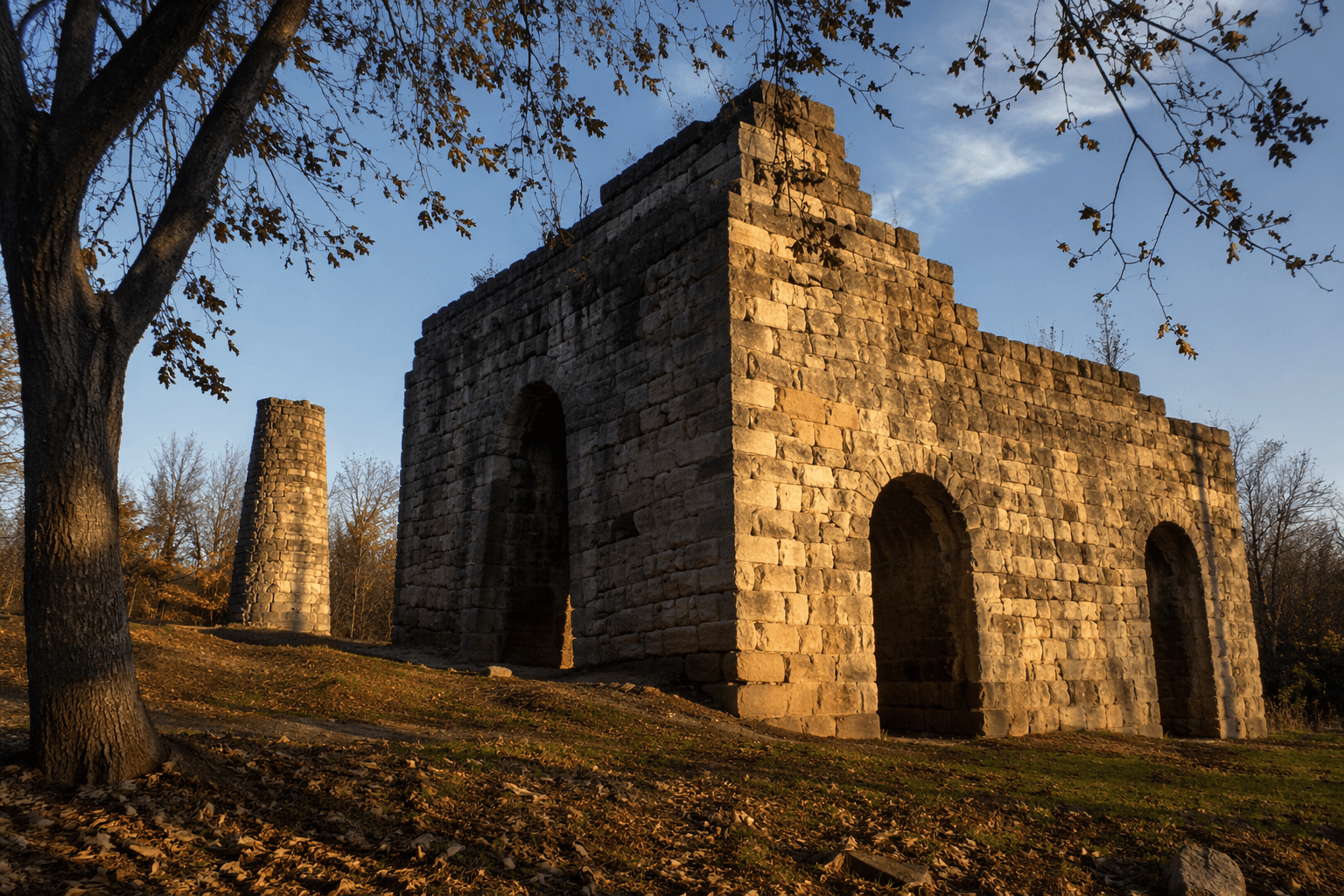
The furnace did not rise from geology and geography alone. Enslaved individuals helped construct the furnace, the commissary, the trails, and the workers’ cabins, and the early 1800s iron industry in this part of Tennessee depended on iron-bearing ore deposits, timber for fuel, and the availability of enslaved Black labor. That history belongs at the center of any visit to Brownsport, because the site is not only a story of invention and commerce but also one of coercion and extraction.
That labor system helps explain why Brownsport is still useful as a teaching site. Visitors can stand at the ruins and trace how the industrial economy functioned in rural West Tennessee: raw ore from nearby hills, timber from surrounding land, workers’ quarters and support buildings nearby, and river transport carrying finished pig iron out of the county. The site makes the relationship between profit, landscape, and slavery unusually visible.
Who built and controlled the furnace
The Brownsport Iron Company owned the 12,000 acres on which the furnace was built. Napoleon Hill served as the company’s first president, with G.M. Trigg and C.R. Thornton among his associates. Those names matter because they tie the site to a specific business network rather than to an anonymous local tradition, and they place Brownsport inside the larger iron economy that developed along the Western Highland Rim.
Brownsport Furnace is part of the Iron Industry on the Western Highland Rim historic context, which helps explain why the site appears in both heritage and industrial-history discussions. It was not an isolated furnace in a vacuum. It was one of the operations that turned the region’s ore, timber, and river access into marketable iron, with Brownsport Landing serving as the shipping point that connected Decatur County to foundries farther away.

Who stewards it now
The most concrete present-day answer to what Decatur County is doing with Brownsport Furnace is stewardship through Decatur County Parks and Recreation. The county oversees the furnace stack remains and some of the surrounding acreage, and the county attractions page identifies the site as open to the public. Tennessee River Valley and Southwest Tennessee Tourism both reinforce its status as a public historic place with National Register recognition, which gives the landmark a civic role beyond simple preservation.
The park’s current use is therefore straightforward but limited. It is protected enough to visit, and it is recognized enough to be listed alongside other county attractions, but the public-facing materials emphasize access and preservation more than formal interpretation. That leaves the ruins themselves carrying most of the educational burden, especially for school groups, local history programs, and visitors who want to understand how Decatur County fit into the state’s industrial past.
Why the name still carries outside the furnace lot
Brownsport’s influence reaches beyond the park boundary. A Tennessee history source says the site was donated to the county by the Tennessee River Pulp and Paper Company in 1977, which explains how the property became a remote public park rather than a private industrial remnant. The furnace also sits within a larger historical landscape that includes the river landing, the old country road, and the surrounding Coalings area, all of which shaped how iron moved from mine to furnace to market.
The site’s afterlife even extends into geology. The name “Brownsport formation” was derived from strata exposed near the old furnace site, a reminder that the place left a mark in both industrial history and scientific language. That layered legacy is part of why Brownsport Furnace still deserves attention in Decatur County: it is a ruin, a preserved public park, a labor site, and a marker of how the county first entered the industrial age.
This article was produced by Prism’s automated news system from verified source data, official records, and press releases, then run through automated quality and moderation checks before publishing. The system is built and supervised by the people who set the standards it runs under. Read our full AI policy.
Did this article answer your question?