Decatur County stood with the Union in Tennessee's secession vote
Decatur County’s Union vote was narrow, but the split ran deeper than election totals. The Tennessee River divided homes, routes, and survival choices that still shape local memory.
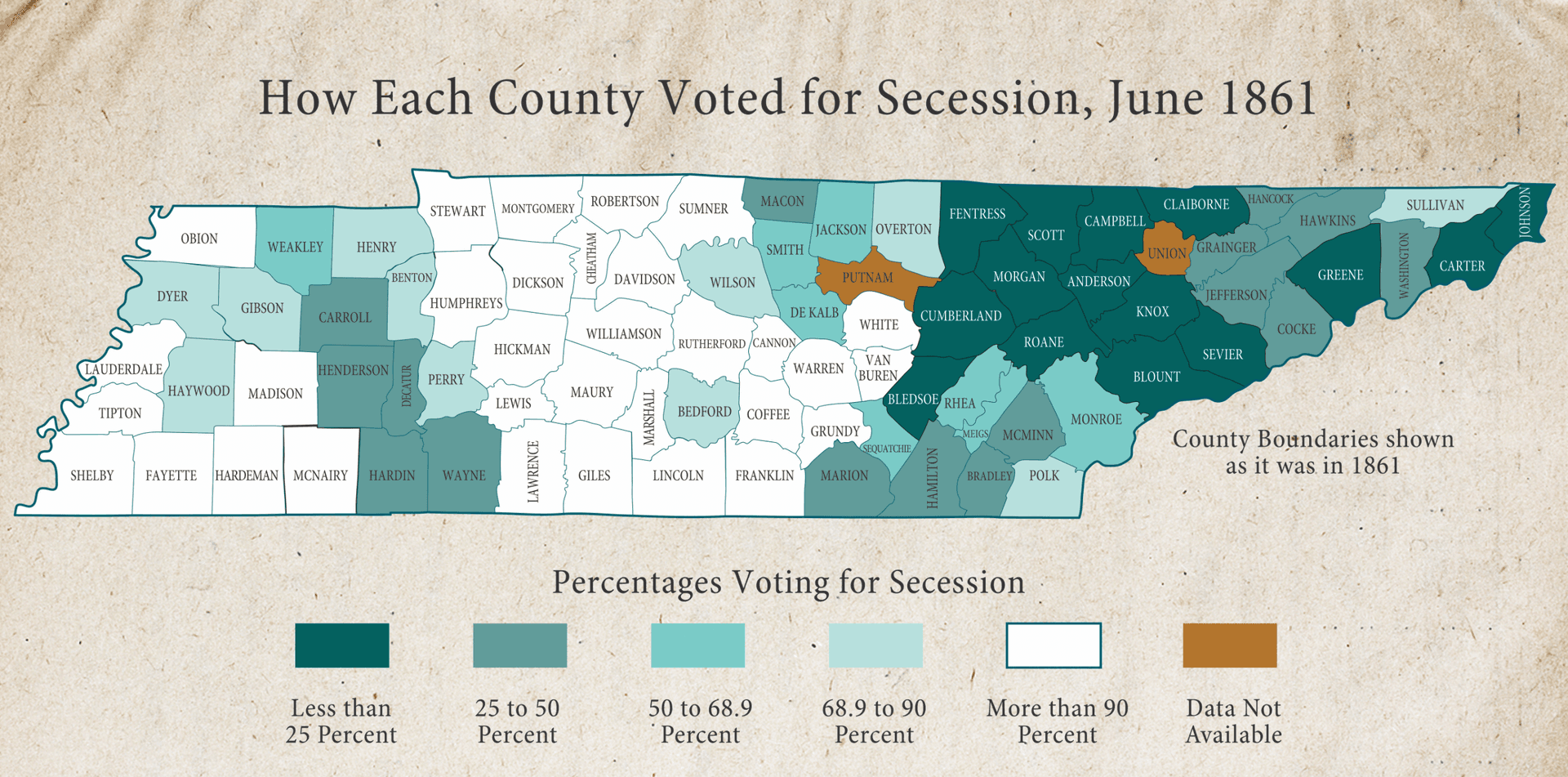
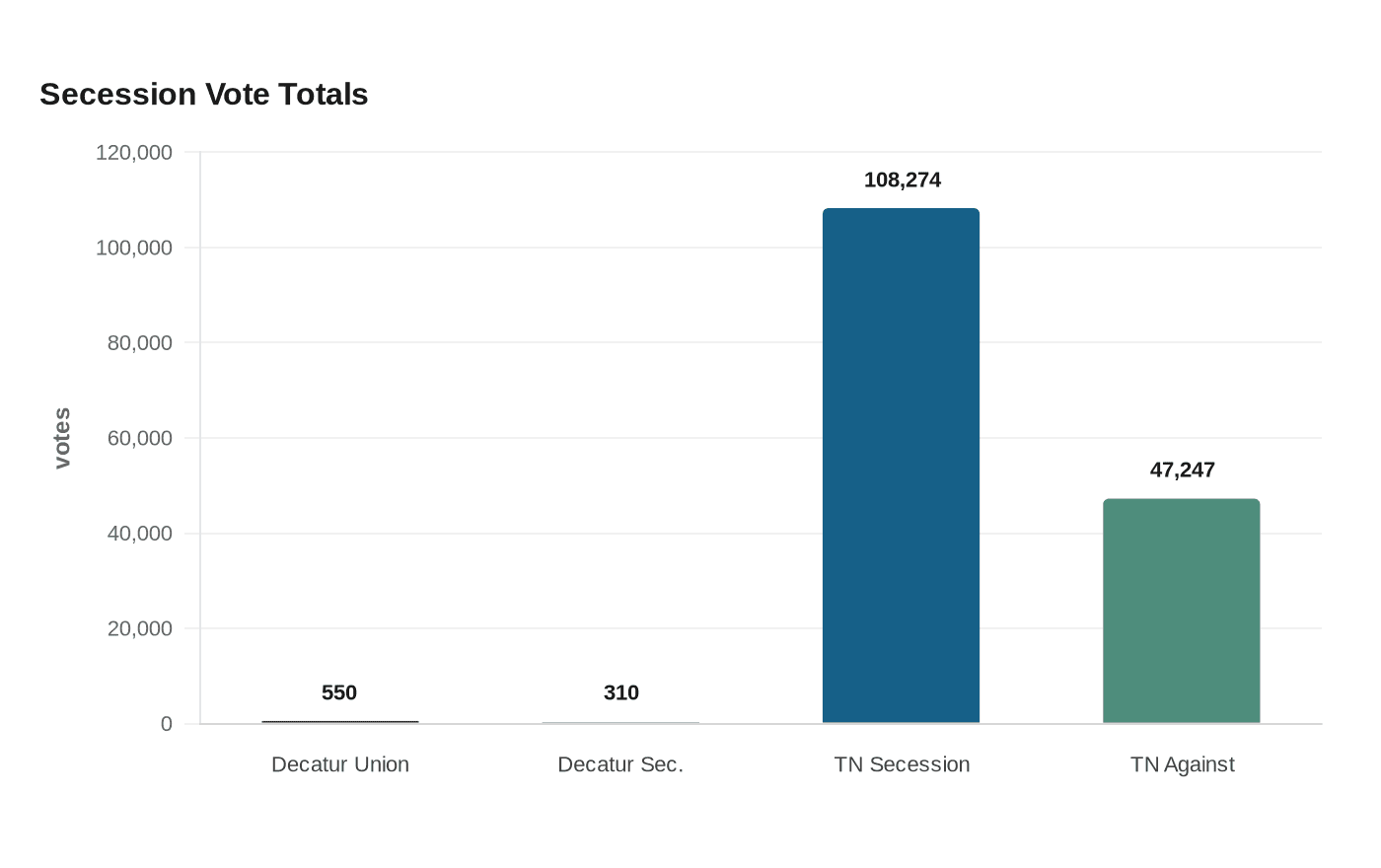
Decatur County’s Civil War story is measured in votes, roads, and river crossings. In June 1861, the county gave the Union 550 votes to 310 for secession, one of only eight counties in West or Middle Tennessee to do so. The Tennessee River was not just a line on the map here. It shaped who stayed loyal, who fled, and who paid a price for siding against the dominant current around them.
A river county that voted against the tide
Tennessee first rejected a secession convention on February 9, 1861, then reversed course on June 8, 1861, after Fort Sumter and Lincoln’s call for troops pushed statewide sentiment sharply toward separation. In that June referendum, Tennessee voted 108,274 for secession and 47,247 against. Decatur County bucked the statewide result and the wider mood in West Tennessee, where secession support was overwhelming.
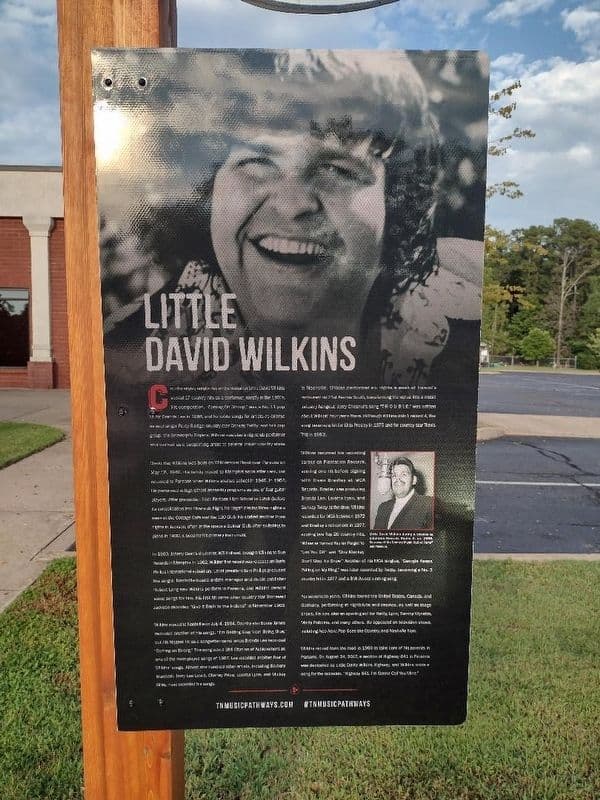
The Divided Loyalties historical marker captures what made the county exceptional. It says a small majority of loyalists in Henderson and Decatur counties voted against separation despite the risks. That matters because Decatur was never simply “Union” in any easy sense. It was a place where neighbors made opposite choices under pressure, with the river corridor helping determine who could move, hide, recruit, trade, or survive.
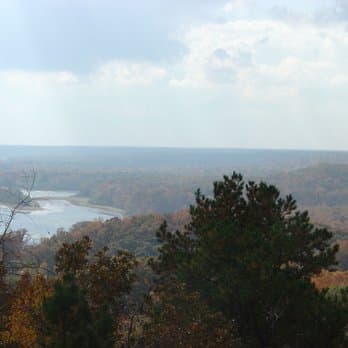
The county’s geography had already made it a divided place long before the war. Decatur County was created in 1845 out of Perry County because the county seat at Perryville was split by the Tennessee River. The Decatur County Historical Society says 200 citizens from the west side of the river petitioned for a new county. That origin story explains why the river keeps showing up in Decatur County history as more than scenery. It was a practical obstacle, a political boundary, and a daily reminder that access and allegiance often followed the water.
The Bear Creek Unionist who kept fighting after the vote
One of the clearest local faces of that divided loyalty is Asa N. Hays, better known as Black Hawk. Hays, born in 1818 and later identified in genealogical records as Asa Nelson Hays, lived in the Bear Creek area and became a captain in the 7th Tennessee Volunteer Cavalry after Federal recruiters enlisted Unionists in Decatur County following Shiloh.
The regiment itself tells part of the story. The 7th Tennessee Cavalry was also known as the 2nd West Tennessee Cavalry, and it was organized on August 28, 1862, at Jackson, Grand Junction, and Trenton. The National Park Service identifies it as a Union Tennessee volunteer regiment. For men like Hays, enlistment was not an abstract political statement. It was a local decision made in a county where loyalty could draw retaliation from the other side of the river and from former neighbors.
Hays’s wartime path followed the hard edge of that choice. He was captured at Union City and imprisoned in Richmond’s Libby Prison, one of the war’s most notorious Confederate prisons. After the war, he was ambushed and killed on Rosson Town Road in 1887. The marker’s account, paired with later records, shows how long the conflict shadowed the county. Even after Appomattox, the division did not disappear into legend. It remained tied to named roads, remembered families, and the kind of local violence that settled grudges without settling history.
Jerome S. Burton and the long road home
The other local story on the marker comes from the Confederate side and is just as rooted in place. Jerome S. Burton, born February 13, 1841, lost his twin brother, Peter Burton, near Murfreesboro in 1863. The marker says Jerome spent 13 days carrying his brother’s remains back through Union-occupied territory to Bunches Chapel Cemetery, traveling by night and hiding the body in shallow graves along the way.
That journey ends at one of the county’s oldest burial grounds. Bunches Chapel Cemetery in Parsons, in the Busselltown community, has carved-marker burials dating to at least 1827. Jerome S. Burton is buried there. The cemetery is more than a resting place. It is a record of how families in Decatur County kept their dead close to home, even when war tried to scatter them across battlefields and prison systems.
Burton’s story also shows how the county’s split loyalties were lived on the ground. One brother fought for the Confederacy, another carried the cost of that fight across occupied territory, and the final burial site sits in a community that still carries the memory of those years. In a county divided by water and war, a cemetery became a map point for endurance.
Where the county keeps the story visible
Decatur County’s historical memory now runs through a set of places and tools that make the war legible without flattening it. The Decatur County Historical Society’s project, The Tennessee River Runs Through It, joins Benton, Hardin, Henderson, Henry, Houston, Perry, Wayne, and Decatur counties in a driving tour built around the Civil War significance of the river corridor. That is an important framing for readers who want to understand why one county’s loyalties mattered beyond its own lines. The river linked communities as much as it divided them.
The Tennessee Civil War GIS Project offers a different entry point. Its county-based search tools bring together 1860 census data, 1860 county boundaries, narrative history, and searchable regimental histories, while the larger map layers in battlefields, landmarks, and African American sites. For Decatur County, that means the war can be followed as geography, not just as a list of battles. The map, the marker, the cemetery, and the old roads all point back to the same reality: the Tennessee River shaped how people voted, where they moved, and how they remembered what came next.
Decatur County’s Civil War story endures because it is local enough to stand in one place and still see the whole conflict in miniature. The county’s Union vote, its divided families, and its river crossings remain fixed in the landscape, and that is why the memory still feels close.
This article was produced by Prism’s automated news system from verified source data, official records, and press releases, then run through automated quality and moderation checks before publishing. The system is built and supervised by the people who set the standards it runs under. Read our full AI policy.
Did this article answer your question?