Tennessee marker honors Parsons native Little David Wilkins' music legacy
Parsons now has a permanent stop on Tennessee's music map, and Little David Wilkins' marker puts local clubs, school stages, and downtown heritage back in view.
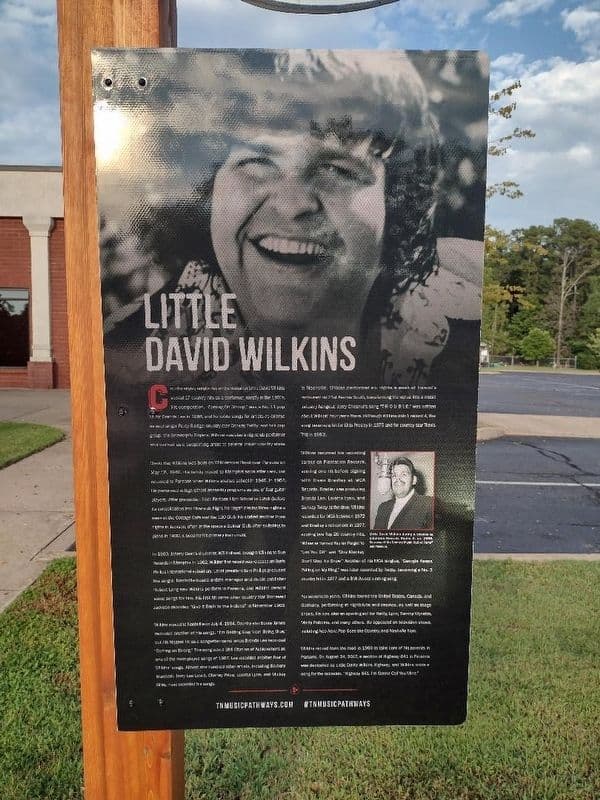
Little David Wilkins now has more than a memory in Parsons. The Tennessee Music Pathways marker in his hometown turns a local success story into a fixed stop on the state’s music trail, tying a Decatur County childhood to a career that reached Memphis, Nashville, and the national charts.
The marker matters because it gives Parsons something concrete to build around: a named artist, a documented route through local clubs and schools, and a place on a statewide driving tour that already connects visitors to Tennessee music history. For a town that claims Wilkins as one of its own, the question is no longer whether his name belongs here. It is whether the marker becomes a real guide for classrooms, museum visits, and downtown traffic, or just a plaque people pass on the way somewhere else.
A hometown stop on Tennessee’s music map
The state unveiled the Wilkins marker in Parsons on Tuesday, Oct. 25, 2022, as one of six new Tennessee Music Pathways markers. Local and state leaders, family and friends, and music industry executives gathered for the celebration, placing Parsons inside a program designed to link travelers with the people, places, and sounds that shaped Tennessee music.
That program carries weight because it is not new or experimental. Tennessee’s Historical Markers Program began in the late 1940s and has placed more than 2,000 markers statewide. In that context, the Parsons marker is not just ceremonial. It is a durable part of the state’s official memory, and that makes Little David Wilkins part of a larger public record about how Tennessee music grew from small towns, club stages, and school performances into a statewide industry.
What Wilkins carried out of Parsons
The marker identifies Wilkins as a country singer, songwriter, and entertainer with 17 country hits. It also traces the roots of that career back to Decatur County, where he was born near Parsons on Wilkinstown Road in 1940 and returned to Parsons as a child. Before his name moved into wider circulation, he was already performing in school settings and local clubs, a detail that matters because it shows how early the town’s cultural life fed his craft.
That local foundation is visible in the places named in his story. Parsons High School sits in the background of the timeline, not as a footnote but as a real stop in the making of a working musician. So do the Cottage Cafe, the B & W Nightclub about three miles outside Parsons, and the Delmar Club in Jackson. These are not abstract symbols. They are the small stages where a future recording artist learned how to hold a room, make a living, and move from one job to the next.
From local gigs to Sun Records
Wilkins’ own account of that climb gives the clearest route through the story. His first paying gig came at the B & W Nightclub, where he played for $10 a night. After that, he moved to a three-nights-a-week job for $15 a night and then on to the Cottage Cafe. In 1958, after graduating from Parsons High School, he was still working local dates. By 1960, he had switched to piano, another practical turn that shows how flexible working musicians had to be if they wanted to keep moving.

The breakthrough came in Jackson. In 1959, while he was playing the Delmar Club, W.S. Holland heard him and told Sam Phillips, founder of Sun Records, about him. That link matters because it places Parsons inside the same Tennessee music network that connected small-town performers to Memphis and the broader recording business. Wilkins did not appear out of nowhere. He moved through a known circuit of clubs, word-of-mouth introductions, and recording opportunities that tied Decatur County to the state’s commercial music center.
His first hit came with Stonewall Jackson’s recording of “Give It Back to the Indians,” and by the 1970s he had become a steady chart presence and a sought-after songwriter. That kind of career arc is exactly what gives the marker its staying power. It is not only about where he was born. It is about how a Parsons musician entered the larger Tennessee economy of songs, recordings, and radio play.
The songs that carried his name farther
The clearest proof of Wilkins’ reach is the song list attached to him. He wrote Brenda Lee’s pop hit “Coming on Strong,” and her version reached No. 11 on the Billboard Hot 100 in 1966. That chart position gives the story a national benchmark, not just a regional one, and it shows that a songwriter with roots near Parsons helped shape a record that traveled far beyond Decatur County.
His songs were also recorded by Percy Sledge, Conway Twitty, the Serendipity Singers, Barbara Mandrell, Jerry Lee Lewis, Charley Pride, Loretta Lynn, and Mickey Gilley. That breadth matters because it shows Wilkins moving across genres, audiences, and eras. He was not locked into one lane of country music history. He wrote material that found life with major names in country, pop, and soul, which is part of why a small-town marker can carry such a large story.
Where Parsons can take the story next
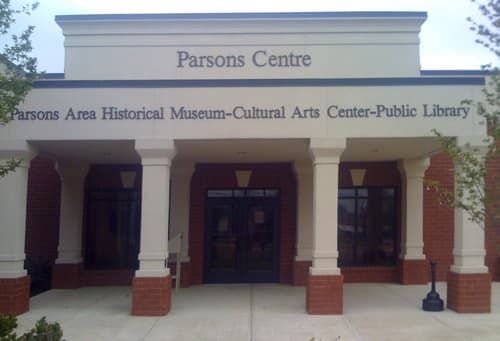
The most useful local anchor is the Parsons & Greater Area Historical Museum at 535 Tennessee Avenue South. That address gives visitors a concrete place to start, and it gives the town a base for turning the marker into a real stop rather than a drive-by reference. The museum can connect Wilkins’ name to the broader Decatur County story, including the schools, clubs, and streets that shaped him before Memphis and Nashville claimed the next chapters.
For Parsons, the value of the marker will be measured in simple, visible ways: whether teachers use it to connect local students to their own music history, whether museum visitors add it to their route, and whether businesses near Tennessee Avenue South can make room for people who come looking for the town behind the songs. The marker cannot create that traffic on its own. What it does provide is a documented reason to stop, listen, and see how one Parsons native carried a local music circuit all the way to 17 country hits and a permanent place on Tennessee’s map.
This article was produced by Prism’s automated news system from verified source data, official records, and press releases, then run through automated quality and moderation checks before publishing. The system is built and supervised by the people who set the standards it runs under. Read our full AI policy.
Did this article answer your question?