Nathan Bedford Forrest State Park blends Decatur County history and trails
Nathan Bedford Forrest State Park gives Decatur County a river-history classroom, trail network, and overlook in one place. Its museum, hikes, and old name make it both useful and contested.
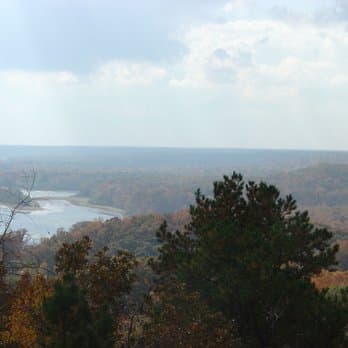
At Pilot Knob, Nathan Bedford Forrest State Park does more than offer a place to walk the woods. The 2,700-acre park on the western shore of Kentucky Lake and the Tennessee River gives Decatur County a public site where local history, school programs, and outdoor recreation meet at 1825 Pilot Knob Road in Eva.
A park built from Depression-era work
Tennessee State Parks says the park was constructed by the Works Progress Administration during the Depression era, which matters because the site itself is part of the region’s public history, not just the land around it. The park’s current description puts it at 2,700 acres, while an earlier state brochure listed 2,650 acres, a small but real reminder that official materials have described the footprint differently over time.
The larger point is steady: this is a state park shaped by river geography and by the communities that lived along the Tennessee River Valley before Kentucky Lake existed. State materials say the park preserves that story, which is why it functions as more than a scenic stop for people passing through Decatur County.
What the Tennessee River Folklife Interpretive Center and Museum adds
The park’s clearest educational anchor is the Tennessee River Folklife Interpretive Center and Museum at Pilot Knob. That museum is where the park becomes a local classroom, with exhibits focused on the lifeways and customs of Tennessee River people.
Its subject matter is broad but specific: musseling, crafts, commercial fishing, Civil War history, and live animal exhibits all sit under the same roof. That mix gives schools, families, and casual visitors a way to learn how river life worked before the lake was formed and how that heritage still defines the area around Eva and Decatur County.
Park materials also point to ranger-led hikes and educational programs for schools and visitors. That makes the site useful beyond recreation, especially for field trips that need a place where history, ecology, and local identity can be taught in the same visit.
Trails with named routes and a clear trailhead
The trail system is one of the park’s biggest draws, and Tennessee State Parks says the network stretches to more than 20 miles. The trailhead at the Pilot Knob Interpretive Center gives the park a practical starting point for day hikes and longer walks, with routes that can fit different abilities and time limits.
- Campground Road Loop
- Chester Hollow
- Polk Creek Wildflower Trail
Specific trail names help make the system concrete:
Those names matter because they signal that this is not a generic trail park with one anonymous path. The routes connect visitors to different parts of the landscape, and the wildflower trail in particular hints at the plant life that adds seasonal value to the park’s interior.
One of the park’s guided experiences, the Pafford Wilson History Hike, interprets the farm and homestead of the Pafford and Wilson families who cared for the park in its early years. That kind of hike ties the trail system directly to the people who shaped the land before it became a state park, turning a walk into a lesson in local stewardship.
Pilot Knob is the high point and the lookout
Pilot Knob is described by Tennessee State Parks as one of the highest points in West Tennessee, and that elevation gives the park part of its appeal. From there, visitors can take in views of Kentucky Lake, which makes the overlook a natural stop for people who want a sense of the landscape, not just a trail mileage total.
The high ground also supports birding. Park materials say Pilot Knob is a good place to watch hawks, vultures, and songbirds, which gives Decatur County another point of public value: wildlife observation tied to a specific place with a specific view.
What people actually do there
The park brochure keeps the list of everyday uses broad and familiar, and that is part of its strength. The site supports fishing, boating, camping, swimming, hiking, paddling, disc golf, and birding. For a county park guide, that range matters because it shows the park is not built around one season or one audience.
The practical takeaway is simple: this is a place for a weekend campout, a river day, a school trip, a hike to an overlook, or a museum visit without leaving the county. That combination gives Decatur County a public asset that serves both residents and visitors in ordinary, repeatable ways.
The name remains part of the story
The park’s name still carries the legacy of Nathan Bedford Forrest, a Confederate cavalry leader whose historical association remains controversial. That tension is part of the park’s public meaning, especially because the site itself is being used to interpret broader Tennessee River history, not to avoid it.
For that reason, the name cannot be separated from the educational mission. Visitors come for trails and overlooks, but they also encounter a park whose identity is tied to public memory, historic interpretation, and the question of how places should present difficult legacies.
Why it matters in Decatur County
Nathan Bedford Forrest State Park gives the county a rare combination of assets in one place: a museum that preserves river heritage, trails that reach past 20 miles, an overlook at one of West Tennessee’s highest points, and a state-run site that still carries Depression-era construction history. The park’s location in Eva makes it a recognizable stop for families, schools, and travelers moving through the Tennessee River valley.
For Decatur County, the value is not abstract. It is a public destination where local history is preserved, outdoor recreation is available year-round, and the county’s river story stays visible in a place built to keep telling it.
This article was produced by Prism’s automated news system from verified source data, official records, and press releases, then run through automated quality and moderation checks before publishing. The system is built and supervised by the people who set the standards it runs under. Read our full AI policy.
Did this article answer your question?