Parsons Centre bundles museum, library and civic services in one building
Parsons Centre is where Decatur County comes for history, library help and public meetings under one roof. Any change there would ripple through daily life in Parsons.
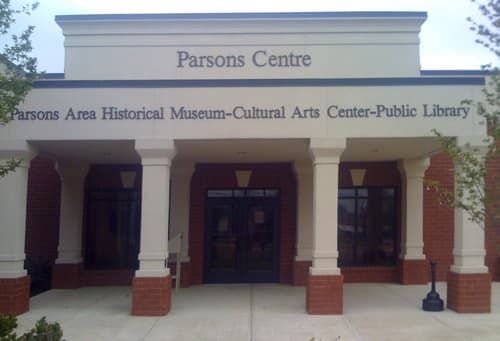
The people who keep Parsons running already use the same address at 535 Tennessee Avenue South. City commissioners meet there, the historical museum sits inside the Parsons Cultural Life Center, the library handles career help and genealogy, and the gallery and community room host local arts and civic groups. That concentration is not just convenient in a town this size; it is how a small Decatur County community keeps government, memory and public access in one place.
A civic hub at 535 Tennessee Avenue South
Parsons Centre sits inside the Parsons Municipal Building, where city hall meets and where the Parsons City Commission gathers on the first Monday of each month at 6 p.m. The building is handicap accessible, which matters when one site is expected to serve voters, volunteers, job seekers, library users and history visitors without making them navigate separate public offices across town.
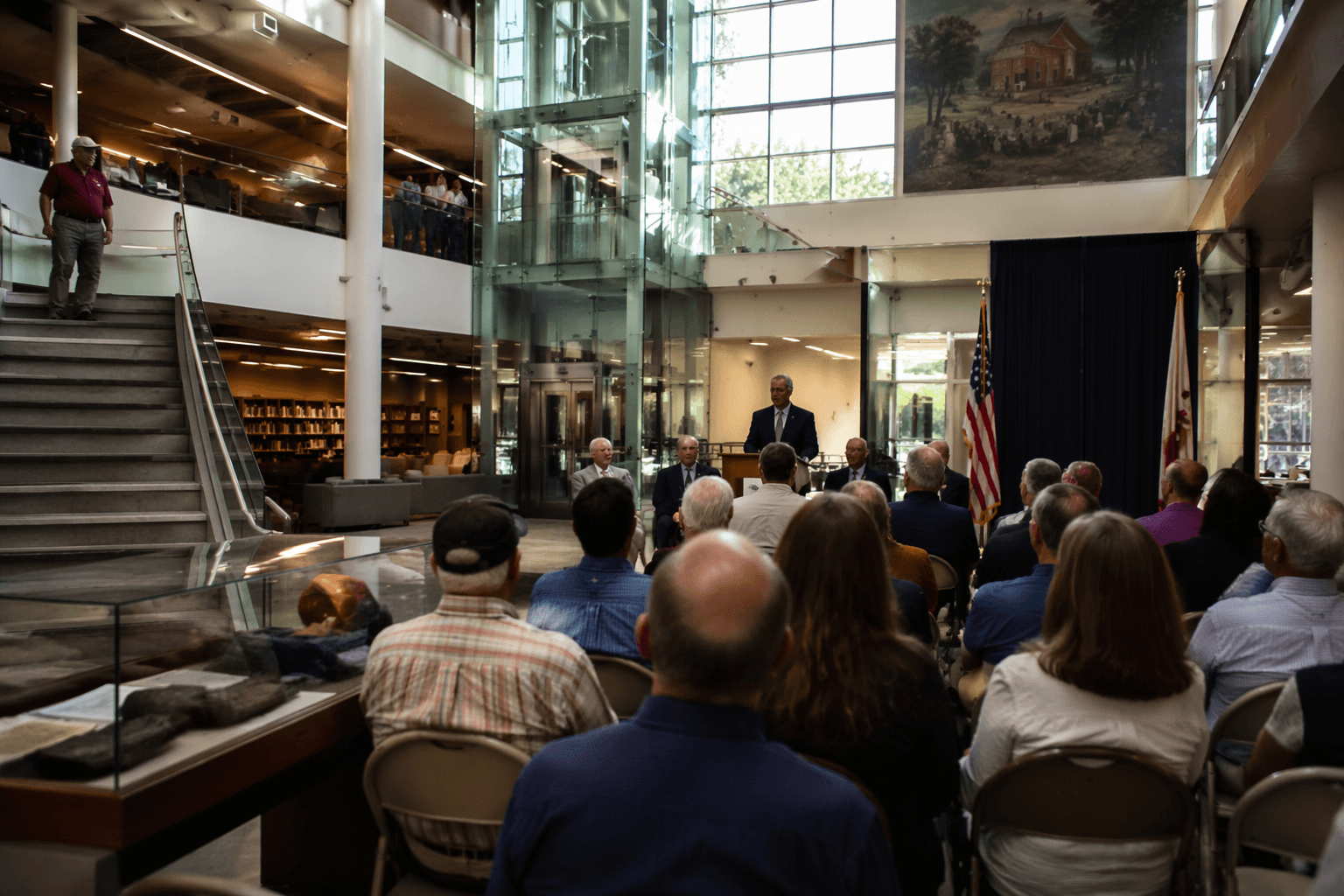
The same complex also houses the Parsons and Greater Area Historical Museum, the Parsons Library, an art gallery and a community room. The chamber lists the address as 535 Tennessee Avenue South, Parsons, TN 38363, and the city ties the municipal building directly to daily civic business. When one address holds so many public functions, it becomes more than a stop for tourists. It becomes the place where residents go to read, meet, research family history, attend city business and see local art.
That shared footprint is what gives Parsons Centre its practical value. The community room can be reserved for meetings and training conferences, the gallery operates during library hours, and the library itself is described as a multi-function space with books, a career center and a genealogy area. The result is a building that handles cultural programming and government access at the same time.
A railroad town’s history, preserved in the same building
Parsons was established as a railroad town in 1889, and that origin still shapes how the city presents itself. Before 1889, Henry Myracle, one of the early settlers of the area, owned a large flat piece of land in Decatur County. On April 11, 1889, he deeded 140 1/3 acres to the Tennessee Midland Railway Company in exchange for a depot on a two-acre lot in Parsons.
A historical plan of the city shows how literal that railroad influence was. Myracle kept the odd-numbered blocks while the railway company took ownership of the even-numbered blocks in the new subdivision. That is not just a town story from the past; it explains why Parsons grew as a planned railroad community and why the museum inside Parsons Centre is built around transportation, settlement and civic change.
The museum’s exhibits reach across that history instead of narrowing it to one chapter. Visitors can trace Native Americans, early settlers, occupations, the railroad, Tennessee River life, churches, schools, theater and dinosaurs. That range makes the museum useful for school groups, newcomers and longtime residents alike, because it connects local history to the county’s wider social life, from river trade to classroom memory.
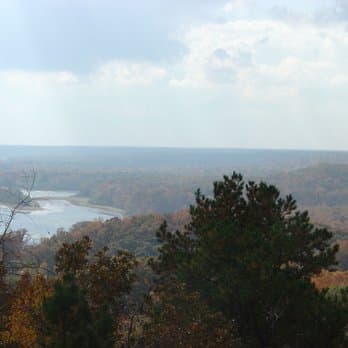
The museum also fits into a larger regional story. Parsons sits off I-40 at exit 126, and the city describes it as about halfway between Memphis and Nashville and 15 minutes south of the interstate on Hwy 641 South. For a traveler passing through West Tennessee, the building is easy to reach. For people who live nearby, it anchors a town shaped by rail lines, river commerce and a practical need to put public services in one reachable place.
What residents use inside the building every week
Parsons Centre is busiest because it serves several different needs at once. The library is not just a place for books. It is a multi-function library with a career center and genealogy area, along with special programs for the entire family. That makes it valuable to people looking for work, people tracing family lines and families who need programming in one place rather than scattered across multiple agencies.
The gallery adds another layer of public use. It is open during library hours, and the Parsons Cultural & Performing Arts Council sponsors art shows and other events there. Exhibitors have included Brenda Moss, Mary Spellings, the Jackson Art Council, the Savannah Guild and local artists Nina Jordan, Sherry Earnhart, Rebecca Duncan and Grant Milam. That mix shows a space that is not limited to one audience or one town, but tied into both local expression and broader regional arts connections.
The community room extends the building’s role beyond display and study. Because it can be used for meetings and training conferences, it gives civic groups and business organizations a central place to gather without needing to maintain separate spaces of their own. The Decatur County Historical Society also meets at the Parsons Municipal Building, which means history preservation happens in the same complex where city government is conducted.
For daily users, this matters in the simplest way possible: one trip can cover several needs. A person can research family history, attend a meeting, look for work resources, and stop by an exhibit without leaving the building. In a county of 11,435 people, and a city of 2,590 in Parsons, that kind of consolidation is not a luxury. It is the operating model.
Why the concentration of services raises the stakes
This is why Parsons Centre is best understood as civic infrastructure, not just a community attraction. If the building were ever unavailable or substantially altered, the impact would reach far beyond one museum room. City commission meetings, historical society gatherings, library programs, genealogy research, gallery shows and community-room reservations would all have to be relocated or split apart.
That would be especially disruptive in a small town where the building already serves residents, students, volunteers and visitors at the same address. Families would lose a single place that combines children’s programs and family browsing. Job seekers would lose the convenience of the library’s career center. Local historians would lose the shared space that supports both the museum and the historical society. Arts groups would lose the gallery and the event space they use during library hours.
Decatur County’s identity is tied to river trade, the Peavine Railroad and a town built around rail access. Parsons Centre reflects that history in the present tense. It is a compact public campus, and in a county this small, the loss of one building would not be symbolic. It would be immediate, practical and widely felt.
This article was produced by Prism’s automated news system from verified source data, official records, and press releases, then run through automated quality and moderation checks before publishing. The system is built and supervised by the people who set the standards it runs under. Read our full AI policy.
Did this article answer your question?