Colorado issues emergency livestock rules after screwworm detections
Colorado now requires new paperwork, permits and inspections for livestock from screwworm zones, and any animal with myiasis is barred from entering the state.
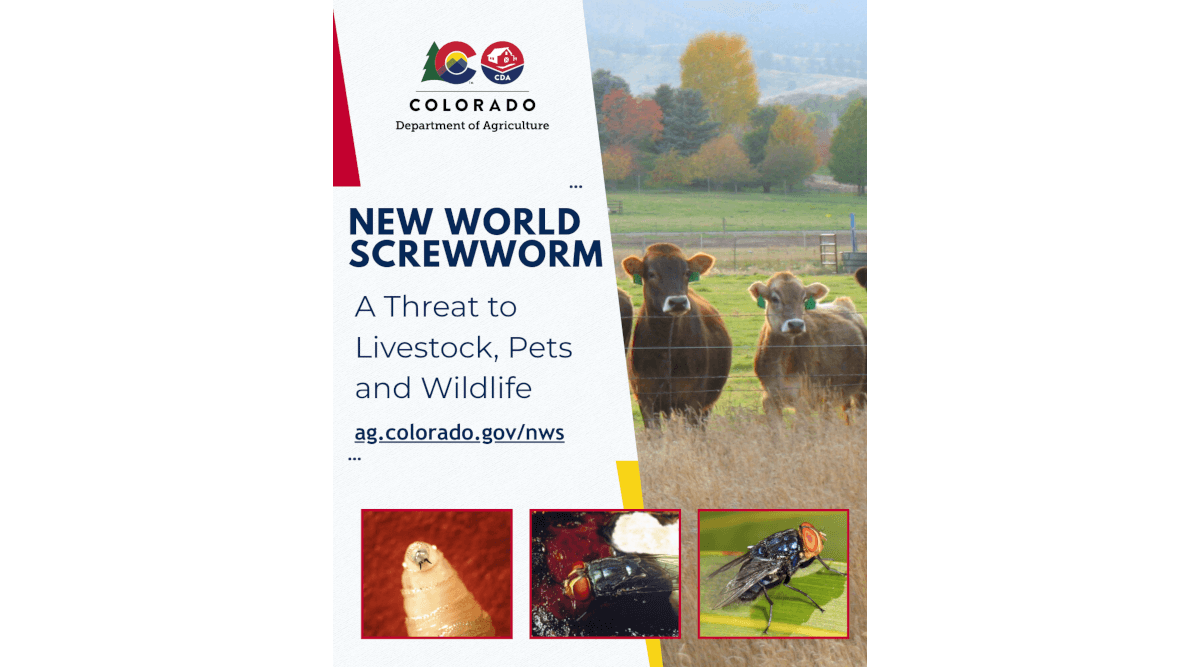
Ranchers hauling cattle, horses or other livestock into Colorado from a New World screwworm infested zone now face a new stack of movement rules: a Certificate for Movement, a Certificate of Veterinary Inspection issued within five days of travel, an entry permit requested within 48 hours of movement and an inspection on arrival. Any animal with New World screwworm myiasis is barred from entering the state.
The Colorado Department of Agriculture adopted the emergency rule on June 10 after detections in Texas and New Mexico. The Four Corners’ dry climate and cold winters make permanent establishment less likely, but livestock can still pass through the region and carry the risk with them.
Colorado Department of Agriculture rules also reach animals with open wounds. Those wounds must be treated within 14 days before movement unless the animals are headed directly to slaughter and are slaughtered within 72 hours. USDA defines an NWS infested zone as a 20-kilometer, or 12-mile, radius from a confirmed detection.
Colorado is reacting to a confirmed detection in Zavala County, Texas, involving a 3-week-old calf with an infested umbilical area. Texas later established an infested zone across parts of several counties and required prior authorization for animals moving out of those zones, while state and federal partners stepped up surveillance, epidemiological investigations and sterile fly dispersal efforts.

Colorado’s response is a One Health effort led by the Colorado Department of Agriculture and state veterinarian Dr. Maggie Baldwin. New World screwworm larvae feed on living tissue, can cause millions of dollars in livestock losses and can infest livestock, pets, wildlife and, in rare cases, people. The pest was eradicated from the United States in 1966 using the sterile insect technique, and the flies die in freezing conditions and slow in cooler temperatures.
The U.S. Department of Agriculture is leading a national One Health response and has been updating response materials throughout 2026.
This article was produced by Prism’s automated news system from verified source data, official records, and press releases, then run through automated quality and moderation checks before publishing. The system is built and supervised by the people who set the standards it runs under. Read our full AI policy.
Did this article answer your question?