Indiana Audubon Seeks Dubois County Landowners to Host Barn Owl Boxes
A barn owl family eats 3,000+ rodents a year. Dubois County farmers can get a free nest box through Indiana Audubon's new state initiative, with installation possible this fall.
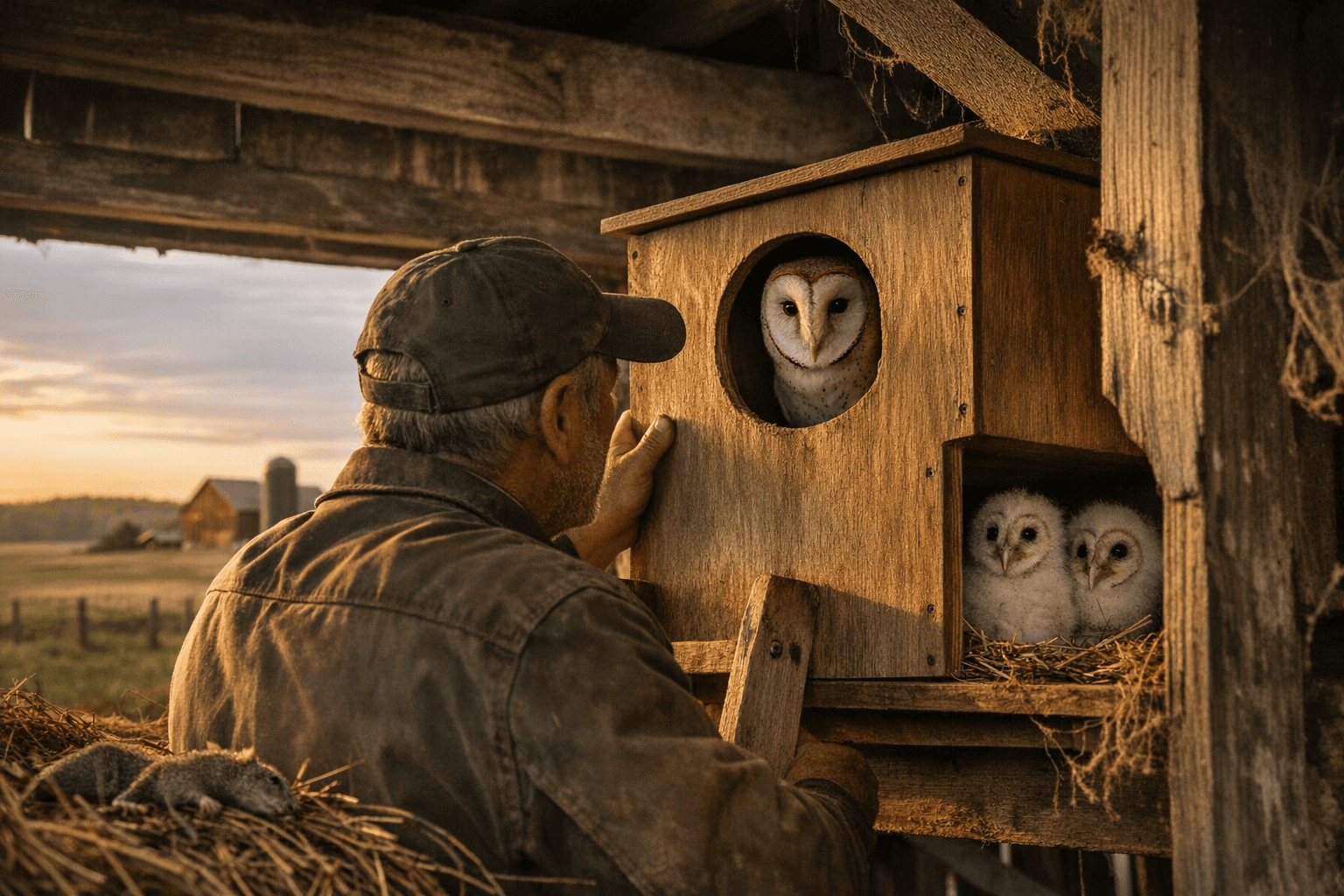
Every year, rodents quietly drain farm budgets across southern Indiana, chewing through stored grain, baled feed, electrical wiring and equipment insulation before a single trap is set. A resident barn owl family, by contrast, will consume more than 3,000 mice and voles in a single year, a natural pest control operation that costs a Dubois County landowner nothing to run once a nest is established.
The Indiana Audubon Society and the Indiana Department of Natural Resources launched the Indiana Barn Owl Initiative in late March, recruiting southern Indiana landowners to host pre-built nest boxes on qualifying properties. The program supplies the box and coordinates installation at no cost to the landowner, potentially as early as this fall, in exchange for a commitment to long-term site maintenance and periodic monitoring visits.
The economics are direct. The USDA has documented that rodents cause millions of dollars in damage to field crops, stored grain and farm equipment each year across U.S. agriculture. A barn owl nest box retails for around $300 before installation costs; Indiana Audubon delivers one free to participating landowners, along with the coordination needed to get birds on site. A single nesting pair will begin suppressing rodent populations across pasture and grain storage areas without additional chemical inputs.
Sam Urquidez, Indiana Audubon's Bird Programs and Partnerships manager, is the primary contact for Dubois County landowners interested in applying. A virtual information session is scheduled for Wednesday, April 8, from 6 to 7 p.m. Eastern, covering site requirements and the selection process in full; registration is required to receive the Zoom link through Indiana Audubon's website.
To qualify, a property generally needs at least 100 acres of open habitat, specifically pastures, hayfields or grasslands, combined with an existing barn or tall structure that provides interior space, sufficient elevation and minimal daily disturbance. A metal machine shed used seasonally may qualify. A working barn with livestock and constant foot traffic likely will not. Those conditions describe a meaningful share of Dubois County's working agricultural landscape, which sits within the southern Indiana zone where barn owls naturally concentrate due to climate.
That concentration is increasingly fragile. Barn owls (Tyto alba) are classified as an endangered species in Indiana. Fewer than 50 nests are confirmed statewide in a typical year, and in 2015 the count fell to just 10 documented nests across the entire state. The culprits are familiar to any Dubois County farmer who has torn down an old timber-frame barn: as aging structures disappear and open pastureland converts to row crops, the cavities and hunting ground barn owls depend on shrink in tandem.
The DNR has pushed back against that trend since 1984, placing more than 400 nest boxes in suitable habitat across Indiana. The Indiana Audubon partnership is designed to accelerate that work by engaging private landowners directly, a necessary step given that most viable barn owl territory in the state sits on private agricultural ground rather than public land.
The program's ask of participating landowners is ongoing rather than one-time: maintain access to the nest site, allow researchers to conduct periodic monitoring visits and commit to keeping the structure available to owls over the long term. Those visits are not simply paperwork; the nesting data they generate informs where future boxes will be placed across the region.
For any Dubois County property that meets the habitat criteria, the April 8 session is the most direct way to assess fit and begin the application process. Landowners who cannot attend can reach Urquidez through Indiana Audubon's website to ask questions directly. With program installations potentially beginning this fall, a property accepted in the coming weeks could have its first resident nesting pair by the 2027 breeding season.
This article was produced by Prism’s automated news system from verified source data, official records, and press releases, then run through automated quality and moderation checks before publishing. The system is built and supervised by the people who set the standards it runs under. Read our full AI policy.
Did this article answer your question?