Georgia Wildlife Officials Urge Forsyth Residents to Secure Trash Ahead of Bear Season
Georgia DNR's Adam Hammond warns Forsyth homes could become a "bear buffet" as 4,100 black bears statewide wake hungry from winter dens this spring.
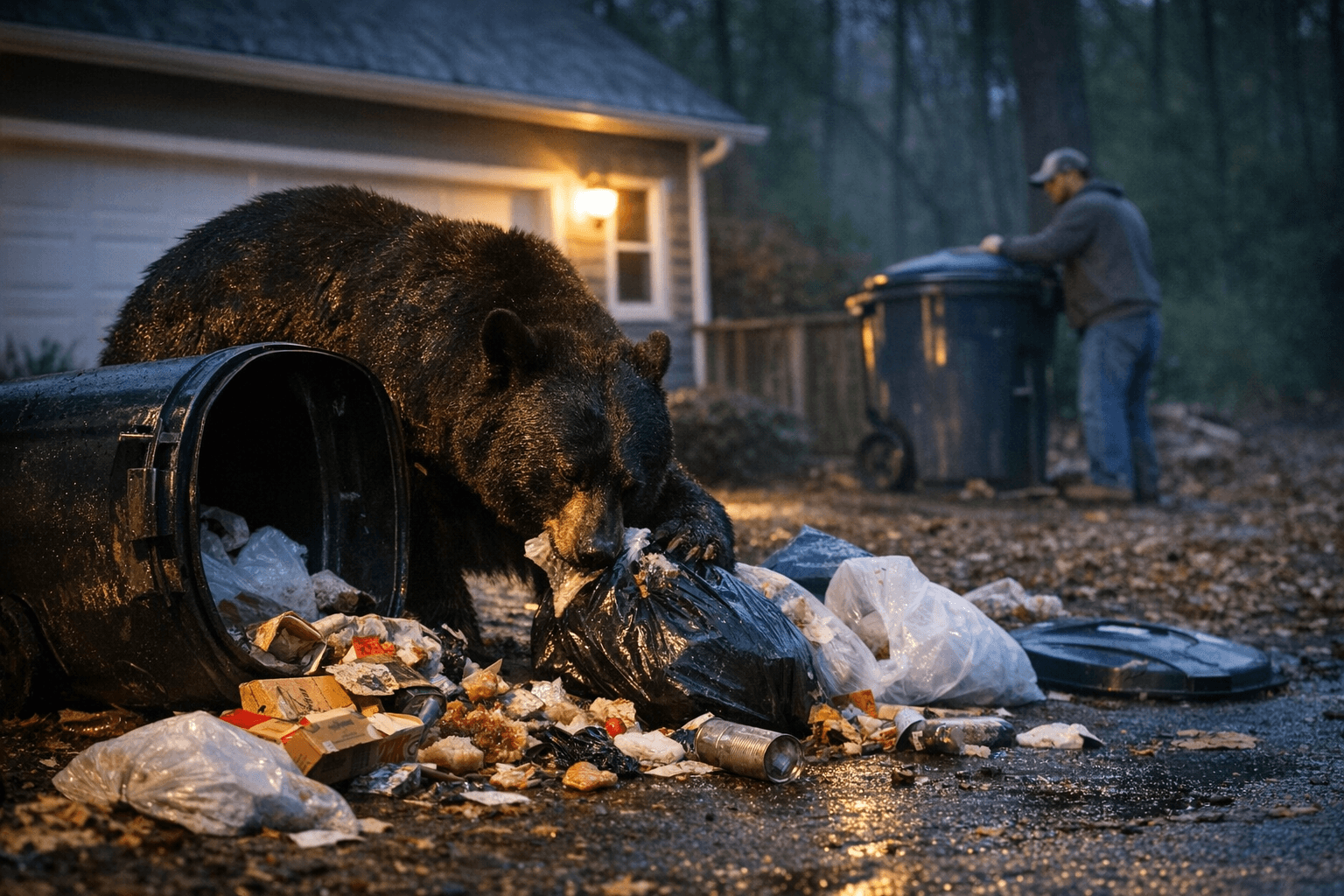
Black bears emerging from winter dens are hungry, and Georgia wildlife officials want Cumming-area homeowners to know their unsecured trash cans, bird feeders, and pet food bowls are effectively an open invitation.
The Georgia Department of Natural Resources' Wildlife Resources Division issued its spring warning as temperatures rise and bears, Georgia's only native bear species, grow more active and visible across the state. Forsyth County sits at the southern edge of the bears' primary roaming range in North Georgia, and the county has documented sightings in neighborhoods including Providence Plantation, along the Big Creek Greenway Trail near Cumming, and near Pooles Mill Elementary School.
"As expected, bears are going to be hungry when they emerge from their winter dens, and that means getting easy-to-obtain food as soon as possible," said Adam Hammond, WRD State Bear Biologist. "Don't let your home become a bear buffet! Become familiar with the BearWise Basics to help keep bears away from homes and businesses, creating a healthier and safer living situation for everyone."
Georgia's black bears have recovered to a statewide population estimated at 4,100, a conservation comeback from near-eradication in the 1930s driven by unregulated hunting and large-scale habitat loss.
Hammond notes that "avoiding problems with bears is usually simple, though it may not always be convenient," and that the single most effective step is securing food, garbage, and recycling, because once bears access human-provided food, they return for more.
The DNR's BearWise program outlines six household steps. Convert to bear-proof garbage containers or secure trash inside a garage, and place garbage cans at the curb on the day of pickup rather than the night before. Remove bird feeders when bears are active, since birdseed and other grains carry a high calorie content that makes them highly attractive. Feed outdoor pets in portion sizes that will be completely finished at each meal, remove leftover food immediately, and clean grills and smokers after every use. If a bear is spotted in the neighborhood, alerting nearby residents helps the whole community respond consistently.
The Forsyth County Sheriff's Office has previously amplified bear warnings through social media when sightings cluster in subdivisions, and residents who spot a bear are encouraged to report it to the DNR rather than attempt to chase or feed the animal. Bears will defend themselves if a person gets too close.
The practical stakes go beyond inconvenience. A bear that repeatedly finds food near homes loses its wariness of people, a behavioral shift that typically ends with wildlife officers being forced to euthanize the animal. Keeping bears wild, Hammond has emphasized, protects both residents and the bears themselves.
This article was produced by Prism’s automated news system from verified source data, official records, and press releases, then run through automated quality and moderation checks before publishing. The system is built and supervised by the people who set the standards it runs under. Read our full AI policy.
Did this article answer your question?