Goochland County Courthouse Green blends history, civic life and preservation
Court Square puts Goochland’s government, courts, and preservation story in one walkable place, from the 1826 courthouse to the old stone jail and the new courthouse plan.
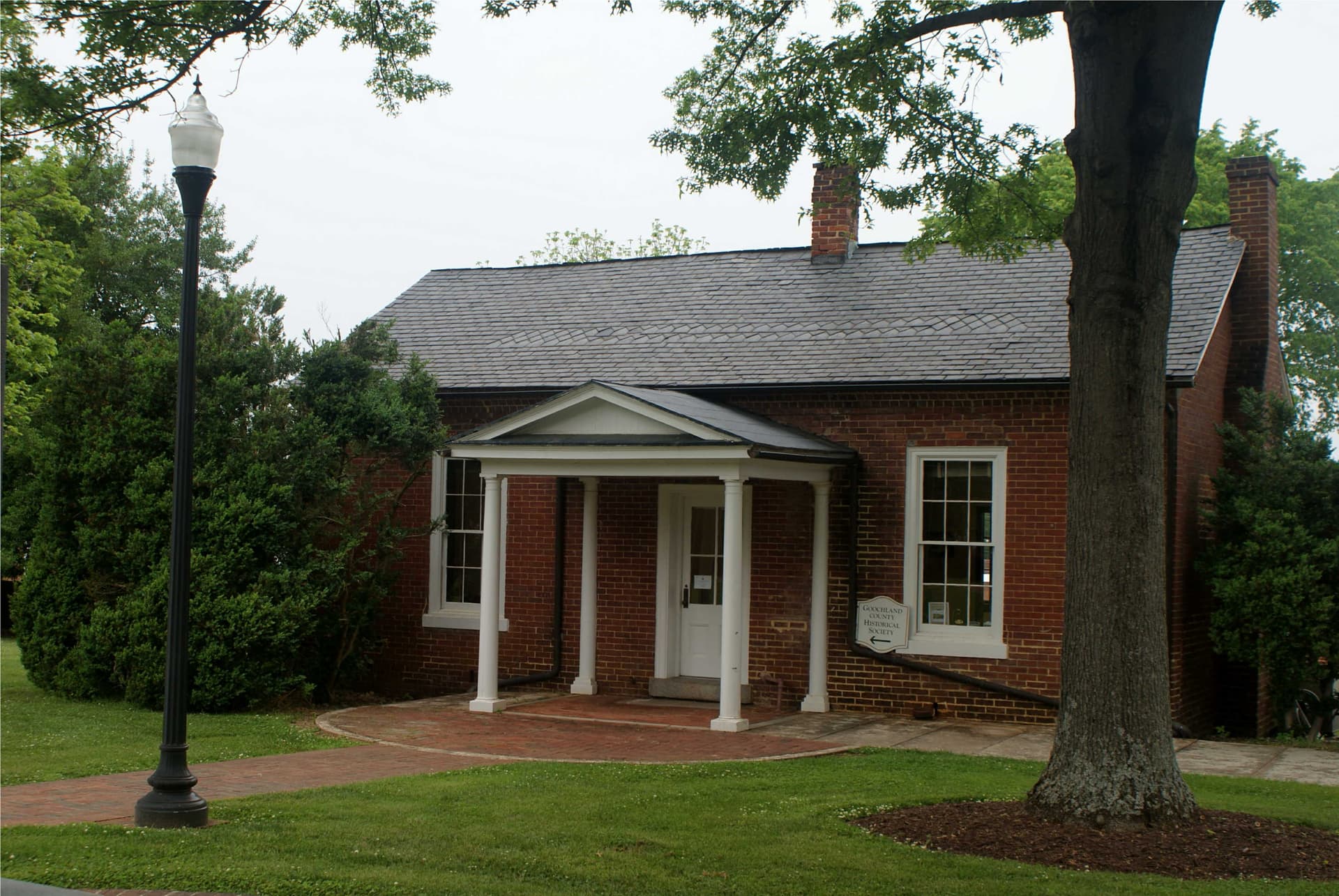
The quickest way to understand Goochland County government is to stand on Court House Green and look around. In a few steps, residents can see the 1826 courthouse, the restored old stone jail, the clerk’s office, and the county’s next courthouse plan all in one civic landscape.
A courthouse square that still reads like a working campus
The center of the square is the Jeffersonian-inspired circuit courthouse completed in 1826. The Virginia Department of Historic Resources identifies it as a temple-form brick building designed by Dabney Cosby, Sr., with an apsidal end and an original gallery supported on Tuscan columns, details that survive in a small number of Virginia courthouses. The same historic setting includes a stone jail, a brick clerk’s office, and a brick wall that once kept wandering cattle out of the grounds.
That physical arrangement matters because it is not just a preservation zone. The county’s court directory places Circuit Court, the Commonwealth’s Attorney, general district and juvenile courts, fire-rescue administration, and the historical museum within the courthouse circle area, making Court House Green a place where law, records, emergency services, and local memory overlap. The clerk’s office remains an elected constitutional office, so this is still the place where county residents come to do business with government, not only to look at it.
What the county has restored and how visitors read it
Goochland County has added a modern interpretive layer to the square without erasing its older bones. The Courthouse Green includes a restored old stone jail, interpretive signage, and a visitor’s center, and the county describes the green as home to the most well-preserved Jeffersonian courthouse in Virginia. That claim is part preservation argument, part civic invitation: the site is meant to be understood, not merely admired from a distance.
The old stone jail restoration was completed in September 2016, and the renovated building now contains exhibits on law enforcement and prison life covering the period from 1825 to the 1950s. Goochland County and the Goochland Historical Society opened the fully restored jail on September 11, 2016, turning a once-utilitarian building into a public stop that connects court history to everyday county life.
The welcome center, which once served as the circuit court clerk’s office, reinforces that blend of function and interpretation. A resident can move from the old jail to the courthouse to the visitor’s center and see how records, punishment, administration, and public access evolved on the same ground.
Why the square is also a live policy story
The courthouse green is not frozen in time. Goochland County plans a new courthouse facility of about 75,000 square feet to consolidate courts, clerks’ offices, and related public safety services into one building with modern workspace and security features. The county issued a request for proposals in February 2026 for an owner’s representative and began reviewing responses in March 2026.
The current courthouse village complex dates to the 1826 courthouse and a 1983 public safety building that houses the Combined District Court and District Court Clerks. That makes the site a practical example of a county trying to manage two demands at once: preserving a historic civic square and updating a courthouse system built for smaller caseloads and older security expectations.
The county says it owns enough adjacent land to build the new courthouse and parking without removing or destroying the historic structures on the green. For residents who vote, pay taxes, or appear in court, that detail is central. It means the county is attempting to modernize access and operations while keeping the old courthouse landscape visible and intact.

A place for public memory, not just filings and hearings
The county is also using the square for public history programming. Goochland County has scheduled a Courthouse 200 Birthday Celebration for September 19, 2026, marking the courthouse’s 200th anniversary on the Courthouse Green. The event is set to include historical plays and family-friendly activities, which extends the square’s role beyond hearings and records into public storytelling.
That is not new behavior for the site. The county’s September 2016 materials show that the restored old stone jail opened as a joint effort between the county and the Goochland Historical Society, a sign that preservation here has depended on repeated public investment and local partnership. The birthday celebration follows the same pattern: use the square itself as the stage.
How the county places the square in a longer timeline
Goochland’s own history page pushes the story back before county formation. It says the Monacan Tribe lived in the James River Valley before the county existed and that Rassawek was a primary village near the confluence of the James and Rivanna rivers. By about 1700, the Monacans had moved westward while Huguenots settled in the area.
That longer view helps explain why Court Square carries more than county-level history. It sits inside a landscape shaped by Native settlement, colonial migration, river travel, and the gradual formation of local institutions. The courthouse is one layer of that story, not the whole of it.
The county has also made that history easier to see in the present. In 2025, Goochland launched a Historic Map Viewer that overlays current mapping with historic maps from 1820, 1863, 1880, 1919, and 1932. For anyone trying to understand how the courthouse village, surrounding roads, and public buildings changed over time, the map viewer offers a practical way to line up the old landscape with the one that exists today.
A walkable route through Goochland’s civic center
A useful visit starts on River Road West, where the courthouse complex and its adjacent buildings still form a compact government campus. From there, the courthouse, old stone jail, clerk’s office, visitor’s center, and interpretive signs can be read as one sequence: court authority, recordkeeping, detention, explanation, and continued administration.
That is what makes Court House Green unusually legible. It shows how Goochland County’s government works in physical form, how the county preserves that form, and how it plans to keep the square visible even as it builds a new courthouse next door.
This article was produced by Prism’s automated news system from verified source data, official records, and press releases, then run through automated quality and moderation checks before publishing. The system is built and supervised by the people who set the standards it runs under. Read our full AI policy.
Did this article answer your question?