Guilford County sees biggest SNAP drop as work rules tighten
Guilford County lost 12,812 SNAP participants in April, the Triad’s steepest drop, as new work rules pushed more families toward local pantries.

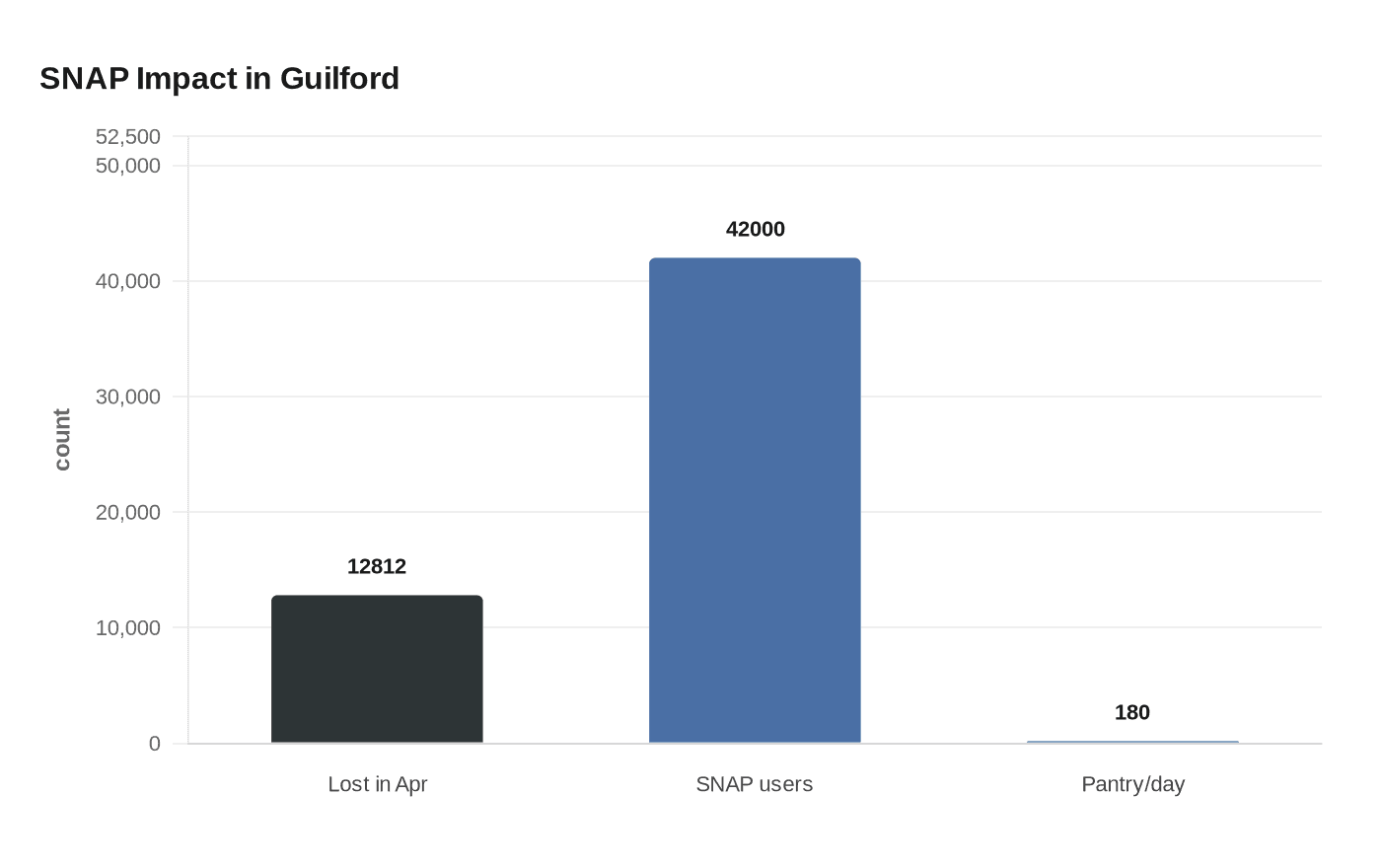
Guilford County saw the sharpest SNAP decline in the Triad, losing 12,812 participants in April compared with the same month a year earlier as new federal work rules began tightening access to food help.
The change affects adults ages 18 to 64 who are physically and mentally able to work and do not live with someone under age 14. To keep benefits, they must show 80 hours a month of paid work, volunteering, training or school-related activity. North Carolina says the expanded rules took effect Dec. 1, 2025, and the 36-month limit for the group runs from January 2025 through December 2027. County DSS agencies screen people for the work-rule changes at recertification.
The loss lands in a county where SNAP has long been a basic part of the food budget. In November 2025, Guilford County leaders said about 42,000 residents were relying on SNAP for basic food needs. A drop of 12,812 participants represents a major shift in how many households are bringing federal food dollars into local grocery stores, corner markets and discount aisles.

The pressure is already showing up at emergency food sites. Greensboro Urban Ministry’s pantry, which provides emergency groceries and works with local grocery stores, has seen more people turn to its doors after reductions or full cutoffs in SNAP. In November 2025, the line there wrapped around the building, and the pantry expected to serve up to 180 households in a single day as families dealt with delayed or interrupted benefits.
Second Harvest Food Bank of Northwest North Carolina, whose SNAP outreach area includes Guilford, Forsyth, Alamance, Randolph and Rockingham counties, is part of the same safety net now absorbing the spillover. Its CEO, Eric Aft, has warned that even a 10% federal SNAP cut could force the food bank to provide nearly 30 million additional meals and shift about $700 million in costs to state and county budgets.
That makes the Guilford decline more than a paperwork change. It is a direct hit to household grocery power, with more adults losing aid if they cannot document enough hours and more of the burden moving to churches, pantries and county social-service offices already stretched by the need.
This article was produced by Prism’s automated news system from verified source data, official records, and press releases, then run through automated quality and moderation checks before publishing. The system is built and supervised by the people who set the standards it runs under. Read our full AI policy.
Did this article answer your question?